THE BACK-TO-SCHOOL ISSUE
Chicago is one city, but it does not look or feel the same from one neighborhood to the next.
This summer, the Columbia Chronicle undertook one of the most ambitious visual journalism projects in our newsroom’s history: documenting all 77 of Chicago’s community areas through photography.
The goal was not simply to make a checklist of places, but to document the people, businesses, streets and everyday moments that give each community its own character.
By the time the fall semester starts, we will have just six community areas left to photograph.
The photographs have taken us from north to south and east to west and introduced us to people who are building, working and creating in their communities. Some images capture familiar pieces of Chicago, while others reveal details that might otherwise go unnoticed.
For the photographers working on the project, those moments have changed the way they see the city.
Amelia Baird:
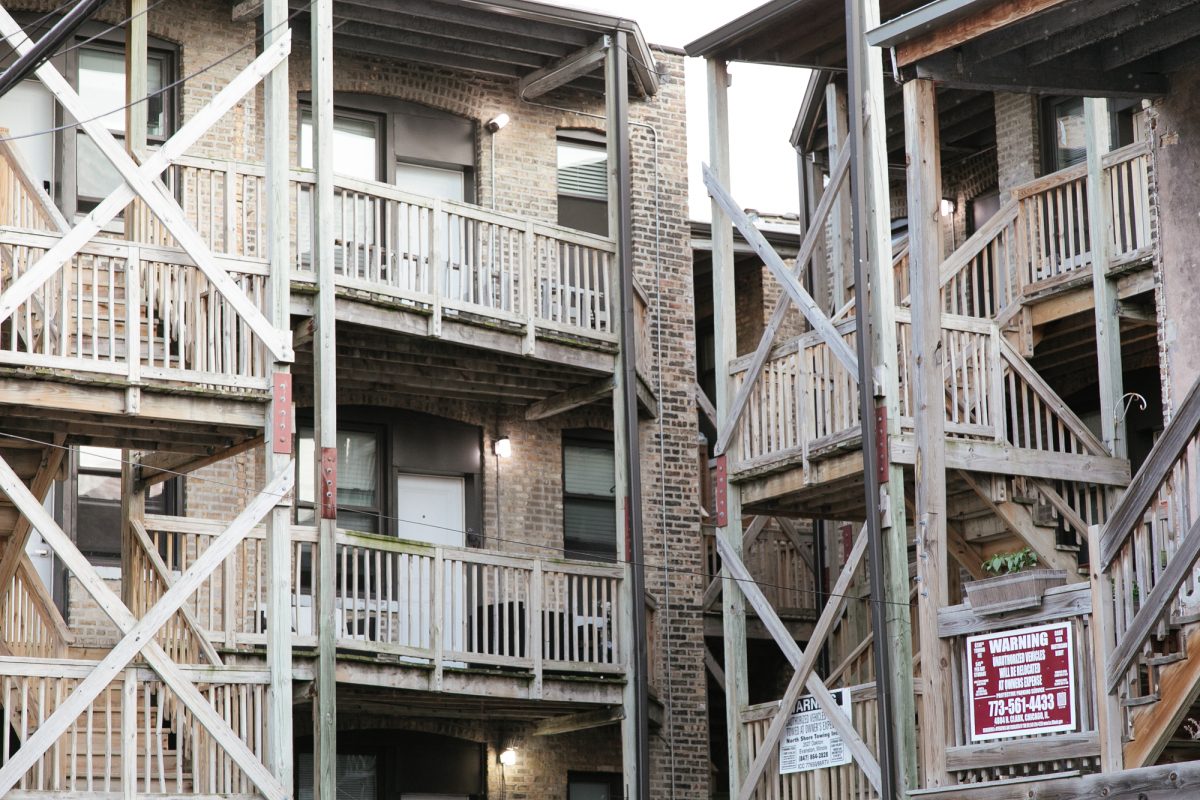
I chose the first photo we published for the project because it feels ubiquitous to Chicago. Sure, you could take a picture of the skyline or The Bean or the CTA, but something about the stairs and back porches felt more Chicago than any of those things. You can pretty much go anywhere in Chicago and know that a back alley and a back porch is going to be there.
Anthony Hernandez:
My favorite image was taken in West Englewood, but the photograph itself isn’t what makes it memorable. It was the teenagers from Latanya and the Youth of Englewood.
Waking up early on a hot, humid Friday morning to set up a fundraiser for their community shows a level of determination and selflessness. The best part of the experience was talking with them. Every conversation brought out a completely different personality and perspective.
That experience reminded me that photographing a community is not only about preserving a moment of history, but also to see a glimpse of what the neighborhood has to offer with its rich culture in a city like Chicago.
Kameron Clepper:
My favorite image from this series came early in the project on the Near South Side. The photograph features Chicago-based, multifaceted artist Terrence “Tee” Curtis airbrushing school buses behind a record shop in an alley.
The image captures the absurdity, uniqueness and downright symbolism of our city. What struck me most was the absurdity of the situation itself. Talent and skill on this scale, especially in the arts, are conventionally presented in a more boastful manner. Here, Curtis’ work was tucked away, still in its beautification process.
Opposed to the talents of this city flaunting itself, Curtis’ work was humble and practiced.
When I asked why he chose airbrushing as an outlet for expression, he said it was simply one of the many artistic tools he uses. He couldn’t put into words an identity that his art didn’t already speak for.
I approached the scene with my camera and was first confronted by the art. Then, I met the man. It was clear that he had been expressing himself this way for a very long time.
The school buses were adorned with different symbols and insignias of Chicago. Some were iconic to all of us, like the Chicago Bulls and our four-star flag. Others were local callouts, like the Blues Brothers and Harold’s Chicken Shack. Each bus didn’t just share a little bit of Chicago — it shared a little bit of Curtis, too.
This image encapsulates the family of images I have uncovered while tackling this city. It has made me fall in love with Chicago and its people a little bit more.
Copy edited by Venus Tapang
This story also appears in the Chronicle’s back-to-school issue, available Sept. 1.