
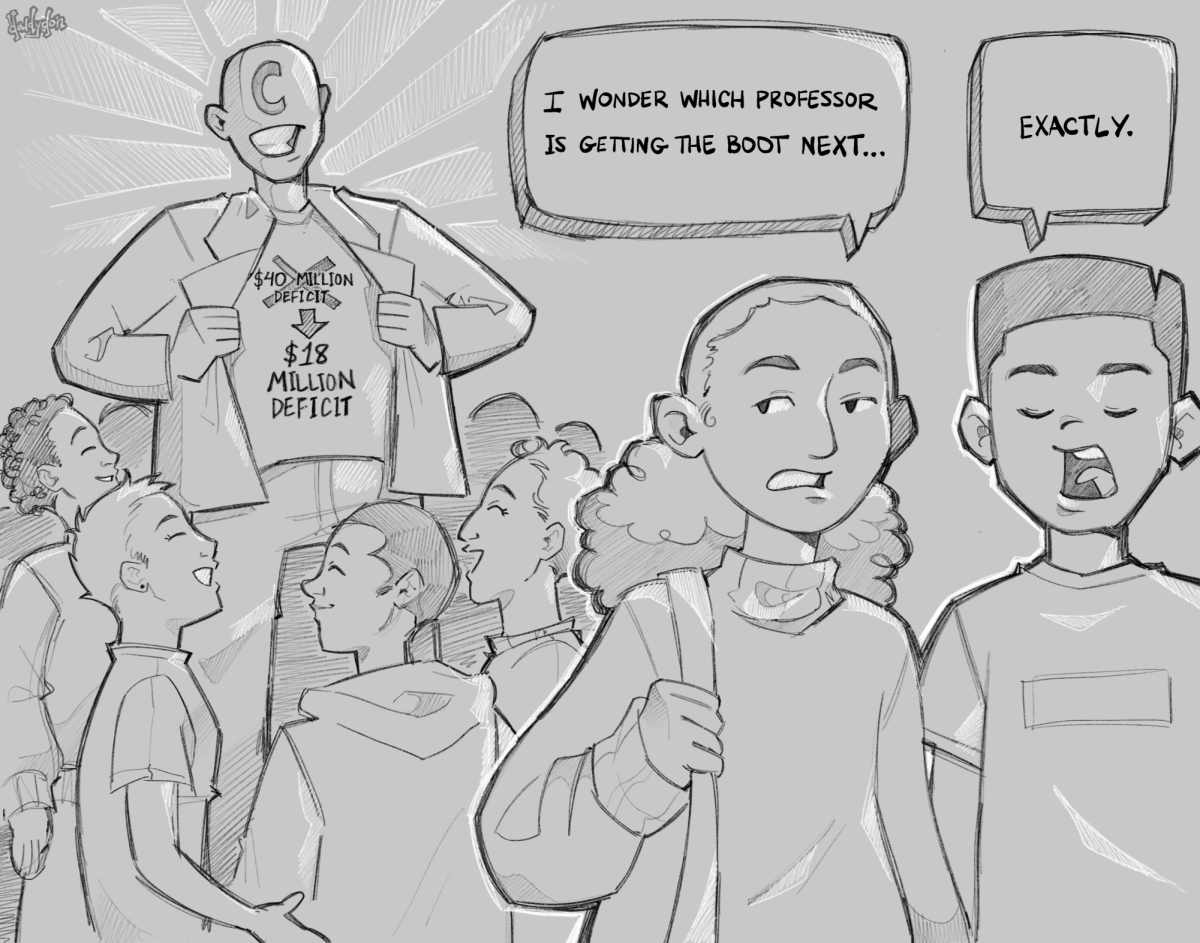
The college’s projected budget deficit is expected to fall from more than $40 million last year to about $18 million this fiscal year, a reduction of more than 50%.
After multiple rounds of layoffs and painful budget cuts, that progress is important, but it is difficult to celebrate when it comes at the expense of so many employees.
Since January 2025, 54 full-time faculty lost their jobs, and according to the staff union, 23 union employees have been laid off in the past five months. Columbia also laid off some of its most senior administrators.
For those who lost their jobs, a smaller deficit is unlikely to feel like a victory. But the reduction does show that the sacrifices made by employees have had a measurable impact on the college’s financial position.
At a Faculty Senate meeting last week, Jeffrey Bethke, interim chief financial officer, acknowledged the difficulty of the cuts.
“Almost all of the work was on the expense side, which makes it particularly painful for the college,” he said.
The projected deficit decrease does offer a glimmer of hope for Columbia’s future.
In the meeting, Faculty Senate President David Gerding, an associate professor in the School of Design, said, “I hear that as ‘There’s a realistic path towards Columbia getting back to long-term sustainability and long-term operation.’’’
Nonetheless, it raises questions about how the college will continue to address the remaining $18 million deficit given that it is dependent on tuition for revenue. Columbia welcomed about 1,100 new students for Fall 2026, up from 632 first-time, first-year students last fall. As this board has argued before, retaining these students with services and support will be key.
The college faces a difficult question about tuition discounts. Columbia relies heavily on tuition revenue, yet the discounts can be an important tool for attracting students. How the college balances enrollment growth with the amount of tuition it actually collects will be critical to its financial recovery.
Bethke told the senate that the college is still getting a handle on what the revenue side of things will look like.
“Enrollments don’t, in and of themselves, drive tuition revenue,” he said. “There’s also discount rates in the mix and the like.”
Realistically, we should prepare for further cuts, and if and when that happens, Columbia should be transparent about why, what alternatives were considered and how they will affect the students and employees who remain.
Financial stability matters, but so does maintaining the programs, services and people that make the college worth attending.
Copy edited by Camila Verzino
This editorial has been corrected to reflect that David Gerding spoke during the Faculty Senate meeting.