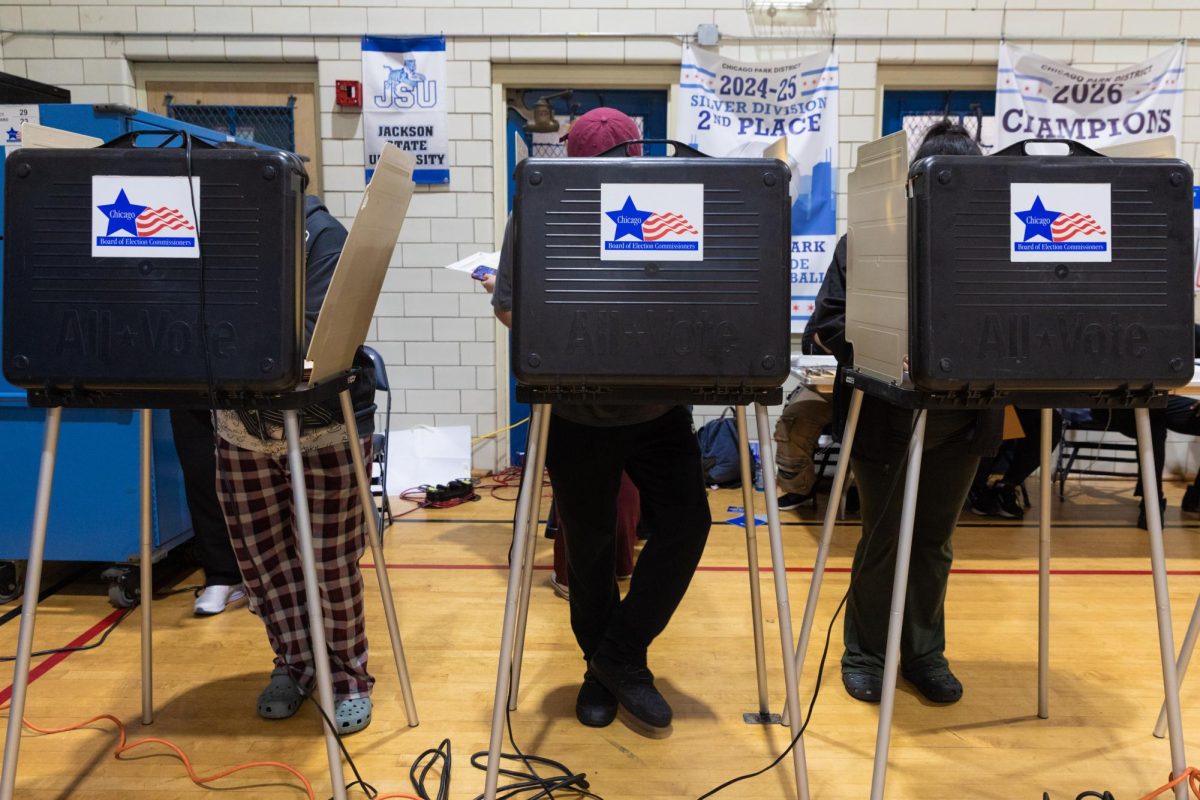
Nearly two weeks after the 2026 midterm elections, the outcome of Alaska’s U.S. Senate race remains undecided. In Mississippi, the Senate race wasn’t called until Wednesday, Nov. 11, after additional ballots, including provisional ballots, were counted.
These close races are a reminder that every single vote matters, which is why I was heartbroken to discover on Election Day that my vote had been rejected because my signature didn’t appear valid.
I am an out-of-state student at Columbia registered to vote in Arizona. I’ve voted exclusively by mail since the 2024 presidential election. Arizona has been considered a battleground state for the last few election cycles, and it’s not uncommon for elections to be decided by less than a percentage point.
Voting is also so important to me personally, not only as a woman, but as an Asian American immigrant. I was adopted from China in 2007 at 13 months old, making me an immigrant by law. Up until 1952, Asian immigrants weren’t able to obtain citizenship. So, of course, I vote in every election cycle.
In Arizona, a voter can confirm their signature up to five days after election day for a federal election and three days after any other election. Every state has its own laws surrounding this. In Illinois, the voter must appear before the election authority on or before Nov. 17 to show why their ballot is valid. Then, a three-judge panel then determines whether the ballot is valid after that.
After I logged in and discovered that my ballot had been rejected, I quickly started gathering the documents I needed to register and vote in Illinois, which allows same-day registration. Before I headed to the polls, I did one last check with Columbia Votes, the college’s nonpartisan voter registration organization, and discovered I could still confirm my Arizona vote remotely, which is what I did.
But I wonder how many votes were rejected without the knowledge of the voter. In the midst of all of the political text messages and spam calls in the lead-up to the election, the call to alert me of my vote rejection was filtered by spam and sent to voicemail.
In recent years, particularly under the Trump administration, voting access has become an increasingly contentious political issue. Efforts to restrict access to the ballot, along with understaffed early voting centers that cause long waits and a lack of language access for non-English speakers, make it harder for people to exercise their right to vote.
There’s so much at stake in every election. If election officials reject a ballot, voters should know about it in time to do something. With how close election margins are becoming, a vote shouldn’t disappear because a notification was never sent or missed.
Every voter deserves to know whether their vote counted. We can’t call ourselves a democracy if they don’t.
Copy edited by Venus Tapang