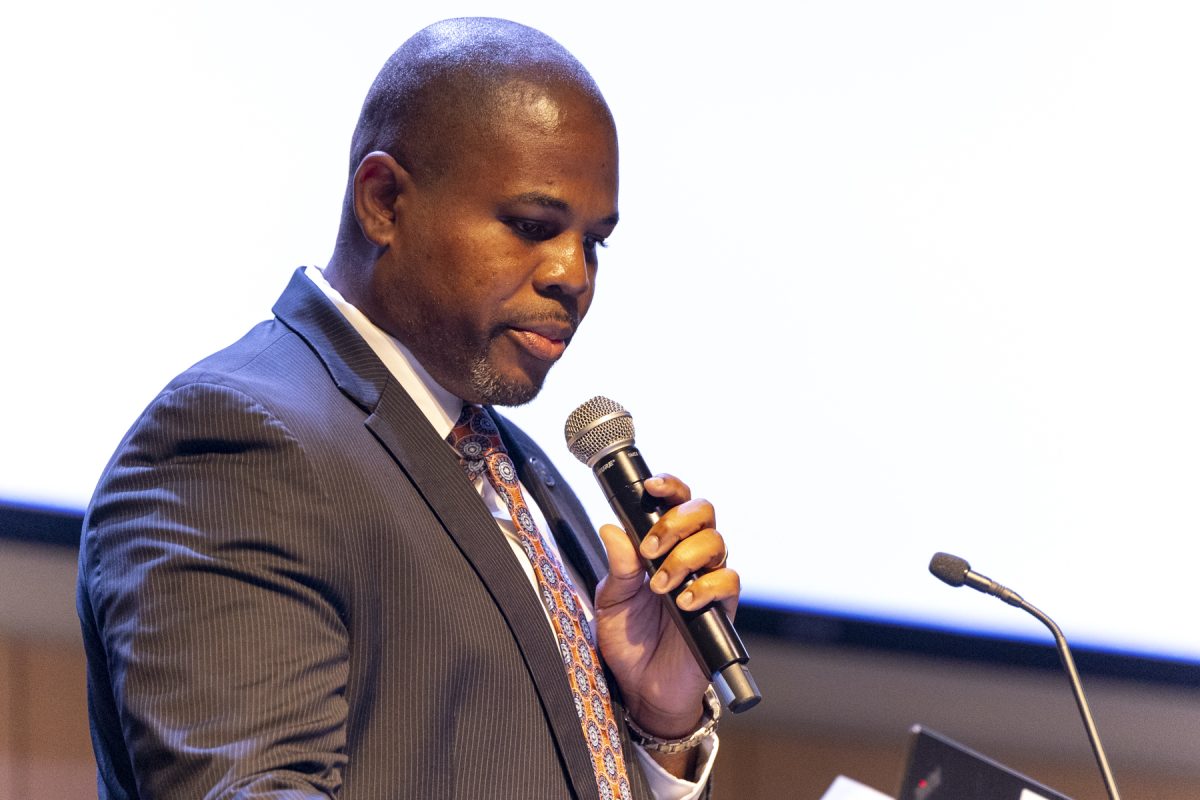
Emmanuel Lalande, who was tasked with growing enrollment at Columbia, has left the college about a year and a half after joining President and CEO Shantay Bolton’s administration.
Lalande, senior vice president of Enrollment Strategy and Student Success, confirmed his departure to the Chronicle in an email from his personal account on Wednesday, Nov. 4. “I wish Columbia College Chicago, its students, faculty and staff continued success,” he said, echoing a similar email he sent to his enrollment management and admissions team on Monday night, Nov. 2.
He is leaving the college after enrollment rebounded this fall following a historic drop in Spring 2026.
“We increased first-year enrollment by more than 70%, experienced growth in transfer and graduate enrollment, achieved a first-year retention rate of 71.2%, one of the highest in decades, and strengthened our collective commitment to student success,” he said in the email to the people who had reported to him. “These accomplishments are a testament to your hard work, resilience and unwavering dedication to our students.”
His departure comes less than two weeks before Columbia’s fall Open House, held in the middle of the busiest recruitment time for colleges and universities.
The Chronicle contacted the college’s Marketing and Communications office, which is handling media requests, to find out why Lalande was let go and what the plan was to replace him. A senior media relations manager said the office was unable to provide answers to the questions in time for publication.
Amelia Lutz, president of the Student Government Association, said Lalande impacted students in many positive ways.
“He had a very student-centered mindset and consistently was working to find ways not to push the costs of the college onto the students.”
He was on the court with students at the Cosmos Costume Dodgeball event during Wicked Week last week and played in a staff versus students volleyball match in May 2026.
Lalande joined the college in July 2025 shortly after Bolton assumed her position. He was a member of the president’s senior leadership team, which included Jerry Tarrer, senior vice president and chief operating officer; Laurent Pernot, vice president of strategic partnerships and civic engagement; and Adriel Hilton, Bolton’s chief of staff. Tarrer and Pernot were laid off in Spring 2026, and Hilton left the college in Summer 2026.
“Our two newest members bring bold ideas and national expertise, while our longstanding colleagues offer continuity and a strong understanding of Columbia’s culture,” Bolton said in a press release announcing her new leadership team.
Lalande was responsible for “strengthening recruitment, improving retention and enhancing the overall student experience,” according to the release.
At the State of the College in early October, Lalande announced that Columbia’s total enrollment increased from 3,958 in Spring 2026 to 4,265 students for Fall 2026. The one-year student retention rate, which measures the percentage of students who stayed from one year to the next, also reached 71.2%, the highest it’s been since 2018.
“More students are choosing Columbia,” Lalande said at the address. “More students are staying, and we are strengthening the support, engagement and experience that will help them succeed.”
But those enrollment and retention gains come as Columbia continues to address the financial problems that led to significant cuts in staffing and other expenses last year.
In explaining his departure, sources told the Chronicle that the Board of Trustees was concerned about how much money the college was losing by discounting tuition, which was part of his enrollment strategy.
Jeffrey Bethke, interim chief financial officer, told the Faculty Senate in September that Columbia is projecting an $18 million operating deficit for this fiscal year, down from the $40 million projected deficit it budgeted for the fiscal year that ended in August, as the Chronicle previously reported.
But he also said Columbia still had to tackle the remaining deficit, which he characterized as high relative to Columbia’s income, which primarily comes from tuition.
“That level of operating deficit is completely unsustainable and puts us all in a bind as it relates to having a path forward productively and sustainably,” Bethke said.
He pointed out that tuition discounting contributed to the financial imbalance.
“Enrollments don’t, in and of themselves, drive tuition revenue,” he said. “There’s also discount rates in the mix and the like.”
This is a developing story.
Copy edited by Venus Tapang