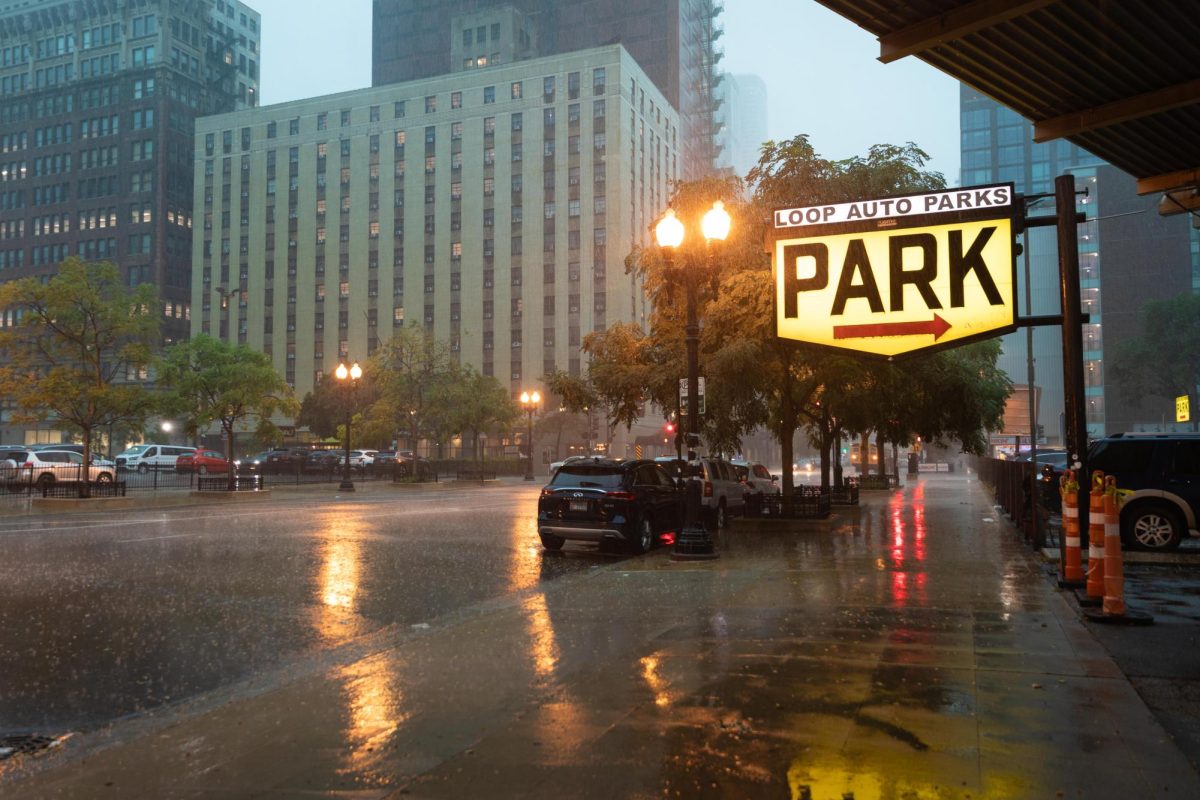
Severe storms with damaging winds and heavy rain swept through the Chicago area Tuesday morning, Aug. 11, prompting tornado warnings and sirens in the South Loop as the National Weather Service warned of potentially dangerous conditions.
The line of thunderstorms moved across the region in the early afternoon. Wind gusts exceeded 80 mph in some areas, and tornadoes were reported in the Chicago suburbs. The storms also caused widespread power outages and disrupted flights at Chicago’s two major airports.
At 11:05 a.m., Columbia received a tornado warning from Campus Security. The alert came roughly 30 minutes after tornado sirens went off and weather alerts were sent to mobile phones from the National Weather Service.
Northeastern Illinois University on Chicago’s north side sent emergency alerts at 10:44 a.m.
By the time Columbia’s alert went out, some students, faculty and staff across campus had already taken shelter in the basement or ground floor of their respective buildings.
WCRX Music Director Peter Andrews went from the first floor WCRX studio in the 33 E. Ida B. Wells building to the basement when he got a warning on his phone at 10:30 a.m., 35 minutes before the Columbia-issued response.
Columbia’s Campus Security tornado warning, which was sent via campus email, recommended not taking cover in an interior with any windows and advised that “campus basements are unsuitable for occupancy.”
“Columbia did outline what to do; however, they did it very late,” Andrews said. “I did feel safe knowing that we were able to go in a space that would protect us, but it was annoying and unsurprising that Columbia was very delayed in their response.”
The Chronicle emailed Watch Commander Shirley Brown seeking comment but did not get a reply. Manager of Operations Charrisse Musgrove did not respond to an email and a voicemail seeking information about protocol for emergency alerts by publication time.
Senior film and television student Maria Fernanda Freaner, who lives one block away from the Student Center, said that they were home with the blinds closed when they received a weather alert on their phone. They only saw the Columbia warning after the storm had passed.
“I just genuinely did not even acknowledge the Columbia alert, if I’m being honest,” Freaner said.
Alum Ava Harper, a film and television student who graduated in May, also lives in an apartment building close to campus where she said a similar storm took place a few years prior. Her apartment building did not have a safety protocol in place.
“I’ve heard a lot of people say that tornadoes wouldn’t be able to touch down or do damage downtown because of the buildings, and I think that misconception has affected how residential buildings handle storms,” Harper said.
Harper said that by the time she received the Columbia warning, the sirens had stopped, and the initial warning she received was ten minutes away from being lifted.
Columbia’s Campus Security lifted the precaution at 12:53 p.m.
This story has been updated.
Copy edited by Katie Peters