
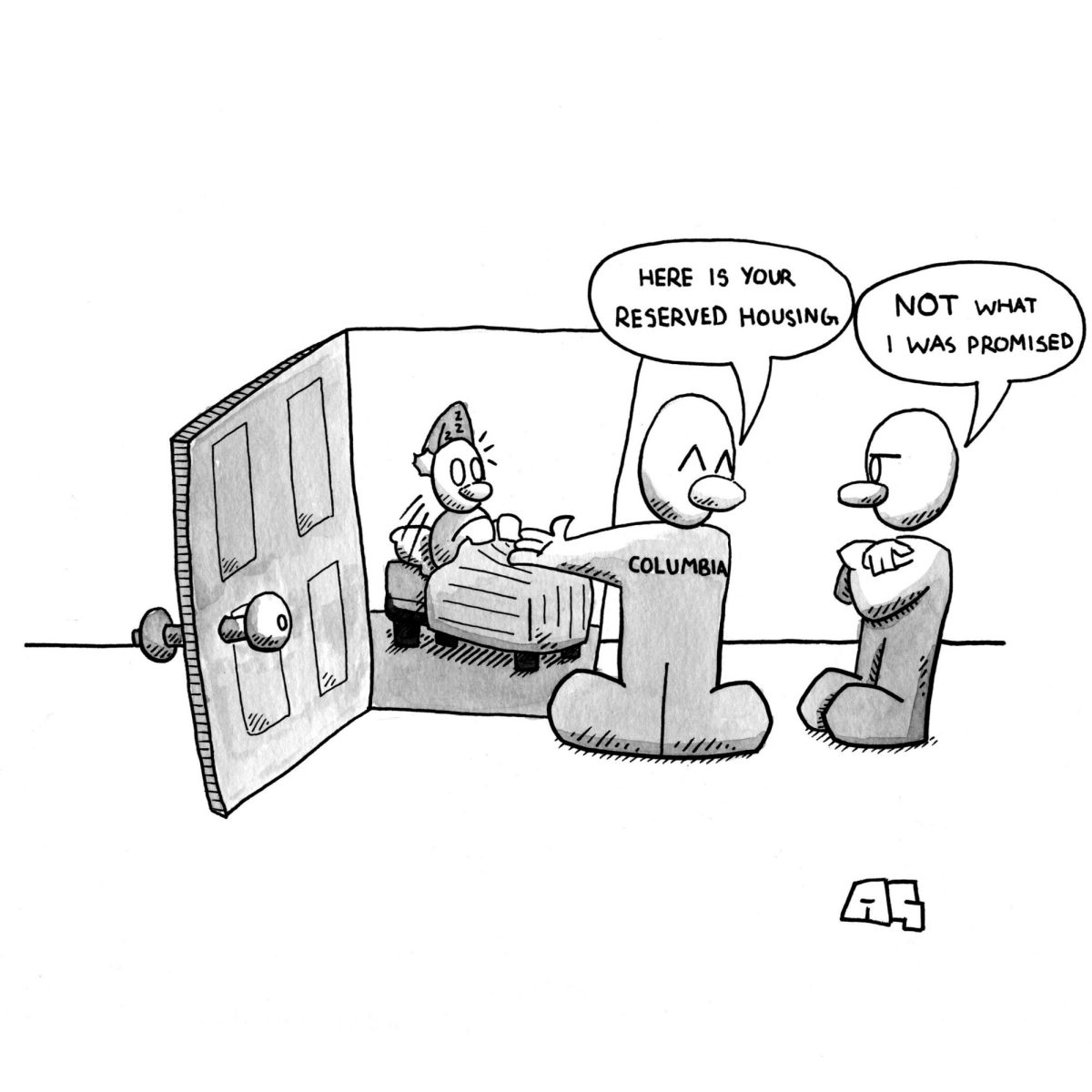
When Columbia announced it would not renew its leases with Dwight Lofts and The Arc at Old Colony, students were reassured there would be enough space. But when hundreds of students were later placed on a waitlist without clear guidance on what that meant, the process quickly became confusing and uncertain.
The college reduced on-campus housing capacity to just 550 beds for returning students across two buildings. Within two days of general room selection opening last week, all beds were taken.
College officials have since said they are working to secure additional housing and expect to accommodate all students who applied. Senior Vice President of Enrollment Strategy and Student Success Emmanuel Lalande told the Chronicle that all students would be placed, and the college sent a follow-up email to students with that assurance after the Chronicle reported that housing had filled and hundreds of students were waitlisted.
That is the right outcome. But it comes after days of uncertainty for students who completed every step of the process and still did not secure housing.
As Columbia faces a $40 million deficit and its lowest enrollment in over two decades, the administration must weigh long-term financial obligations against short-term student needs. Housing occupancy has dropped significantly since Fall 2021, so reducing underutilized beds is a reasonable decision.
The number of available beds mattered. But what mattered more was that students were not clearly told how quickly those beds could fill or what a waitlist would mean.
Lalande told the Chronicle that the college intentionally used the waitlist to know how many beds they would need to secure. Students were not made aware that this would be the case before room selection began, causing unnecessary uncertainty.
Before room selection started, students should have been made aware of the college’s strategy if it had expected to have a waitlist and started preparing for extra accommodation as early as January. Students should have been aware that housing availability could be contingent on spaces found after the initial selection process.
A waitlist can be part of the plan, but it must be properly explained before students rely on a process that no longer works the way they expect.
Student Government Association President Jenna Davis noted that communication has been more inconsistent than during previous housing announcements.
To the administration’s credit, Lalande committed that every student who applied for housing will be accommodated. That is the right outcome.
The school is in talks about possible one-year leases, having begun negotiations as early as January, indicating an understanding that the housing capacity must grow. That should have been communicated to students.
The college must release a firm timeline for resolving waitlist assignments well before the May 1 enrollment deadline and stay true to the guarantee that any student, continuing or new, who needs housing will get it.
Columbia had a future contingency policy so that students would not be left without options, but that should have been communicated to students. Additionally, gender-inclusive housing, which Lalande cautioned may not be available for all who request it, must be treated as a right and not an afterthought.
The beds filling up was a problem, but students not knowing what that meant for days was the bigger one. Columbia must not leave students in the dark about something as fundamental as where they will live again.
Copy edited by Katie Peters