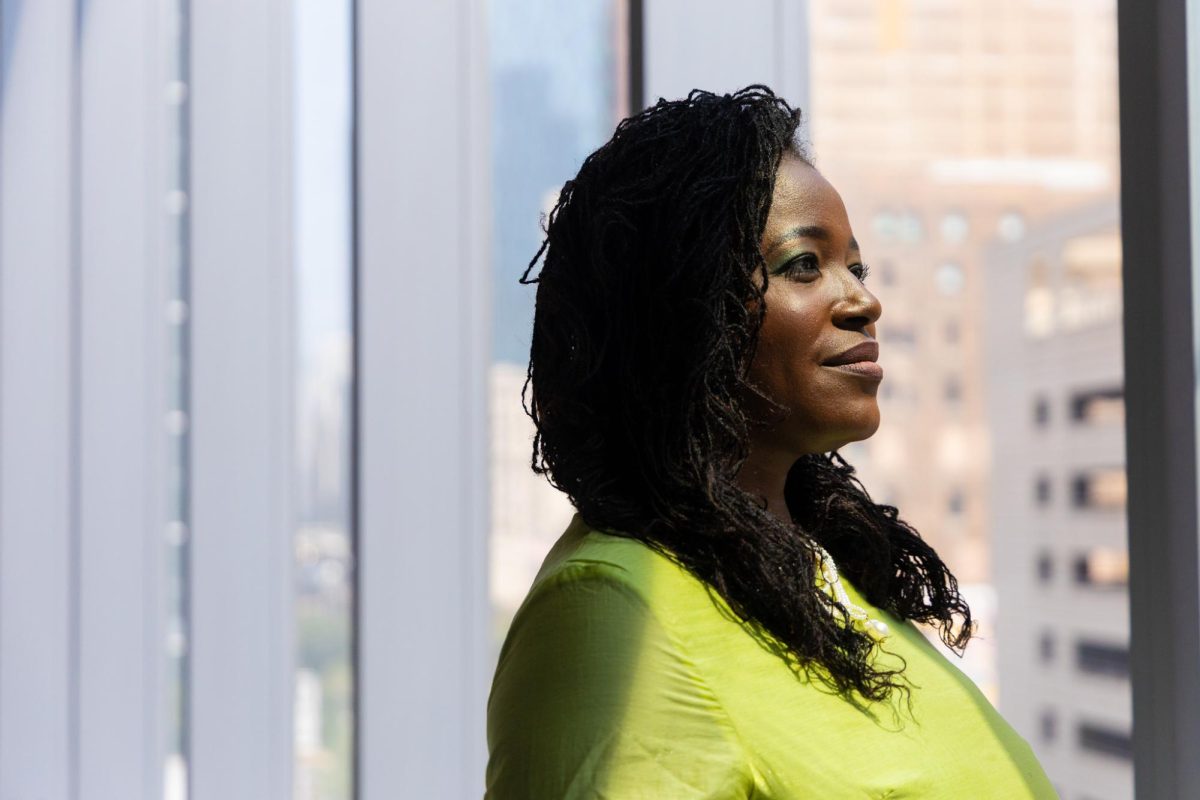
A year ago, Columbia President and CEO Shantay Bolton received a standing ovation for her vision for Columbia at her first all-college meeting. That optimism was tested during the school year by more layoffs, the lowest enrollment in two decades and a deficit that could exceed the $40 million budgeted figure.
As she prepares for her second all-college meeting on Tuesday, Aug. 18, the question is less about that vision and more about whether the changes made during her first year can move the college toward the stability and growth she envisions.
During an interview with the Chronicle in early August, Bolton reflected on her first year as president and what she hopes to accomplish during the next two years of the college’s three-year strategic plan.
“The first year, in some ways, has been more difficult,” Bolton said. “And in most ways, it’s been a wonderful experience and enlightening.”
Bolton, who came to Columbia from the Georgia Institute of Technology where she was executive vice president of administration and finance and chief business officer, said the financial pressures at Columbia were bigger than she had anticipated when she started in July 2025. The college’s deficit was about $40 million at the start of the Fall 2025 semester, nearly double from the year before.
Asked about whether the deficit is projected to increase again, Jourdan Thompson, the college’s interim executive director of Marketing and Communications, said the college budgeted for a $40 million operating deficit in FY2026, which does not end until Aug. 31. The final deficit will not be known until the year-end close and audit are complete. The college’s current forecast could exceed $40 million, she said.
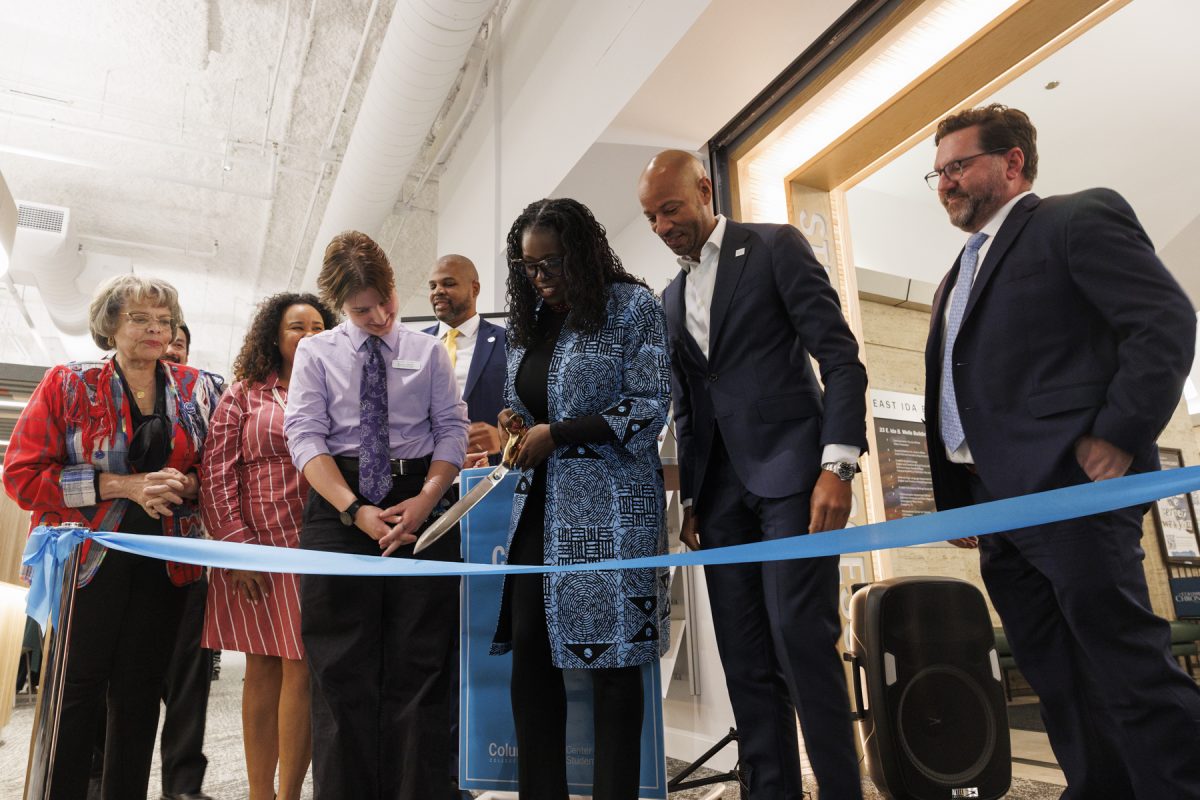
But Bolton said the college has made “meaningful progress,” pointing to the restructure of the schools this fall, a new Honors Lounge which opened last spring and a new grant-funded Center for Student Success that will be a hub for advising, financial services and academic tutoring.
Bolton also pointed to improvements in student support. She said Columbia’s DFW rate, the percentage of students who receive a D, fail or withdraw from a course, fell from more than 20% to less than 13% during the past year, which she attributed to identifying student challenges earlier and connecting them with resources. The college also issued more than 2,600 financial aid award letters earlier in the year.
“If I had to characterize my first year, I’d say it’s been rewarding, a bit extraordinary,” she said. “And it’s been one that has reinforced for me the importance of transformation at our institution and why the work of now matters.”
The changes Bolton points to come after several years of restructuring at Columbia. The college has faced multiple rounds of layoffs and continued enrollment declines as it has worked to reduce costs and address its financial problems. Bolton said those challenges did not begin with her presidency but have accumulated over time.
In his State of the College address in Spring 2024, former President and CEO Kwang-Wu Kim announced a hiring freeze in response to a $38 million deficit that had doubled after Columbia’s historic part-time faculty strike in Fall 2023. Through a series of cost-cutting measures, the deficit was reduced to $17 million by March 2025. But in her State of the College address in October, Bolton announced, to audible gasps from the audience, that the deficit had grown to $40 million, which she attributed to enrollment declines.
Like many colleges and universities, Columbia has struggled with enrollment amid broader demographic and financial pressures facing higher education. Enrollment in Spring 2026 fell to 3,958 students, the lowest in two decades, although the college expects it to hit about 4,000 students in the fall, the Chronicle previously reported. Bolton told the Chronicle that she wants Columbia’s enrollment to be over 4,500 students in three years.
The college has responded to enrollment declines and the increased operating deficit by cutting programs and eliminating faculty positions. Since January 2025, the college has laid off four senior administrators and 54 full-time faculty members, the Chronicle reported in May 2026. In June, Vice President of Institution Strategy and Chief of Staff Adriel Hilton left after less than a year at the college.
There is no timeline for filling the empty senior administration positions, and some of the roles may not stay the same from when the college was a larger institution, she said.
“I can’t guarantee the titles will be the same one for one, but I’m looking at the work and trying to make sure that when we go back to market, that we’re hiring exactly the skill set we need for where we are and where we want to go, not for where we’ve been,” she said.
As Columbia works to address its financial problems, questions remain about what the college’s future could look like. When asked whether the college has considered a merger, Bolton said she is open to exploring one if it would benefit students.
“I am very open to whatever I need to do to fight the good fight to ensure we are viable and around,” she said. “So I have not been committed to any one direction, but what I’ve said consistently is that we’re going to explore any opportunity that gives our students more access.”
Bolton announced her three-year strategic plan in the spring to improve the college’s finances and long-term sustainability through enrollment, Columbia’s brand and philanthropy.
After using her first year to assess the college’s needs, Bolton plans to execute her plan starting this fall, she said.
“I’m looking forward to this year, us really doubling down on the execution side of that,” she said. “So it’s one thing to have the big ideas. It’s another thing to bring them to life and make sure that we’re doing it and doing it well.”
One part of that plan is a restructuring of Columbia’s academic schools. The college will keep its eight-school structure while shifting oversight to five deans, replacing the current system of 10 school directors.
More details about the college’s plans for the coming year are expected to be announced at Tuesday’s all-college meeting, now being called a “summit.”
The college plans to restart the search for a provost in the fall, after the national provost search in the spring failed to find a replacement for Interim Provost and Senior Vice President Suzanne McBride. She will continue to serve in the role through the 2026–2027 academic year, Bolton said.
“It’s rare, but unfortunately, sometimes searches don’t advance forward with a candidate,” she said. “We learned some things about what we need as an institution and the type of provost that we want to ensure that we have.”
Bolton’s vision for Columbia’s future centers on growth, financial stability and stronger pathways from the classroom to careers. But her first year also gave her a chance to reflect on how she wants to lead the college.
If she could do one thing differently over the course of the past year, it would be to show up in more student spaces, she said.
“It took me a while because I didn’t feel like I was worthy to be in the spaces with the students because I’m not a natural creative. But I would have given myself more grace because creativity, I’ve learned from Columbia students, comes in different forms, and it shows up in different ways. And you don’t have to express it the same way as the person to your left or right.”
Looking ahead, Bolton said she sees the next two years as a period of building toward greater stability.
“I see us as an institution that has a strong student body of over 4,500 students of creative scholars,” she said. “I see us as an institution who has a strong muscle for increasing our career from classroom to career pathways for students. I see us being one of the premier creative arts and media institutions in the Midwest, but also being an institution known for how we’ve increased our impact globally with how we’ve positioned our students to take their art forms to other places around the world, and to express that. I also see us in three years being in a clearer financial state than we are today.”

Copy edited by Katie Peters