Latino communities have shaped the United States through their contributions to the workforce, higher education, arts and media, according to speakers at a Hispanic Heritage Month panel.
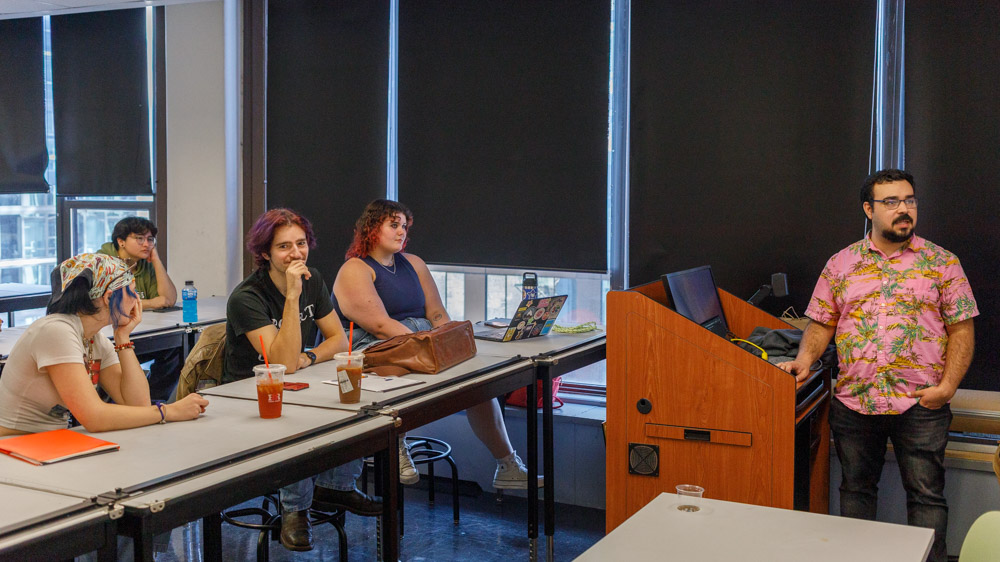
“We think about agriculture and more hands-on jobs, but you don’t really think about the STEM jobs and the science jobs,” said Maria Marimoto, a first-year film and television major. “It’s really important for people to understand that Latinos have a place in all aspects of our society.”
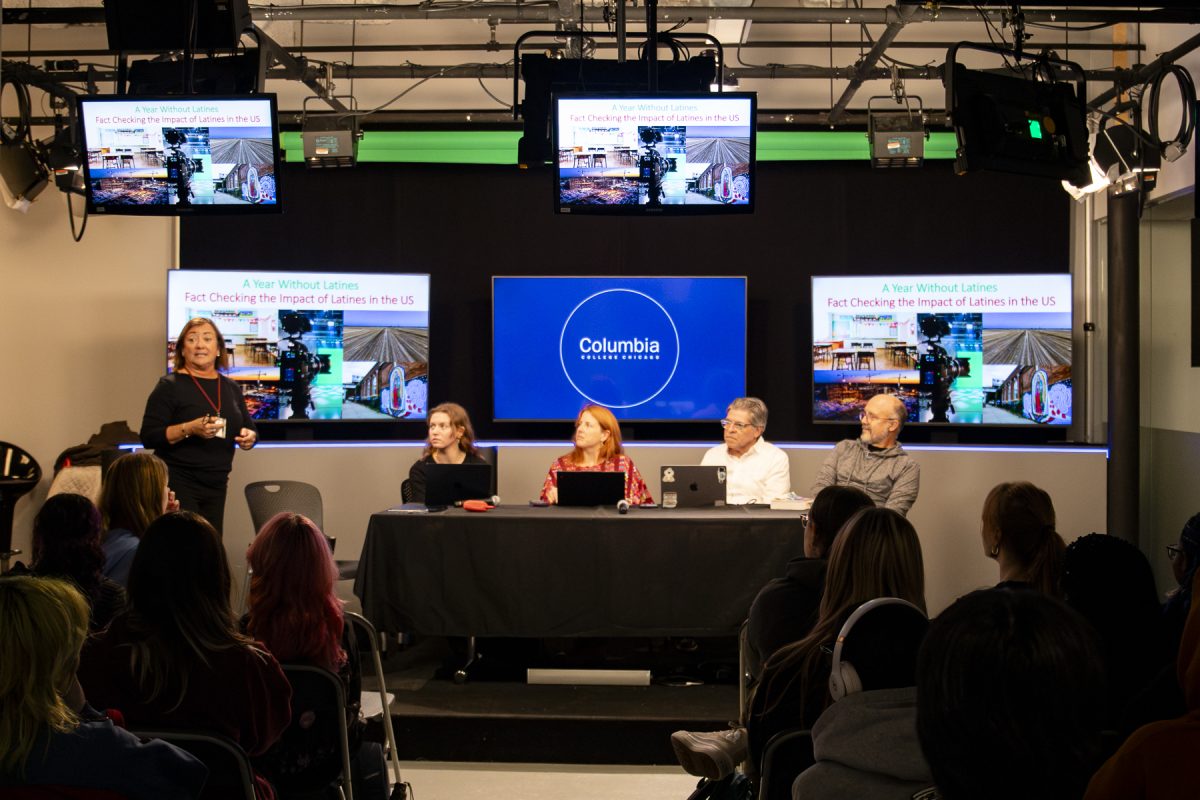
Marimoto was among those who attended a panel on Wednesday, Sept. 30, which explored the contributions of Latino communities in the U.S. It was the second of three Hispanic Heritage Month events organized by the School of Communication and Culture. The final event, a curated tour of Latino art at the Art Institute of Chicago, is scheduled for Thursday, Oct. 1.
The Wednesday panel discussion was organized around a hypothetical question: “What would happen if Latine people disappeared from the U.S. for a year?”
Marcelo Sabatés, professor in the School of Communication and Culture, said the idea was inspired by the 2004 film, “A Day Without a Mexican,” directed by Sergio Arau, which depicts the disappearance of Mexican people from California.
Sabatés said the panel used the premise of the film to examine the role of Latino communities through demographic and economic data.
“The movie is very telling, but it’s qualitative,” Sabatés said. “It doesn’t use numbers or anything. So we could do a more quantitative version of that movie.”
Latino gross domestic product, which measures the values of goods and services, reached $4.1 trillion in 2023. This was up from $3.6 trillion in 2022, according to a report from researchers at California Lutheran University and the University of California, Los Angeles. Latino consumption reached $2.7 trillion, which was larger than the entire economies of Texas and New York combined in 2023.
Despite representing only 19.5% of the U.S. population, Latinos were responsible for 30.6% of the growth of the national GDP since 2019, researchers found.
Sabatés examined what the U.S. workforce and economy would look like without Latino communities, pointing to their role in the labor force, entrepreneurship and consumer spending. He also connected the growth of Latino communities across the country to migration and changing labor demands.
Those contributions extend beyond the workforce. The panel next turned to higher education, where Skye Rust, Columbia’s senior director of international admissions and global partnerships, discussed the growing number of Latino students entering college and the challenges that remain after admission.
Hispanic students accounted for nearly 30% of Columbia students in Fall 2025, according to the college’s Office of Institutional Effectiveness. The college qualified as a Hispanic-serving institution in 2022 when the percentage of Hispanic students reached 25%. Institutions are considered Hispanic-servicing if at least a quarter of their student body is Hispanic, the term used by the federal government for people who originated from a Spanish-speaking country, according to the Hispanic Association of Colleges and Universities. There are more than 600 colleges and universities in the U.S. and Puerto Rico that qualify as an HSI, the Chronicle previously reported.
Rust said access to higher education is only one part of the issue. Colleges also need to consider how they support students once they arrive on campus.
“It’s not enough to show students and admit students to come in,” Rust said. “It’s how we can serve them and how we can make sure they stay.”
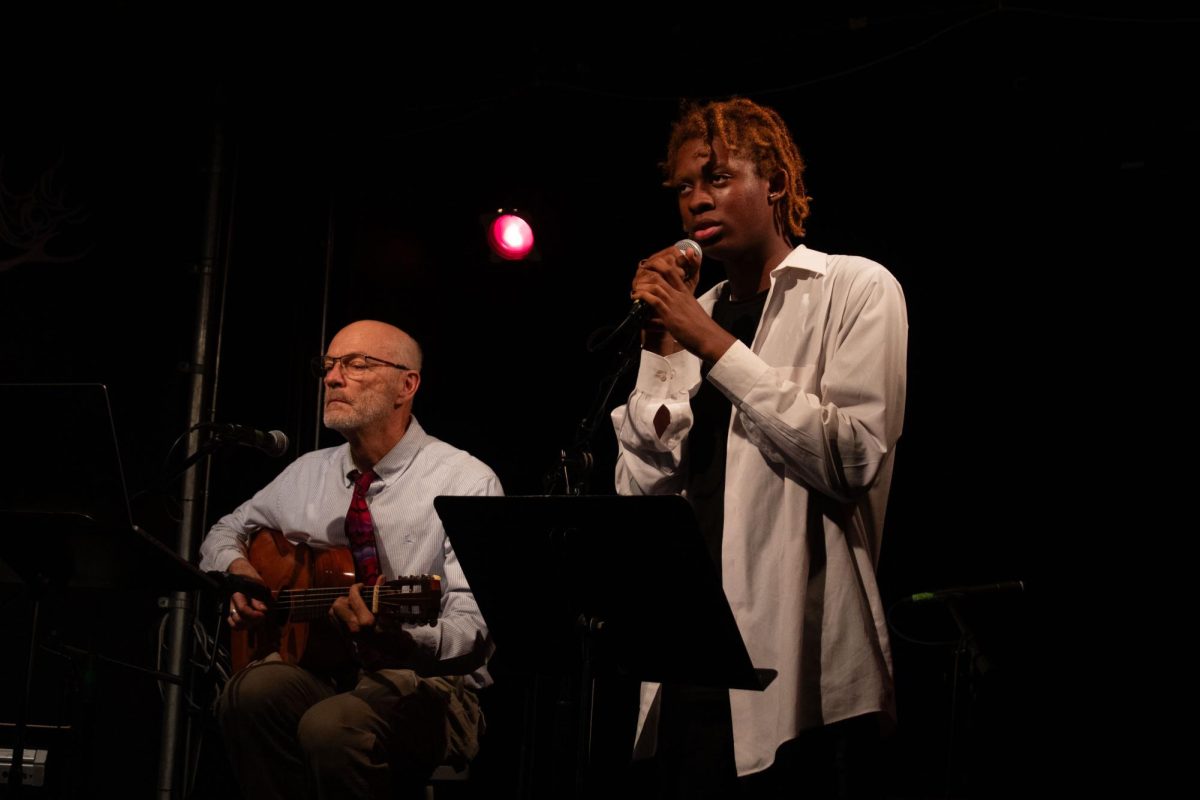
Carmelo Esterrich, professor in the School of Communication and Culture, discussed the relationship between Latin American and U.S. music, focusing on genres such as mambo, salsa and reggaeton.
Esterrich said migration played an important role in the development and spread of those genres, creating musical connections between communities in the U.S., the Caribbean and Latin America.
For first-year acting for stage and screen major Vance Casey, the music discussion was one of the most memorable parts of the talk.
“I thought it was super cool how the border is between America and Latin America with music, and how fast it travels and how collaborative it is,” Casey said.
The panel also addressed representation in journalism and the importance of bilingual media.
Sofía Oyarzún, a photojournalism major, said reporting can help readers connect larger issues to people in their own community
“It humanizes stories. It makes us more connected to our community to see who it is affecting and the specificities of that,” said Oyarzún, a bilingual journalist who is the editor of La Crónica, the Spanish-language section of the Columbia Chronicle.
Sabatés said increasing awareness of Latino contributors was one of the main goals of the event.
“I think it’s the idea that, despite what is shown in some media and public discourse and political discourse, there is a growing impact,” Sabatés said. “This country couldn’t survive, basically, as an important country without the contribution of Latinos.”
Sabatés pointed to student organizations and events, including the Latino Alliance and Latifest, as opportunities for students to participate in and learn about their community.
Marimoto said the discussion was valuable for both Latino and non-Latino students.
“It’s really a good opportunity to educate students that are both part of the Latin community and not part of the Latin community,” Marimoto said, “about the importance and significance of being Latin in both the Chicago community and just the world in general.”
Editor’s Note: Panel member Sofía Oyarzún, a senior photojournalism major, is the Chronicle’s La Crónica editor and oversees its bilingual coverage.
Copy edited by Venus Tapang