Children raced between activity tables and families gathered in red, white and blue as visitors streamed into the newly reopened “Facing Freedom” exhibit at the Chicago History Museum on the Fourth of July.
As the nation celebrated its 250th Independence Day on Saturday, July 4, the museum invited visitors to look beyond the country’s founding and explore how generations of activists have shaped the meaning of freedom through civic engagement and social movements.
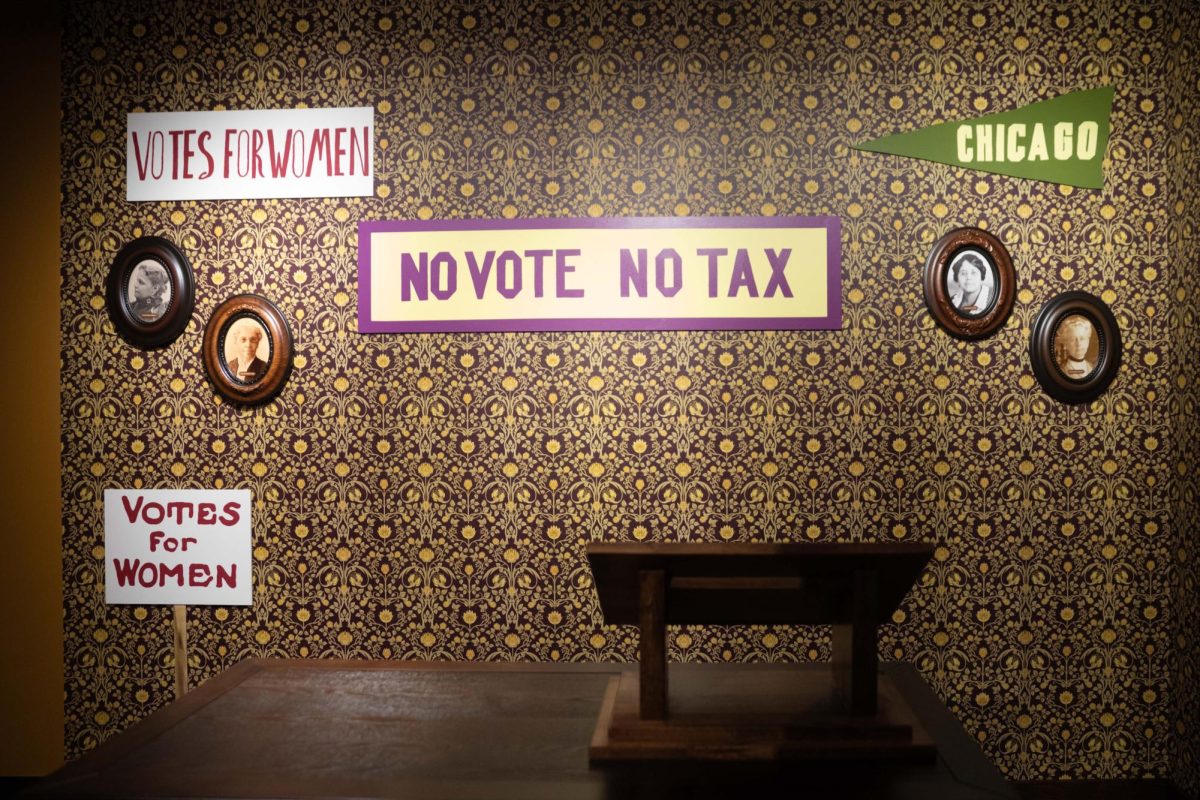
The exhibition examines moments of activism through stories rooted in Chicago. New sections highlight abolitionists and Chicago’s house music movement, while returning displays explore topics on women’s suffrage, the incarceration of Japanese Americans and Native American activism.
“Freedom and what people are struggling for is much less about the founding documents and much more about the individual and collective activism,” said Peter Alter, chief historian and director for the Studs Terkel Center for Oral History at the Chicago History Museum.
This perspective guided much of the exhibit’s redesign. Rather than revisiting stories students are more likely to encounter in textbooks, the Chicago History Museum staff focused on the stories that are often overlooked, while strengthening Chicago’s connection to national movements, he said.
For Lewis Nowak, who lives in the Avondale neighborhood of Chicago, the exhibit offered a deeper dive into Chicago’s history, with new details on abolitionism and Native American activism.
Nowak was looking at the abolitionist display, which featured spoons gifted by Frederick Douglass to abolitionists Mary Richardson and John Jones.
“There’s a lot of great history in this country and there’s a lot of bad too, but Chicago has always been a place where people from different backgrounds can come together and create something greater,” Nowak said.
The new installation has been in the works since December, from planning, research and installation. Throughout the gallery, visitors were invited to write, reflect and engage with questions about speaking out, organizing and defending the communities around them.
“They’re such important Chicagoans and I feel like it’s a story everyone should know,” said Heidi Moison, who works in the museum’s education department. “I’m really happy to bring their work in abolitionism and women’s suffrage more to the forefront.”
The refreshed exhibit also added bilingual English and Spanish interpretation and new interactive displays that encourage visitors to consider their own role in shaping their communities.
The changes to the exhibit reflect the museum’s effort to engage younger audiences.
Alter said that the reason behind creating a new exhibit instead of updating the original one was to engage people beyond the traditional American stories.
“If I don’t find it interesting, I don’t expect a 12 year old to either,” he said.
On a day dedicated to celebrating the nation’s founding, Alter said he hopes visitors leave with a broader understanding of the people and movements that have continued to shape the meaning of freedom.
“I think it is our job as historians to push back,” Alter said, referring to efforts to simplify or erase parts of American history. “We encourage everyone to be their own historians.”
The “Facing Freedom” exhibit is included with general admission to the Chicago History Museum. Columbia students, faculty and staff receive free admission with a valid college ID. The museum, located at 1601 N. Clark St., is open 9:30 a.m. to 4:30 p.m. Tuesday through Saturday and 12 to 5 p.m. on Sunday.
Copy edited by Venus Tapang