
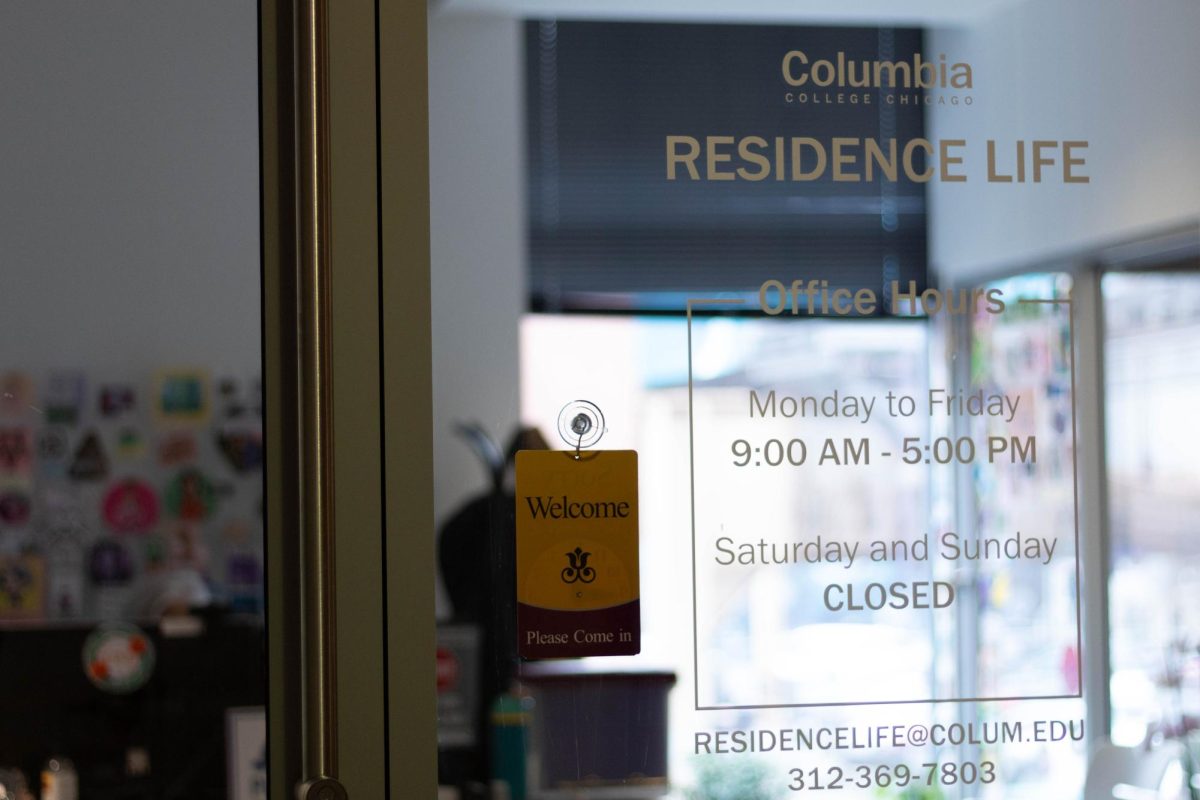
After the college reduced on-campus housing capacity this spring, demand from returning students exceeded expectations almost immediately, frustrating students and parents, and leaving many without confirmed housing for the fall.
When the college decided earlier this year not to renew its lease with Dwight Lofts or The Arc at the Old Colony after the spring semester, citing declining enrollment and financial concerns, housing officials assured students that there would be enough space for Fall 2026 at two remaining residence halls.
But within two days of general housing room selection opening last week, all 550 beds reserved for continuing students were taken. According to Residence Life, 40% of the 919 beds have been set aside for new students.
Continuing students who didn’t get a bed were waitlisted for room assignments despite promises from the college that all students would be accommodated with just two dorm options remaining, 30 E. Balbo Dr. and the University Center at 525 S. State St., which Columbia shares with DePaul University and Roosevelt University.
“The waitlist is in constant fluctuation based on applications, cancellations and various changes,” Director of Housing and Residential Experience Michelle Hunter-Lancaster told the Chronicle in an email.
She said there were 724 returning students that have applied for Fall 2026 housing as of April 7.
In December when the Chronicle learned that The Arc at Old Colony lease would not be renewed after Spring 2026, Hunter-Lancaster told the Chronicle that “we expect to be able to accommodate all students seeking housing.”
In February, the college confirmed that after Spring 2026, it would not renew its lease with Dwight Lofts, the residence hall that houses first-year and transfer students, the Chronicle previously reported.
Columbia’s enrollment has been declining for years and hit its lowest level in more than two decades this spring, although Interim Provost and Senior Vice President Suzanne McBride told students at a recent town hall that the college is planning for a larger incoming first-year class in the fall.
Sources told the Chronicle that deposits from new students were up compared to this time last year.
Campus housing occupancy for Fall 2025 was 1,426 students, down about 25% from Fall 2021, when roughly 2,000 students lived in Columbia-affiliated housing.
Margarete Noonan, a junior English major, said that although filling out the paperwork for housing went smoothly, she is “incredibly disappointed” that the college only notified students about being over capacity after applications were complete.
“The glaring issue is Columbia’s inconsideration of its students and willingly entering another school session with insufficient housing,” Noonan told the Chronicle. “I am incredibly stressed and bereft. I have no idea where I will be living next year.”
Residence Life said the decision to reduce the college’s leased housing was made by senior leadership and the Board of Trustees, “after careful consideration of long-term enrollment trends and financial obligations.”
“The college remains committed to meeting as much student demand for on-campus housing as possible,” according to a statement from Residence Life emailed to the Chronicle through the college’s spokesperson.
To accommodate more students between the two dorms, the college no longer offers designated floors for honors students and students 21 and older. The option of roommate groups, which allowed students to choose roommates when applying for housing, was also suspended.
Students were still able to choose between gender-inclusive and general housing on the Fall 2026 housing applications.
Room selection access times were assigned based on students’ preferred housing option and how quickly they turned in their secondary application at the beginning of March.
Gender-inclusive housing room selection opened on March 17 with varying access times, while general housing room selection occurred between March 31 and April 3.
On April 2, Columbia’s Housing and Residential Experience sent an email notifying applicants that all available bed spaces had already been selected, and anyone who did not secure a spot yet would be placed on a waitlist for gender-inclusive or general housing, depending on their preference. Positions on the waitlists are determined by the same room selection access time criteria.
Sophomore journalism major Zadyn Higgins is an out of state student from Maryland. He applied for gender inclusive housing and was waitlisted before his time slot to select a room had even arrived.
Higgins said that he only received information about his position on the waitlist after calling the Housing and Residential Experience office to ask for an update.
“They let me know that there were 40 people on the gender-inclusive housing waiting list, and I was number 12,” Higgins said. “They told me that they could not guarantee I would get a room, and the only way that I would get off of the waiting list is if 12 people gave up their rooms.”
Higgins explained that he and his current roommate have begun looking for private leases so that they can continue attending Columbia next year.
“It has been very stressful and hard to focus on classwork and homework,” Higgins said. “There’s this looming sense of, ‘what if I don’t get housing?’”
As spots become available, the Housing and Residential Experience office has been offering beds to students on the respective waitlists.
Previously, the college has required students to submit a down payment to secure housing for the upcoming academic semester. This year, students seeking to live on campus for Fall 2026 will be required to enroll in at least one course for that semester by May 1 in order to remain eligible for their housing assignment.
“While enrollment has always been tied to housing eligibility, this deadline reflects a more clearly defined ‘enforcement’ point to ensure that housing resources are allocated to actively enrolled students,” according to the email from the college.
“At the current moment, it is not financially responsible to enter new, multi-year lease obligations. As such, we are in conversations to execute one-year leases.”
SGA President Jenna Davis said many students were “very worried” about these changes and had felt the communication was more inconsistent than when the college announced the nonrenewal of The Arc at Old Colony lease.
“There is always room for the college to communicate further, especially in times of unknown,” the senior fine arts major said.
Davis added that SGA relayed student concerns about housing to the administration, resulting in an open conversation with Emmanuel Lalande, senior vice president of enrollment strategy and student success, that she said helped ease some anxieties.
“As this is such a recent change, I do not have all of the facts,” said Davis, “but I truly believe the college will do everything in its power to make sure the students living on campus have their full support.”
Are you a student who has been waitlisted for on-campus housing? Email the Chronicle at tips@colum.edu.
This story has been updated to include a statement from Director of Housing and Residential Experience Michelle Hunter-Lancaster.
Copy edited by Venus Tapang and Katie Peters
Resumen en español
Columbia se ha quedado sin camas para los estudiantes que regresan para el otoño de 2026 días después de abrir el proceso de selección de habitaciones, tras una reducción en su capacidad de alojamiento derivada de la eliminación de dos residencias estudiantiles.
Algunos estudiantes quedaron en lista de espera como Margarete Noonan, estudiante de tercer año de inglés. Dijo que se siente “increíblemente estresada”, porque no sabe dónde vivirá el próximo año.
“La lista de espera se encuentra en constante fluctuación, en función de las solicitudes, cancelaciones y varios otros cambios”, dijo Michelle Hunter-Lancaster, la directora de vivienda y experiencia residencial en un correo electrónico dirigido al Chronicle.
Ella dijo que, al 7 de abril, 724 estudiantes que volverán han solicitado vivienda para el semestre de otoño de 2026.
Resumen por Anthony Hernandez y Guadalupe Loza-Sanchez
Editado por Brandon Anaya