THE SUSTAINABILITY ISSUE
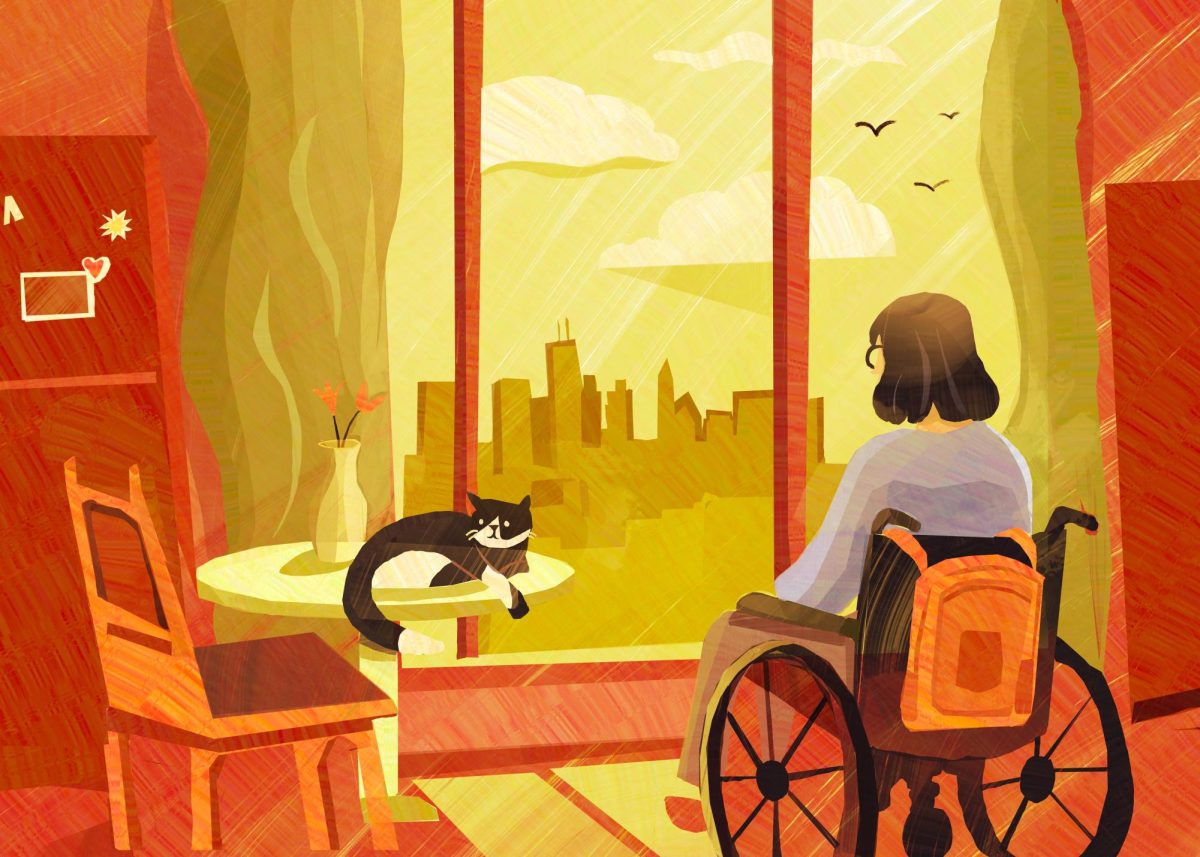
Last March, as the tornado sirens rang for the third time that month, most residents of my apartment immediately headed for the lowest floor. I sat, heart racing, alone in my wheelchair at the top of multiple flights of stairs, wondering if or how I would get down safely.
This fear is the reality of trying to navigate emergency situations in a body that emergency plans were not made to serve.
As climate disasters become more frequent and more severe, the gap between who gets out and who gets left behind is becoming a matter of life and death.
People with disabilities are up to four times more likely to die in climate disasters than the general population, according to the Harvard University Center for the Environment. Yet less than a third of countries that signed the 2015 Paris climate agreement even mentioned disabled people in their long-term climate plans, according to The Associated Press.
The harm is targeted as power outages disable medical equipment that people rely on to survive. Evacuation routes are commonly inaccessible. Environmental factors like smoke, heat, flooding and degraded air quality don’t just impact disabled people, but they exacerbate chronic conditions quickly. I feel bad air quality days before I even check the alert. The chest tightness starts, then the cough, then the wheezing. A poor air quality day can shut down my entire day and cause my body to need extra medications and treatments in order to breathe.
Climate change is making those days more frequent.
The financial cost compounds the physical one. Extra medications, unplanned medical visits and the inability to work on high-symptom days accumulate into a burden that is invisible to people who do not live with it. For many disabled people, climate change is not a future economic threat — it is an ongoing drain on already strained resources, one that widens the gap between disabled and non-disabled people with every season.
History shows time and time again that disabled bodies are on the line in climate disasters. During Hurricane Katrina in 2005, emergency communications were inaccessible to people with certain disabilities, and when evacuation buses were available, they often lacked wheelchair ramps, leaving disabled individuals to wait, according to the Administration for Community Living
In 2017, when Hurricane Maria hit Puerto Rico where roughly one in five adults is disabled, around a third of reported deaths were linked to delayed and interrupted medical care. These deaths are a result of ignoring disabled people when disaster planning.
Part of what makes these crises so exhausting is that disabled people are rarely visible in climate conversations. Mainstream climate coverage does not think about evacuation accessibility, air quality impacts on chronic illness and how disabled people require different things in climate scenarios. When disabled bodies are absent from the conversations, solutions ignore our needs.
Moving forward starts with the inclusion of disabled voices at the decision-making level. Disability justice advocates have been fighting for disabled people to be a part of climate and emergency policy conversations.
Inclusion cannot be performative. Climate town halls are regularly held in venues that are not accessible. National climate plans are drafted without disability organizations at the table. When disabled people do show up to these spaces, they are often consulted after decisions have already been made and brought in to review a final draft rather than shape the conversation from the start. This must change.
In preparation for emergencies, first responders should know who in a community depends on electricity to survive so that care can be targeted. Emergency alerts should be accessible and able to reach people with hearing loss, vision impairment and cognitive disabilities.
Longer term climate legislation at every level of government should be required to undergo a disability impact review before passing. The same way environmental assessments evaluate harm to air and water, policymakers should be required to evaluate how proposed climate policies serve or fail to serve people with disabilities before those policies are enacted.
The climate crisis is not a problem for the future, it is currently hitting communities, and for many disabled people, it has been a crisis for a long time. Every heat wave or air quality drop — every tornado or hurricane warning – is a test of whether our communities consider our lives to be something worth protecting.
Copy edited by Katie Peters