THE SUSTAINABILITY ISSUE
Data centers, the physical infrastructure powering artificial intelligence and cloud computing, are expanding rapidly across the Chicago area. Their growth is driven by demand for digital tools, but that demand comes with environmental costs that are often overlooked.
As a photojournalist and documentarian, I’m concerned not only about what that growth represents for my work, but also for my ability to build a life in a city where resources like water, energy and affordable space are increasingly under strain.
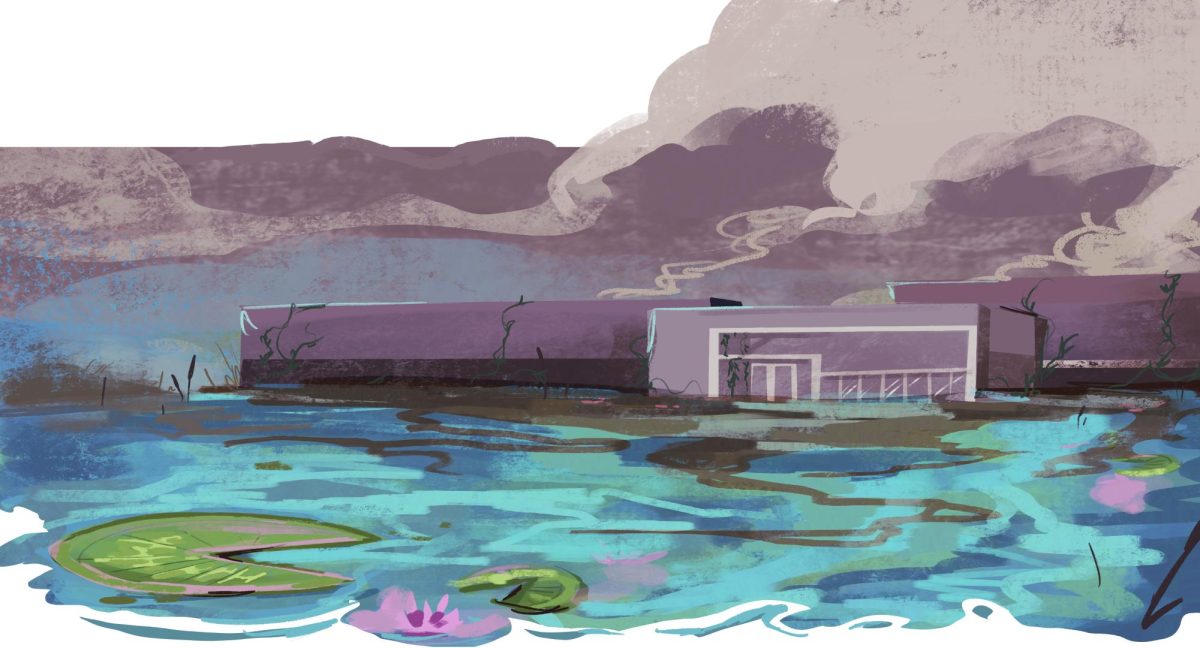
Illinois has more than 200 data centers, and the number continues to grow. Just a few miles from Columbia’s campus, the HydraVault facility planned for near the South Side shows how quickly this expansion is moving into the community.
Coming to Chicago from a coastal city, Lake Michigan was a major factor in my move. The ability to swim, fish and live right on the coast of the third largest city in the country is remarkable. However, as of March 2026, much of the state of Illinois is facing drought conditions, according to the U.S. drought monitor, and local conservation advocacy groups are concerned about how these conditions could be exacerbated by the booming data processing demand.
Data centers often use water as a way to cool equipment. However, the Great Lakes-St. Lawrence River Basin Water Resource Compact Council dictates that under very few circumstances can anyone pump water directly from the Great Lakes Basin, though ground water is different.
Ground water, which is saturated into the land, makes up between 20% to 40% of the Great Lakes’ water budget (the total water flowing in and out of the system), according to a report by Alliance for the Great Lakes. In cities as close as Aurora, where data centers have been operating for almost a decade, a report from the Illinois State Water Survey shows that due to local drought, they have been relying increasingly on ground water — the same ground water that nearby data centers are pulling from at alarming rates. They are projected to use 150.4 billion gallons of water over the next five years in the United States.
The concerns of those living across the state of Illinois are starting to be echoed on a political level. At least 12 representatives from across the state have co-signed bill HB5513, dubbed the POWER Act, which aims to establish “comprehensive environmental, water, and energy regulations for hyperscale data centers.” This bill would also prohibit non-disclosure agreements and mandate water resource planning.
If I want to stay in Chicago, not only will I need water, but I’ll need to be able to afford to live, and AI contributes to these concerns, according to data from the Illinois Citizens Utility Board. In Ohio, American Electric Power and the state’s utility regulators reached an agreement requiring the largest data centers to pay up to 85% of their electricity costs upfront. This works to address concerns over how much the production and construction of energy infrastructure to power data centers will end up costing consumers.
In Joliet, 45 miles southwest of Chicago, the city council approved 795 acres of land to be used by the Joliet Technology Center, a proposed data center project. Their reasoning is that data center projects within the city would boost economic benefits tied to an increase in monetary investment. They believe this is significant and is reason enough to continue expanding development.
Even with continued investment in our communities, I worry that without extensive regulations like those proposed in the POWER Act, my neighbors and I will be priced out of our homes and deprived of access to essential natural resources.
Policies like those in Ohio and proposed in Illinois feel like a step in the right direction and signal a commitment to further regulation.
If as artists and community members we don’t make our concerns known now, the resources we rely on will continue to go to major corporations, and with them the ability for citizens to create and share the art that captures the full range of the human experience.
Copy edited by Venus Tapang