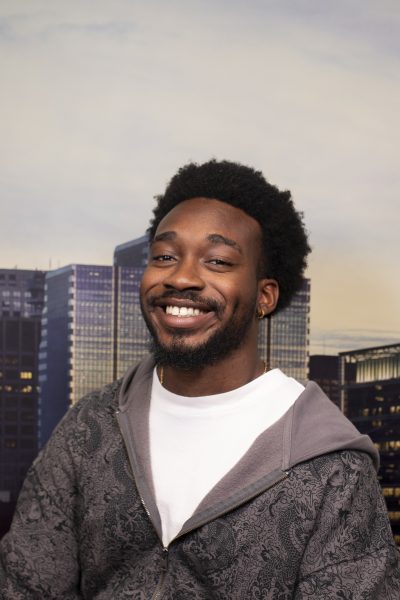
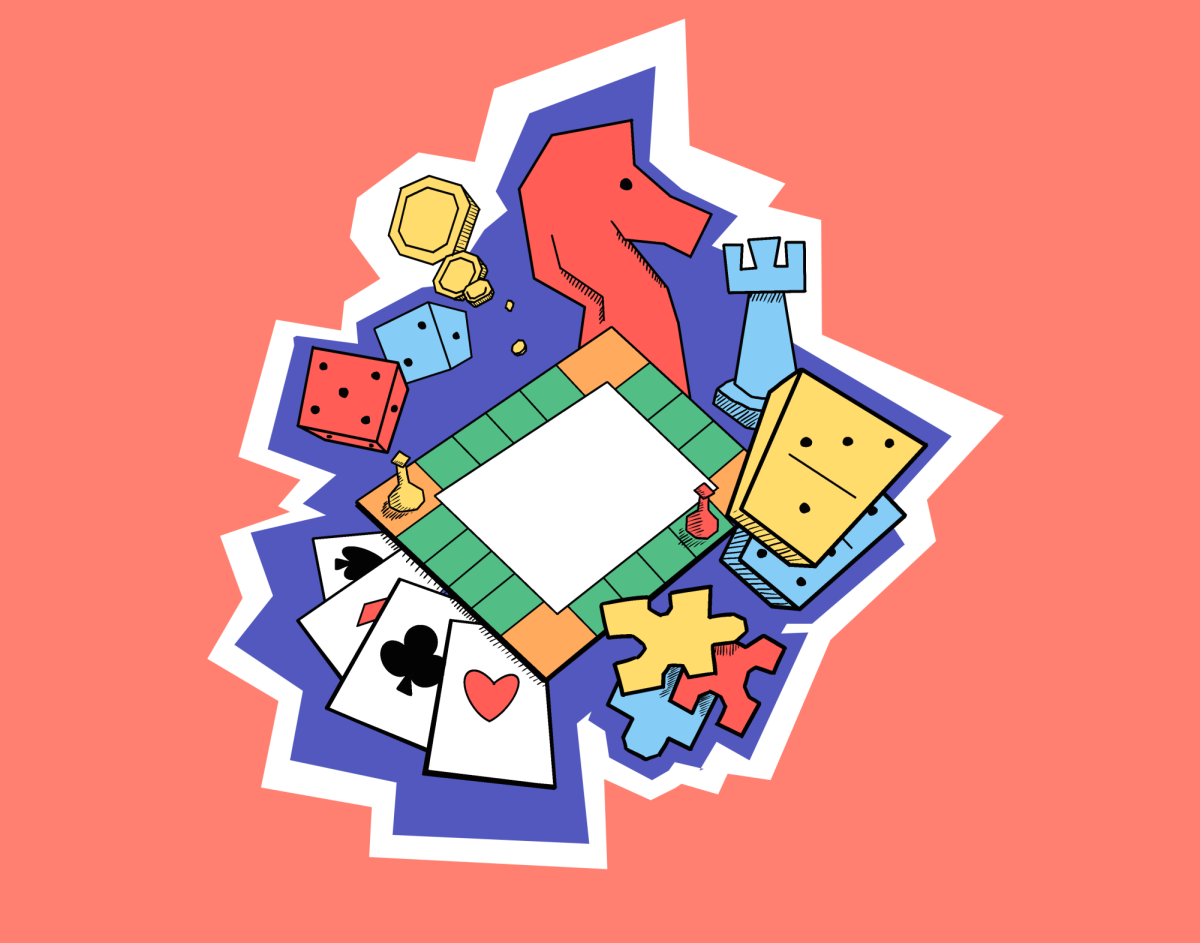
Cameron Johnson has a conversation with Oliver Bush about Board Game Club and how communities tie students together.
Transcript:
0:05: Welcome back to Chronversations.
0:07: I’m your host, Cameron Johnson.
0:10: We have already been putting a significant dent in the semester.
0:13: And with that being known, many clubs have been putting together opportunities to thrive within their respective communities.
0:19: I sat down with the vice president of the Board Game Society to speak about the DNA of his organization.
0:25: And see how many students can get involved.
0:27: My name is Oliver Bush.
0:29: My pronouns are he/him/his, and my major is sound design.
0:33: Can you also tell me your position within the Board Game Society?
0:36: So, right now I am serving as our vice president for this kind of, this current semester.
0:43: What would you say is the origin or the DNA of the Board Game Society?
0:47: How did you guys have your start?
0:49: I remember when I first came to Columbia about 2 years ago, the club was already existing and I wanna say it was created by Alex Lanting and Harrison Hartzell in collaboration with Brendan Riley, one of the professors here at the club.
1:03: Brendan teaches a “Tabletop Games & Communities” class, a CCCX class.
1:08: Post that class, Alex and Harrison approached Brendan and was like, I think we should probably try and start a board game club here at Columbia.
1:15: I think it’s probably one of the most consistently engaged clubs.
1:20: We have a very steady member base, a lot of people are kind of constantly showing up.
1:25: And I think part of the reason for that is that in our kind of core identity, there is a level of casualness to the activity.
1:34: Board Game Club is extremely come as you are.
1:38: We do not need anyone to show up for the whole time we meet biweekly.
1:44: We don’t need people to show up having brought a game, having even played board games before.
1:49: We try to be as open and accepting of where someone is coming from into the club as possible.
1:57: In what ways do you hope to deeply impact the students that come in?
2:01: The impact that you’ve already witnessed—what is some of the impact that you’ve already witnessed? Also how do you deeply hope to impact future students?
2:13: I would say some of the biggest impacts I’ve seen currently has been one that actually I personally experienced, having a place that is an easy environment to talk with new people and meet them because I think when you’re first coming to a new college, you know, people, we have quite a few transfer students.
2:32: I was a transfer student myself.
2:34: It can be very challenging to get acclimated to a new college environment, a new city, a new state.
2:40: There’s none of this pressure to perform in a certain way, you know, you’re not trying to get grades, you’re not trying to,
2:48: necessarily achieve something there’s not like there’s some grand prize.
2:51: There’s almost like a removal of the distractions I find, you know, playing a game with another person is a very engaging and intimate way of talking to a person and enjoying their company because,
3:08: it’s good courtesy to put your phone away and just dedicate the time to be like, oh, we’re gonna sit down for half an hour, 1 hour, and we’re gonna play this board game, and if you’re not feeling up for really like talking a ton, you can just focus on the game, but if you’re feeling more engaged, you can like ask questions between turns.
3:27: I find it’s a very natural lubricant for socialization that just takes a lot of pressure off of people who I often see, you know, being a bit more within themselves and a bit more stressed about situations like that.
3:48: I mostly play board games with my family or something like that, but that’s something that would bring peace to me.
3:53: Like chess, that’s something that trains my mind, but I’m not stressing out unless I’m losing, but other than that, like there is a peaceful piece of,
4:03: unwinding from the screen.
4:05: So I really like that.
4:06: What are all of the many different events that you guys, and I know you guys do like meetups, but is there anything else that you guys do?
4:14: Obviously, as you mentioned, we have our regular meetings.
4:17: They are typically biweekly.
4:20: They’re now on Fridays, they used to be on Thursdays,
4:22: and those ones are just pretty, you know, there’s not really a structure as much, but In terms of events, I think we often try to have the events match the different themed weeks of the year.
4:36: For example, we actually have one coming up now for Kindness Week.
4:40: I wanna say it’s October 9th will be the meeting.
4:42: So that’s kind of one, we often do another meeting for distress fest.
4:46: Additionally, we plan to do a special meeting for Halloween, or Wicked Week specifically.
4:54: This Friday is going to just be another regular meeting so please come as you are.
4:59: We meet biweekly in the 600 South Michigan building on the 8th floor.
5:04: The meeting is typically going to be from 6:30 to 9:30 p.m.
5:08: You do not have to stay for the whole time, you can show up late a little bit.
5:11: The only thing worth noting is that, because of New Columbia policy, doors do close at about I think around 8:00 p.m. now.
5:19: So try to get, make sure to get there before then if you would like to join.
5:22: But yeah, we’re probably just going to be having another regular session.
5:26: People will play whatever games they would like to play, bring, we’ll probably make some announcements about things coming up in the semester so that people in the club are aware of our themed nights, things like that.
5:37: If you have any interest at all, and or have any interest in trying to learn a new game or play an old classic that you haven’t touched for a while or just meet some really cool, interesting people, I highly recommend coming out.
5:49: If what you’ve been hearing has been right up your alley, stay tuned for more events from the Board Game Society on Engage.
6:00: Make sure to stay up to date with campus and Metro News at columbiachronicle.com.
6:05: I’m Cameron Johnson.
6:07: Thanks for listening.
6:08: And until next time.
Copy Edited by Mia Smith