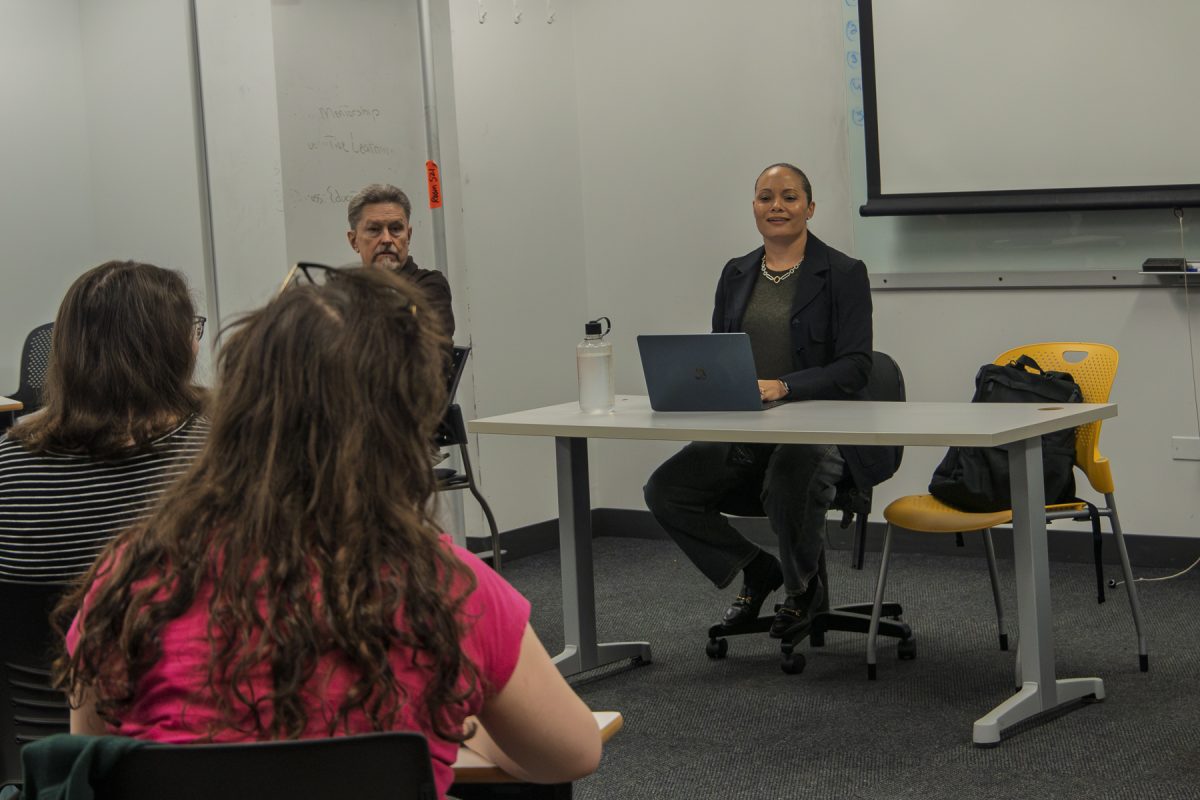
“Imagination” asks students to consider the nature of imagination, whether it is simply make-believe or a vital way of understanding the world.
The 200-level humanities course is about “the mental sandbox where reality and fantasy collide,” said CM Burroughs, associate professor of creative writing in the School of Communication and Culture.
The course focuses on both the surface level of what comprises imagination, such as artistic inspiration, and what lies deeper in the mind, such as anxiety, nightmares and conspiracy theories.
“We thrive, we survive, based on our ability to imagine our own art,” Burroughs said.“At Columbia, all the students and faculty are engaged in our own genre experimentations, so we have to have the ability to expand, be flexible, with our minds in order to create.”
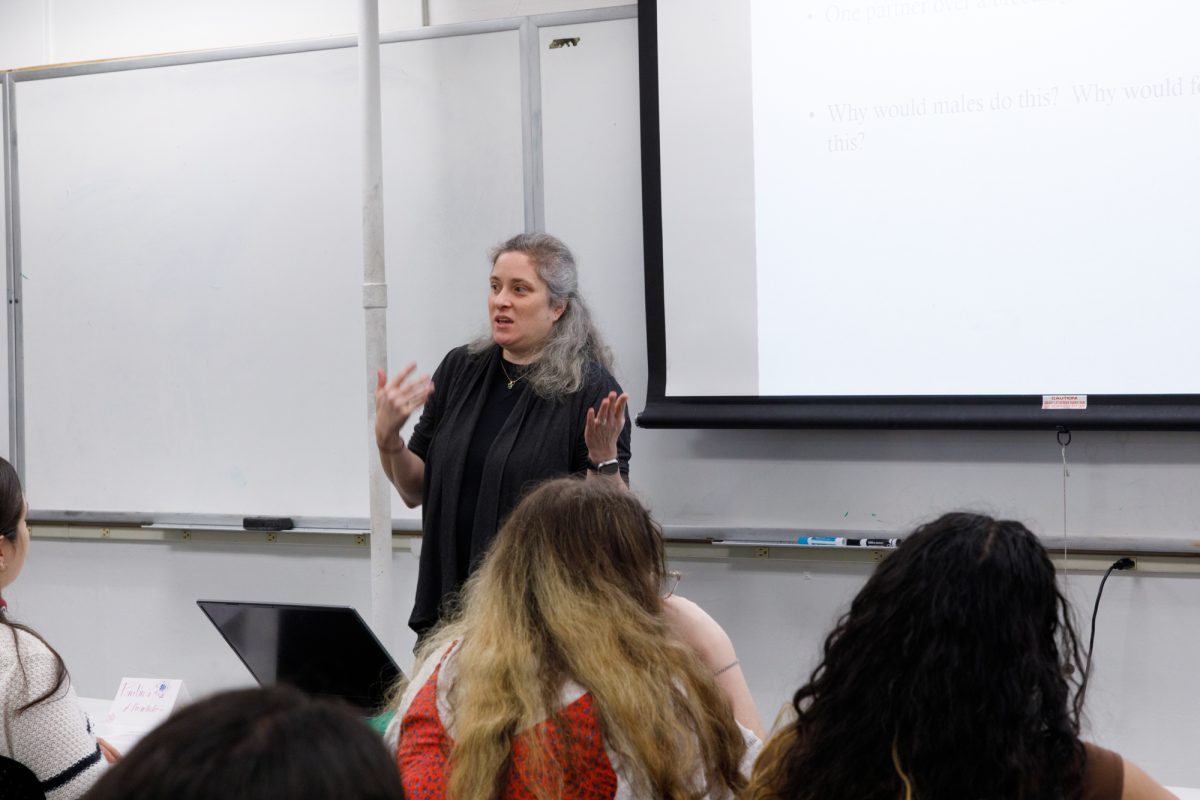
During a recent class, Burroughs led a discussion of the book, “The Amputee’s Guide to Sex” after students talked about it in small groups. Then she tasked the 20 students to apply what they discussed in a writing assignment, before being given an opportunity to share their work.
“I’ve been enjoying this class,” said Damian Lopez, a senior music production major. “It’s inspired me with my writing, which the professor has helped us engage with during class, especially our in-class writing.”
Lopez also said he’s been using the material given in class to use in his own work and personal projects.
The course is new at Columbia, and Burroughs, a poet, is the first one to teach it.
“Imagination has its fingers in each artistic experience of the college, so it shouldn’t just be locked in a particular genre of art, or a particular field of experience,” Burroughs said. “Every student will benefit from knowing something about how to open their minds and think outside the possibilities of their field.”
Kindy Britt, a senior creative writing major, said the course is thought-provoking.
“It’s not concentration-specific, so I really enjoy that,” Britt said. “ I don’t feel pressured to write poetry.”
Burroughs said she’s cultivated the course with a gaze on “things like deafness, amputees and minority cultures.”
The learning highlights these perspectives, using fiction as a way to give these communities a place where they can be on top and live unbothered by current societal systems, while also commenting on why those systems are there in the first place, Burroughs said.
In addition to “The Amputee’s Guide to Sex” by Jillian Weise, students read “Radio Heart; or, How Robots Fall Out of Love” by Margaret Rhee, “Deaf Republic” by Ilya Kaminsky and “Electric Arches” by Eve L. Ewing.
Each book combines one of these communities and sets their story in a fictional world.
Burroughs said she hopes that the study of the imagination in correlation with these stories will help students become “more open as people and more embracing of difference, so it develops them as humans and as artists.”
Copy edited by Camila Verzino