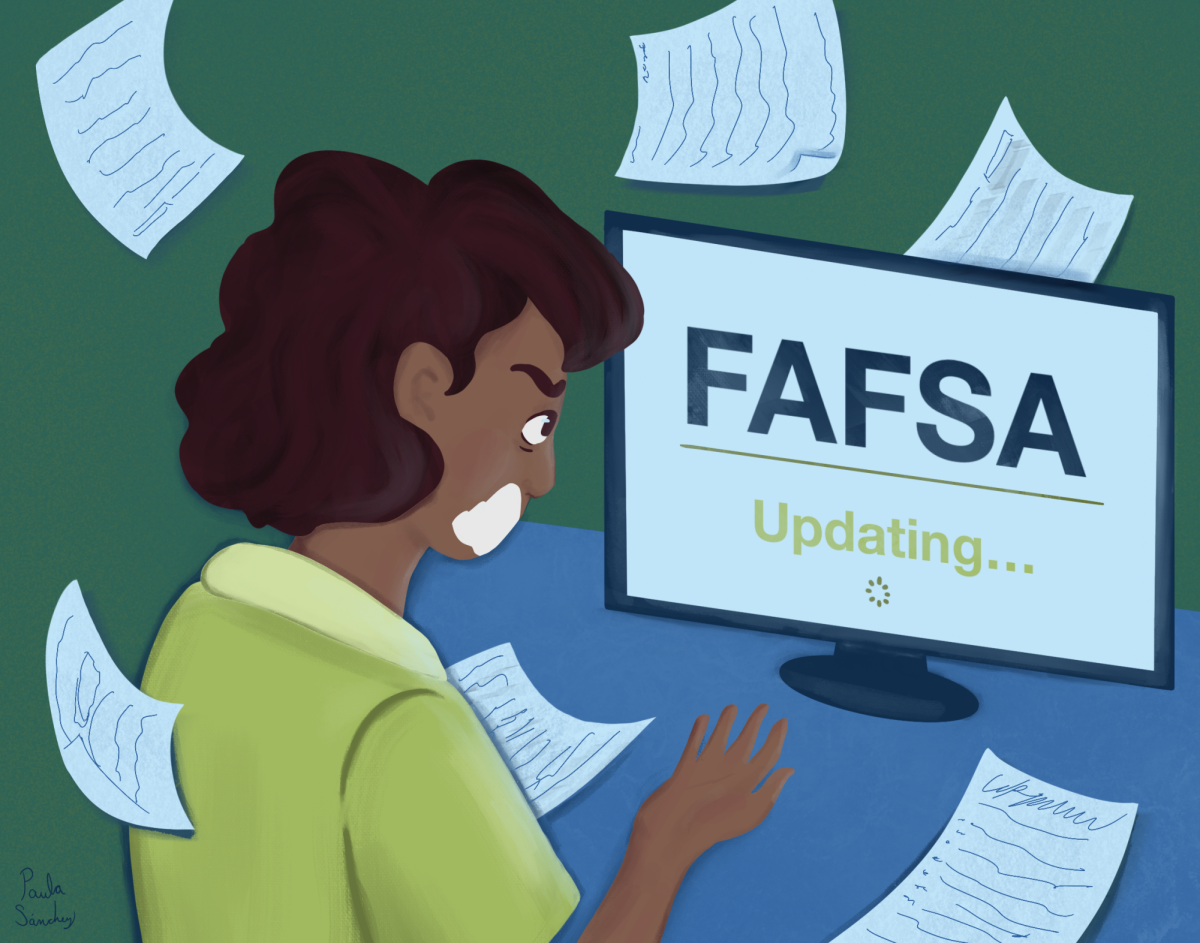
The Free Application for Federal Student Aid for the 2027-28 academic year revised questions and added new ways for students to invite parents or other contributors to provide financial information.
FAFSA determines students’ eligibility for federal financial aid, including Pell Grants, federal student loans and Federal Work-Study. It is also used by states and colleges to determine eligibility for some additional financial aid.
About 49% of Columbia undergraduate students received Pell Grants in Fall 2024, as the Chronicle previously reported.
Emmanuel Lalande, senior vice president of enrollment strategy and student success, said the college is monitoring federal developments and communicating with students as information becomes available.
“There have been a number of changes at the federal level affecting higher education and financial aid,” Lalande said in an email to the Chronicle. “At Columbia, our focus has been on closely monitoring those developments, communicating with students as information becomes available and helping students understand how changes may apply to their individual financial aid circumstances.”
How has FAFSA changed?
Federal Student Aid revised questions and instructions that previously caused some confusion for applicants, including questions about homelessness, college plans, high school graduation and students’ career plans. The application also includes new ways for students to invite parents or other contributors to provide financial information.
The earlier launch addresses problems with the FAFSA that have affected Columbia students in prior years.
The redesigned 2024-25 FAFSA was not released until Dec. 30, 2023, almost three months late. Technical problems and processing delays pushed back when colleges received students’ financial information.
Lalande said it is too early to determine whether recent federal financial aid changes have affected enrollment decisions at Columbia.
What stays the same?
Students must complete a new FAFSA each academic year to remain eligible for federal student aid.
Students should monitor communications from Columbia and Student Financial Services, complete required documentation by the established deadlines and contact the office with questions about their eligibility or awards, Lalande said.
For students facing financial gaps, Student Financial Services works individually with them to explain their aid packages and available options.
“Our goal is to help students understand the resources available to them and make informed decisions about financing their education,” Lalande said.
What students are saying
Valdemar Camargo-Lopez, a first-year music production major, said financial aid helped him cover college costs and influenced his decision to attend Columbia.
“The reason why I was going to come here was because they gave me the biggest offer,” Camargo-Lopez said.
Raniya Waller, a senior animation major, said Pell Grants help with college costs, but scholarships are her main focus. She said maintaining the grades needed to keep her scholarships is a priority.
“Pell Grants and stuff definitely help, but scholarships help knock down that price significantly,” Waller said.
Waller said she had not heard about the FAFSA changes before speaking with the Chronicle and would like more communications from the college informing students about financial aid updates.
“I didn’t even realize that we got it sooner than we usually do,” Waller said. “They email us about everything else.”
Copy edited by Isaac Russo