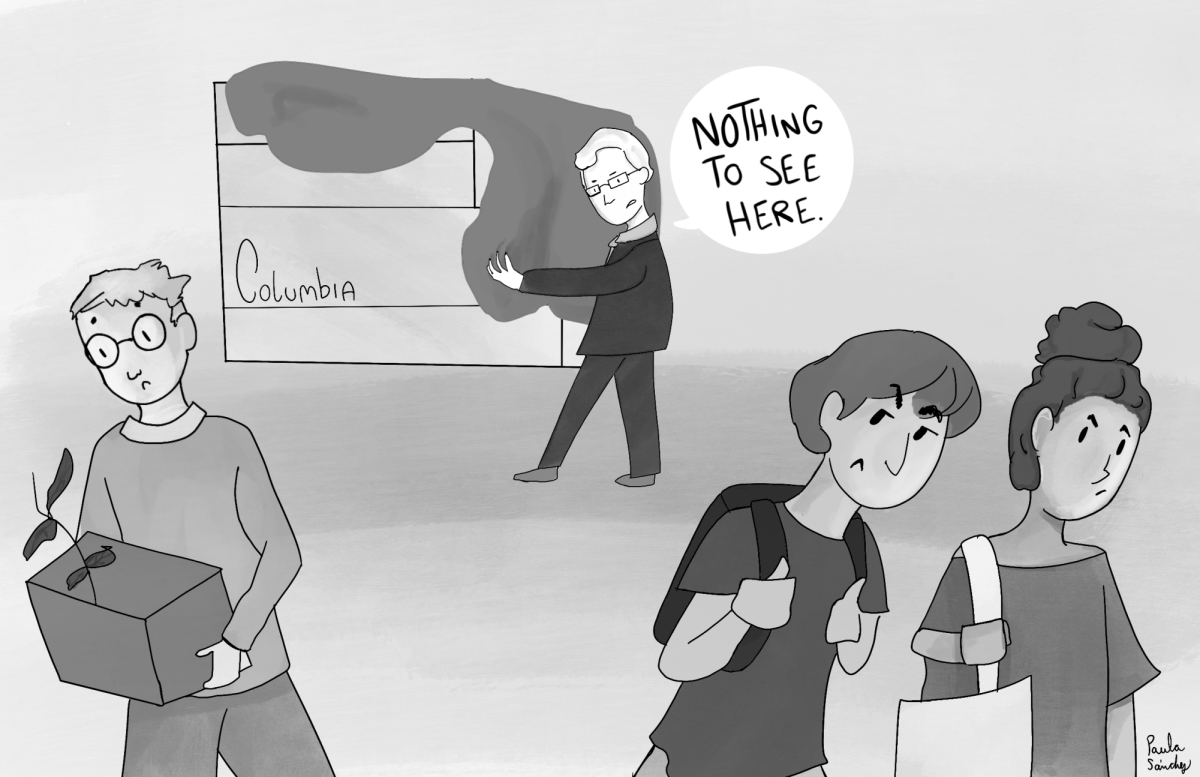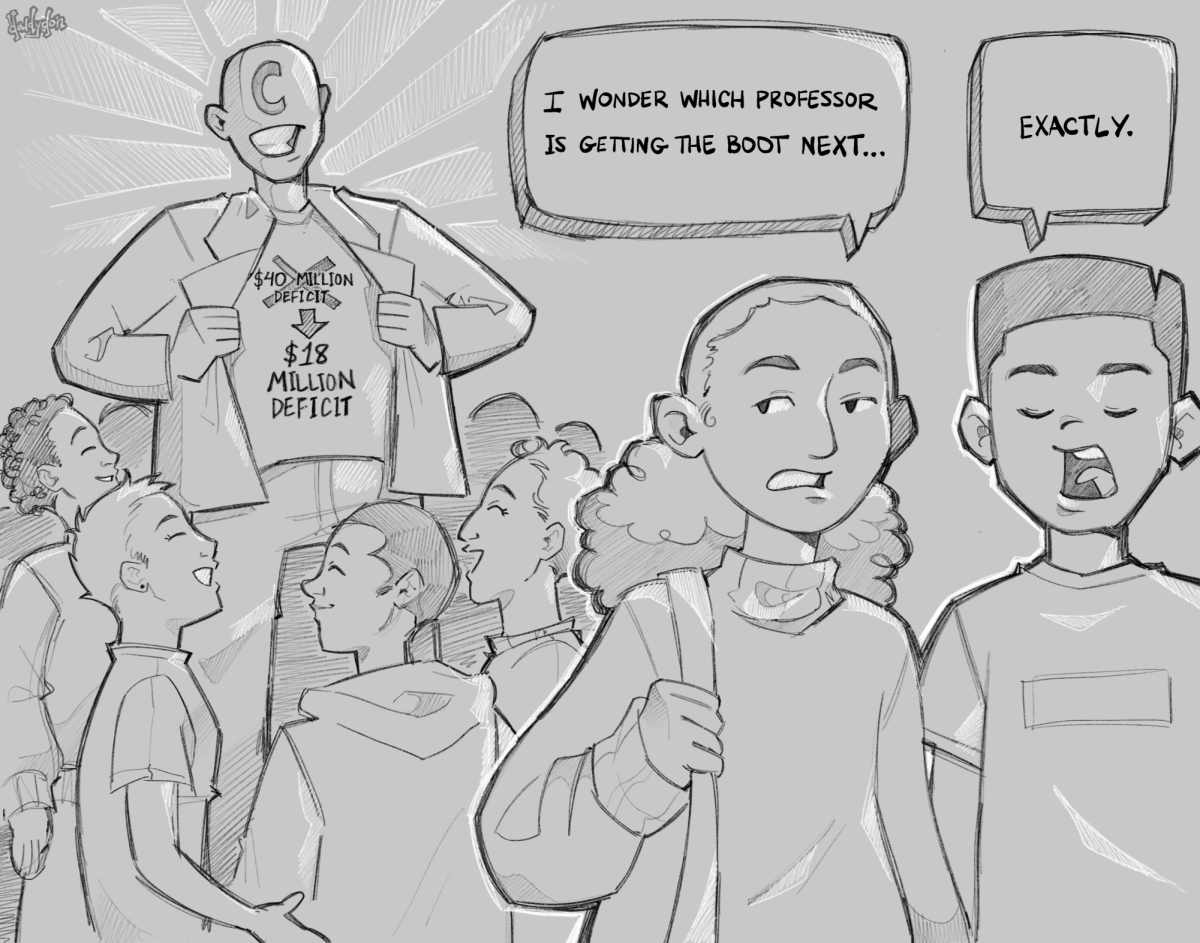
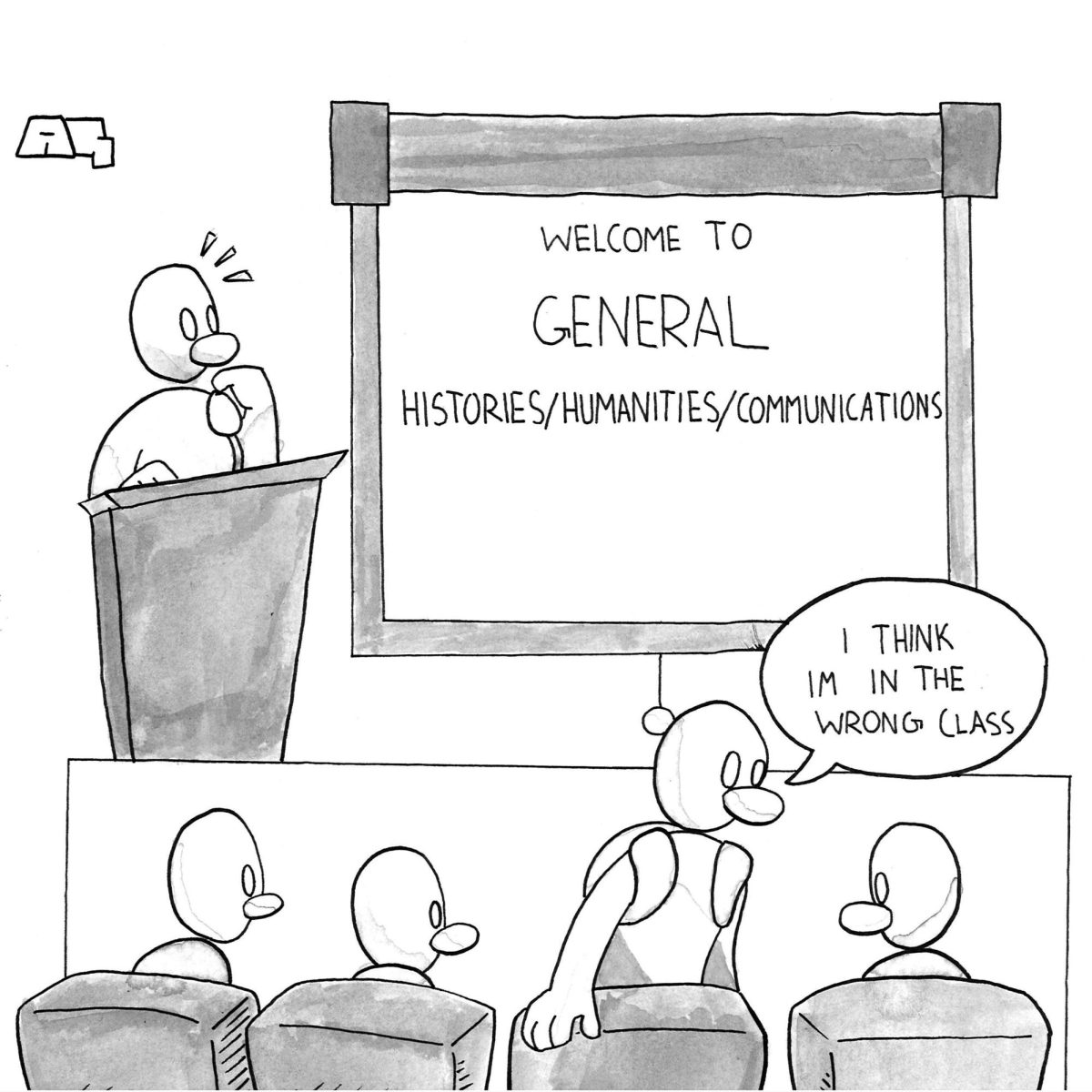
Columbia reduced its core curriculum from 42 to 30 credits nearly two years ago. This semester, the School of Communication and Culture worked to redesign the core offerings, consolidating dozens of specialized courses into broader, interdisciplinary offerings. The shift reflects a financial and logistical reality. A catalog of more than 400 courses is difficult to sustain amid declining enrollment and a $40 million deficit.
But consolidation is not just about simplifying the course catalog. It changes how subjects are taught.
One course, “The Holocaust (1939-45),” no longer exists as a standalone class — it is now part of “Social Problems,” a course covering poverty, racism and gender inequality.
The Holocaust is not a historical event to simply teach alongside other large events and times in history; it warrants its own course.
Likewise, “The Israeli/Palestinian Conflict” course, taught this spring, is being folded into another one. The conflict is too layered and significant to be taught within any general course on world history.
The same applies to courses rooted in Black, Latino and queer histories. Currently, an African American history course and an LGBTQ+ history course are still being offered. These topics rightfully must continue to exist as standalone courses. Absorbing them into bigger categories repeats, in academic form, the very erasure they were designed to counteract.
The college is correct in streamlining an unsustainable catalog, and reducing the core has allowed students more time to pursue their major courses, add minors or explore electives. But it cannot assume that important subjects will naturally survive inside broader course structures. They must be deliberately preserved.
The college must make sure that the depth and specificity that specialized subjects require are not lost in translation since eliminating a course does not equate to keeping its content within a different class.
All courses need detailed descriptions in the catalog. Major historical events should be included in these descriptions so students know where they are included. Beyond the core, the same principle should extend to all courses across the college. For example, “History Of Audio” and “Directing Techniques” don’t have course descriptions. Students should know more than the course title.
Courses that address singular historical events or marginalized communities must be protected as standalone classes.
Trimming an unsustainable curriculum is the right thing to do but not if it compromises the rigor and focus those subjects demand.
Copy edited by Katie Peters