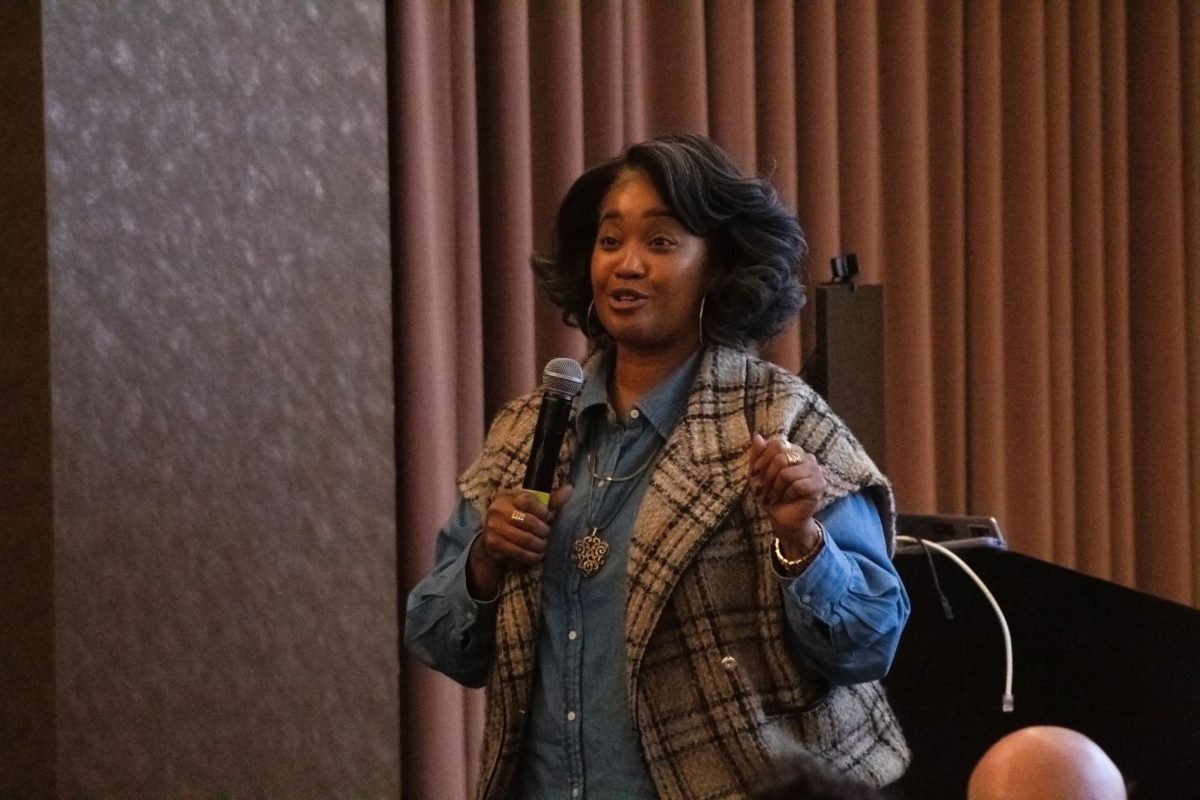
Two Chicago addresses can share the same number and sit miles apart, separated by decades of segregation. Alum Tonika Lewis Johnson has spent years pairing the residents who live at them.
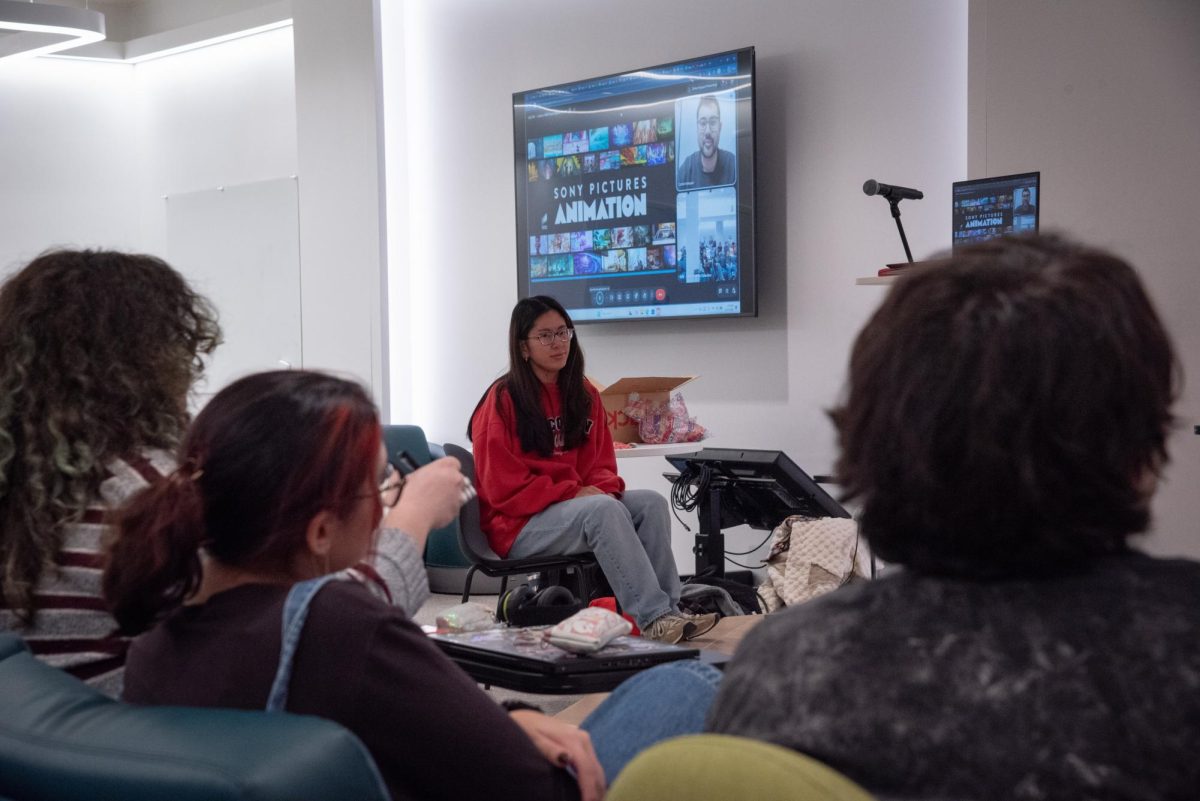
Johnson screened her short film “The Folded Map Project” for more than 70 students at Film Row Cinema, 1104 S. Wabash Ave. on Wednesday, Nov. 18, her second screening at Columbia on the film about the project. She also discussed her book, “Don’t go: Stories of Segregation and How to Disrupt It” at the event sponsored by the School of Communication and Culture.
Folded Map started as an idea to unite residents with the same address on the North and South sides of Chicago in 2018. It has since grown into a nationally recognized multimedia investigation of systemic issues, earning Johnson the 25’ MacArthur “genius grant,” as previously reported by the Chronicle.
“A lot of the students at the college aren’t from Chicago,” Johnson said. “So it’s just a perfect way for them to get to know the city through the lens of an alumni and a fellow creative.”
Ayo Walker, an associate professor in the School of Theater and Dance, brought her Big Chicago class “People, Power and Narrative” to the screening and said the film was a good way to explain modern segregation, something that’s hard for people to wrap their head around.
“I was in disbelief before I moved here that Chicago was this segregated,” Walker said, who came from Tennessee. “And Tonika and this film really made it glaringly obvious that it wasn’t something that we could just think isn’t true.”
During the Q&A portion of the event, Lila Jackson, a first-year entrepreneurship and innovation major, said that she came to Chicago after growing up in Utah and did not know the full extent of Chicago’s segregation.
“Obviously I knew about segregation, the south side versus the north side and I heard about redlining before in high school,” Jackson said. “But it looks very different where I’m from versus here. And I thought it was interesting to get a real example of it and what that looks like.”
Adrianna Gutierrez, a sophomore photography major and peer mentor in the Big Chicago course, “Carnival Art: Chicago Stories,” was excited to see students who wanted to bring the project to their own hometowns.
“I was pleasantly surprised to see the students super engaged with this project and wanting to replicate it in their own states, neighborhoods and cities. And I think that’s kind of the nationwide impact of this project,” Gutierrez said.
That outreach is what truly matters to Johnson. She made sure to emphasize that while ending systemic racism isn’t something that will happen in one day, small actions by individuals can still make an impact.
“Whenever we think that an issue is too large for us to attack, I want people to be able to refer to my work and know that it takes individuals to create things that are bad, and it takes individuals to change things that are bad,” Johnson said.
Copy edited by Camila Verzino