Some Columbia academic and administrative units have reduced budgets and available hours for on-campus student employment this academic year as the college works to manage expenses, said Anna Ogier-Bloomer, the associate dean of career development and industry relations.
“Student employment is budgeted at the departmental level based on available resources and operational needs,” Ogier-Bloomer said in an email. “There is not a single collegewide number of student employment hours allocated annually so we do not have a total number of hours cut to report.”
She also did not specify which units specifically were asked to reduce student worker hours.
The college is projecting an approximate $18 million operating deficit for this fiscal year, a more than 50% reduction after Columbia projected a $40 million deficit last fiscal year, the Chronicle previously reported.
Jimmy Noriega, dean of the Schools of Theatre and Dance & Audio and Music, told the Chronicle that the school is still in the process of filling student worker positions and was unable to provide more information as of publication time.
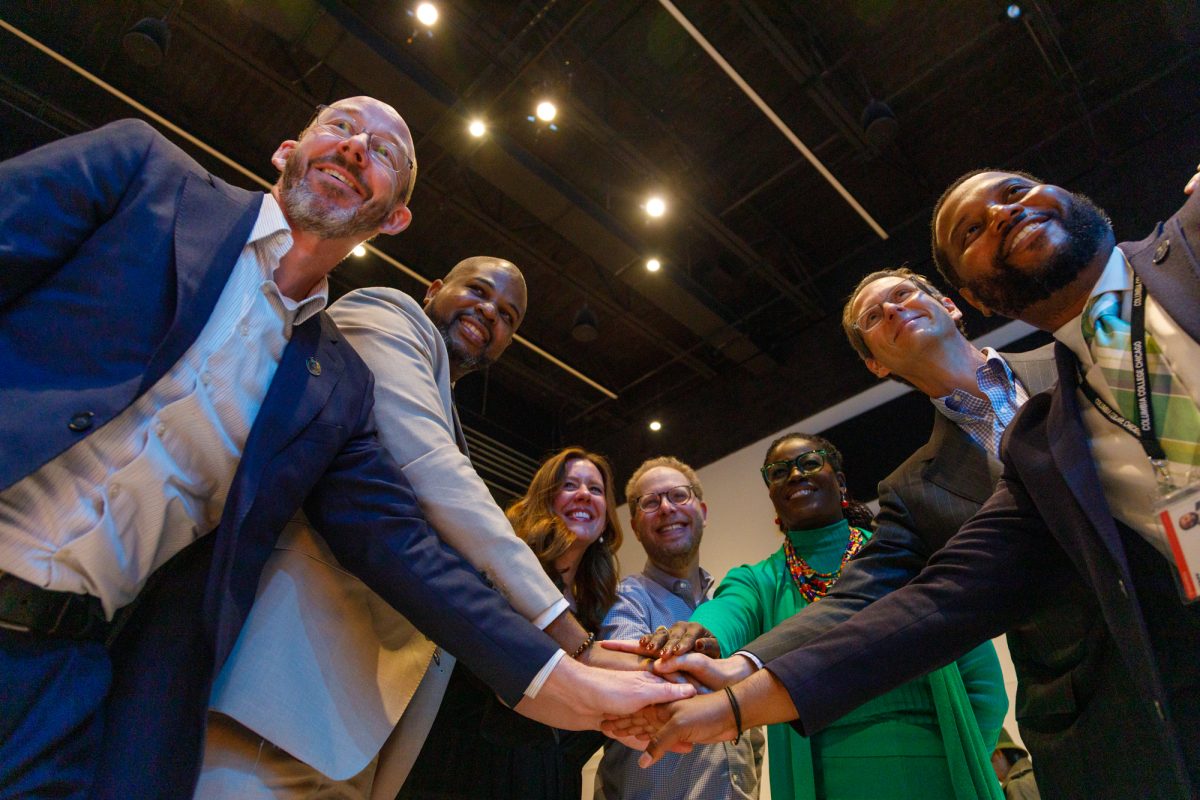
Ben Sutherland, associate dean of the School of Audio and Music, and Wen-Hwa Ts’ao, dean of the School of Film and Television, declined to comment when a Chronicle reporter approached them at the State of the College on Wednesday, Oct. 7.
Last spring, the college reduced the maximum number of hours most students can work on campus from 20 hours per week to 15, citing a reduction in its Federal Work-Study allocation, as the Chronicle previously reported.
Columbia’s Federal Work-Study allocation dropped from $780,780 last academic year to $570,359 this year, the Chronicle previously reported.
Federal Work-Study hours are not counted toward a unit’s student employment expenses because it is federal money.
Jeffrey Bethke, interim chief financial officer, told the Faculty Senate on Sept. 25 that the college will try to have a “minimal impact” on the student experience while it works toward reaching a more sustainable budget.
“Student employment dollars have a direct bearing on our students and on the retention of our students,” Bethke said. “We have to balance the funds available for student employment with everything else.”
Columbia reported this week that total enrollment increased to 4,265 students for Fall 2026 from 3,958 last spring, the first time enrollment fell below 4,000 students in nearly two decades.
The proportion of Columbia students working on campus has fallen from 12.3% in 2019-2020 to 9.5% this year, based on numbers provided by Ogier-Bloomer.
During the 2019-2020 academic year, out of 6,947 enrolled students, the college reported 854 student workers. Currently, there are 407 out of 4,265 students employed on campus through both the college and the Federal Work-Study program, Ogier-Bloomer said in an email.
“The college continues to offer both Federal Work-Study and institutionally funded student employment opportunities,” she said. “The funding source for individual positions depends on departmental resources, the nature of the position and student eligibility.”
On ColumWorks, the new online platform Columbia uses to post on-campus jobs, several listings state that they are only accepting students who have been awarded financial aid through Federal Work-Study, a program that provides on-campus jobs for students who show financial need.
As of this week, about 13 jobs were listed, including ambassador for student admissions, audio class assistant and a student worker in the Advanced Camera Center.
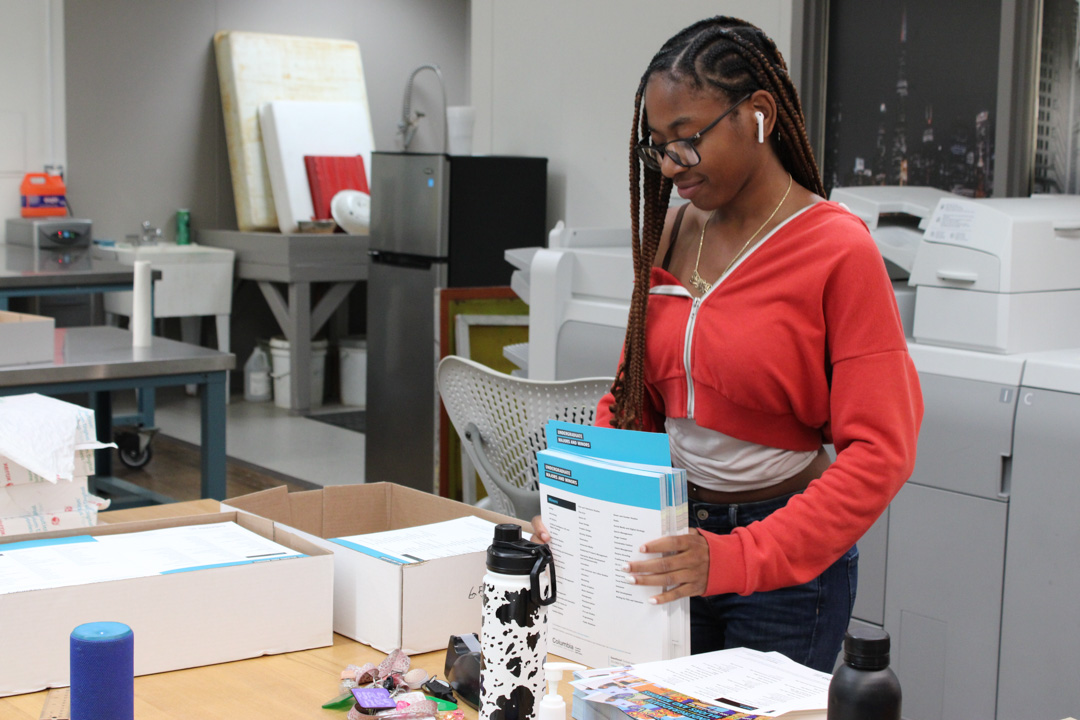
As a student employed through the Federal Work-Study program, Aurora Sasso, a junior graphic design major, was initially distressed after finding out about potential cuts to their hours in the Makerspace for the fall. Although they were able to get an exception to the new 15-hour cap policy, they said it was only due to their extreme circumstances as a low-income student with no other support.
“I thought there was a chance I was going to have to get a second job to pay for my bills and my loans,” Sasso said. “I don’t even know if I should go to Columbia if I don’t have the hours to support myself.”
Jace Eisenberg, a senior visual arts major, worked 15 hours a week in Columbia’s Fabrication Facility last spring. However, when he returned to campus this fall, he said his hours were cut to one three-hour shift a week.
He also works off-campus and said he plans to pick up as many open shifts as possible in order to make up for the lost hours.
“It’s incredibly frustrating,” said Eisenberg. “The most frustrating part is there’s just no communication with us for why this is happening at all.”
Nate Carder, the assistant director of Makerspace facilities, did not respond to two emails from the Chronicle seeking information about student worker hours.
For Rebeca Urzúa, a senior music major who has two on-campus jobs, said the 15 hours she works on campus each week is one of the only avenues of income available to her as an international student from Mexico.
“I don’t have that many resources as other people do,” said Urzúa, who works at the Digital Print Center and as an Engage leader. “I just need to start looking for more opportunities that I can take.”
Are you a current student worker who has been impacted by the cuts to on-campus employment hours? Email tips@columbiachronicle.com.
Copy edited by Isaac Russo