THE CREATIVE CAREERS ISSUE
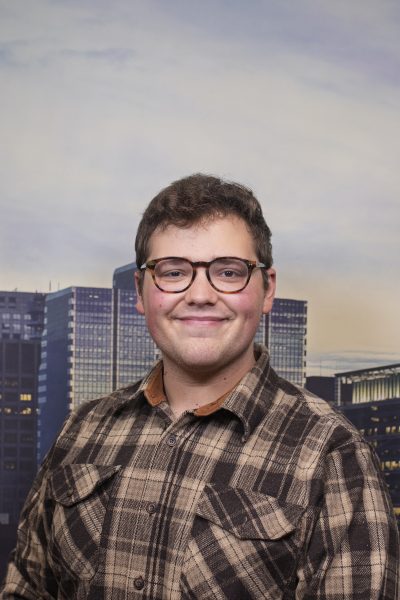
Macklin Youmans graduated from Columbia in 2022 with a degree in film and television, but today, instead of a full-time job working on a set, they spend the day in a staffing office drawing indents and scratches on the side of a breakroom locker.
Since graduating, Youmans has moved between jobs at coffee shops, a movie theater and occasional TV productions. The work has provided financial stability, but it hasn’t always offered the creative fulfillment they expected from a career in film.
“I was able to appreciate the scratches on the locker because I was enjoying drawing them,” Youmans said. “That was a big moment for me beyond just drawing beautiful things or beautiful people. It doesn’t even have to be beautiful stuff. It becomes beautiful because you’re enjoying it.”
Youmans’ experience reflects a difficult reality for many college graduates who may not find an entry-level position in their field right after school. According to the Cengage Group’s Graduate Employability Report, only 30% of the 971 2025 college graduates who were polled found positions in their fields.
Columbia reported a much higher rate: 96% of its 2023 graduates were employed or “achieving success” in their creative practice within 12 to 18 months after graduation. But employment included full-time, part-time and freelance, and the survey only had a 19% response rate, according to the Office of Institutional Effectiveness.
Like Youmans, junior illustration major Charlie Tober has found ways to make art outside the expectations of a professional career. As a member of the executive board of Columbia’s Illustration Student Group, Tober participates in urban and live sketching events that offer students a chance to draw for enjoyment.
“Urban illustration is something I like doing just for fun on my own time, like sitting at parks and drawing the plant life, sitting places, sometimes the people visiting if I’m feeling a bit more bold,” Tober said.
For Youmans, the period after graduation brought a series of jobs, unexpected loss and discovery. After their father died in 2023, they discovered illustration, which is something they never thought they would be good at.
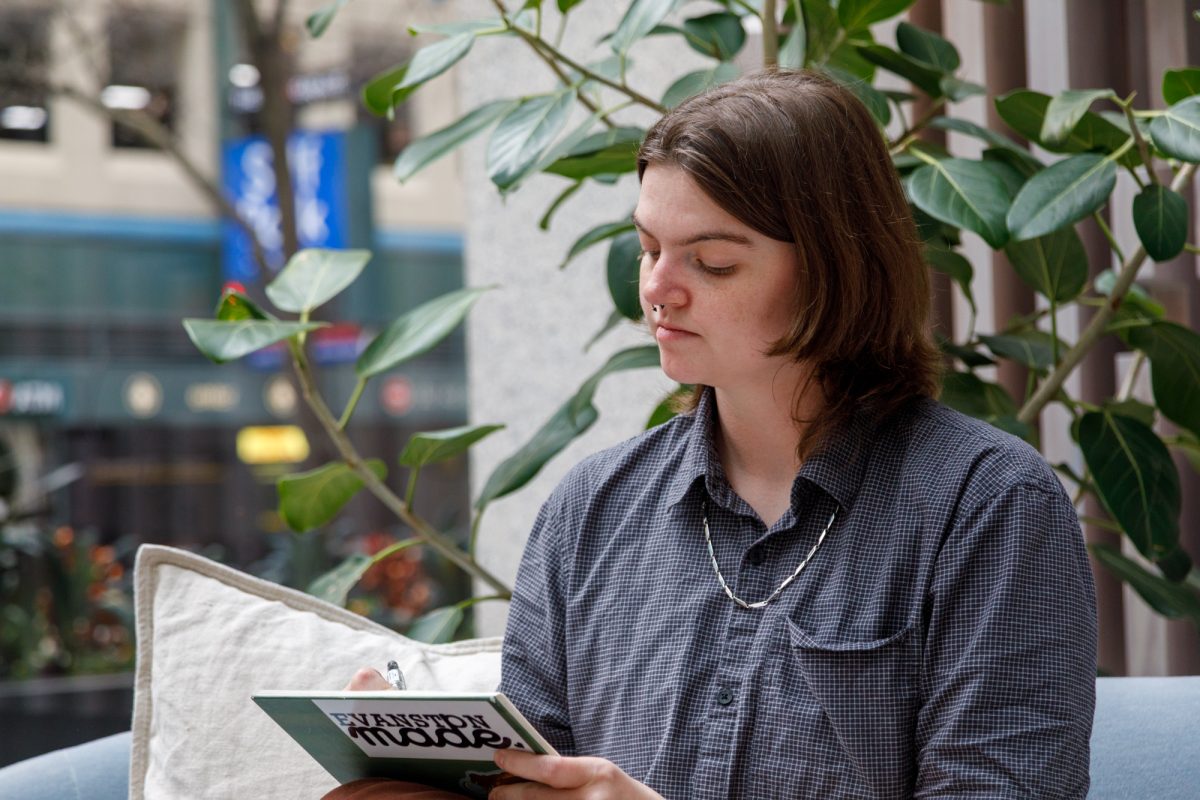
“I got really angry for a long time, you know, life is hard and grief and whatever. But it’s made me enjoy the people around me and the places that I visit so much more,” Youmans said. “I have like four books on me right now actually in various formats. I always have something, and it makes me just sit and enjoy the beauty and the stillness of the moment.”
Last year, Youmans joined the Chicago chapter of Urban Sketchers, a nonprofit community of artists that organize events to bring together both trained illustrators and interested sketchers to draw locations and scenes from “direct observation,” as the organization describes it.
Youmans said a key lesson from Urban Sketchers has been giving them a new perspective, not just on life, but on how they approach their other disciplines as an artist.
“I think every time I pick up a new hobby or a passion, it’s only adding to my creative lens, my creative perspective. And so when I returned to old passions, I’m only stronger because I deviated for a little bit and gained some perspective,” Youmans said.
Bernabe Martinez, a member of the sponsorship team for Urban Sketchers, said the organization was an opportunity to escape the pressure of his studio work, giving him the opportunity to draw exactly what is in front of him, and to relive moments through a sketch.
“When you look back at a sketch, you can easily be reminded of what that day was like, what the city was giving off in that moment. Very powerful,” Martinez said.
Martinez found Urban Sketchers after seeing his friend sketching with other people and wondered how she found the community. She eventually directed him to the group’s Facebook page.
“That’s how it started, found them on Facebook and watched for a couple months until I got past the nerves and met with them in person,” Martinez said. That was five years ago, and it’s “been a great journey so far.”
Youmans and Martinez both said Urban Sketchers taught them the importance of imperfections. For Youmans, there is more room to make mistakes compared to filmmaking.
“That’s been kind of life changing,” Youmans said. “There’s nobody’s saying, ‘you could have drawn that line straighter.’”
Youmans described an exercise called a “throw down,” where all the artists during a sketching get together scatter all their pieces onto a surface and take in how each interpreted one location differently.
“One of my good friends is really into doing these, like, wavy buildings,” Youmans said. “Urban Sketchers is supposed to be kind of like built-in realism. It’s about capturing. But it’s interesting how people will take that and still capture something true and real and just put a little love into it in a different way.”
While Tober looks at illustration as a potential job, Youmans doesn’t want illustration to be a career. For them, it has become an outlet, a new passion and a reason to keep exploring.
“But I think, just as a person who likes to make stuff, why box yourself in?” Youmans said.
Copy edited by Mia Smith
This story also appears in the Chronicle’s fall issue, available Nov. 23.