Lt. Gov. Juliana Stratton won the Democratic nomination for U.S. Senate on Tuesday, March 17, emerging from a competitive primary to succeed longtime Sen. Dick Durbin, who is retiring after more than four decades in Congress.
With the victory, Stratton advances to the November general election, where she will face Republican candidate Don Tracy in a race that will test whether Democrats can maintain their long hold on the seat. Illinois has not elected a Republican to the U.S. Senate since 2010, when Sen. Mark Kirk won a single term.
Stratton would be the fourth Black U.S. senator from Illinois and the second Black woman. There have only been 14 Black senators in U.S. history, including former President Barack Obama.
The Associated Press called the race at 9:38 p.m., with Stratton receiving 39.8% of the vote with 86% of votes counted, ahead of Rep. Raja Krishnamoorthi, who had 33.2%.
Stratton was endorsed by Illinois Gov. J.B. Pritzker after serving as his lieutenant governor since 2019. Pritzker ran as the unopposed incumbent in the gubernatorial primary with running mate Christian Mitchell, a former Illinois state representative and political advisor.
Pritzker will again face former Republican state Sen. Darren Bailey, whom he defeated in 2022, in November’s general election.
The primary unfolded during one of the most consequential election cycles in Illinois in decades, with an open U.S. Senate seat and multiple vacancies in the state’s congressional delegation creating a rare level of turnover for voters.
A third of the state’s congressional delegation was on the ballot, marking the largest congressional turnover in Illinois since 1948, when new districts were created following reapportionment and several members of Congress either retired or left office.
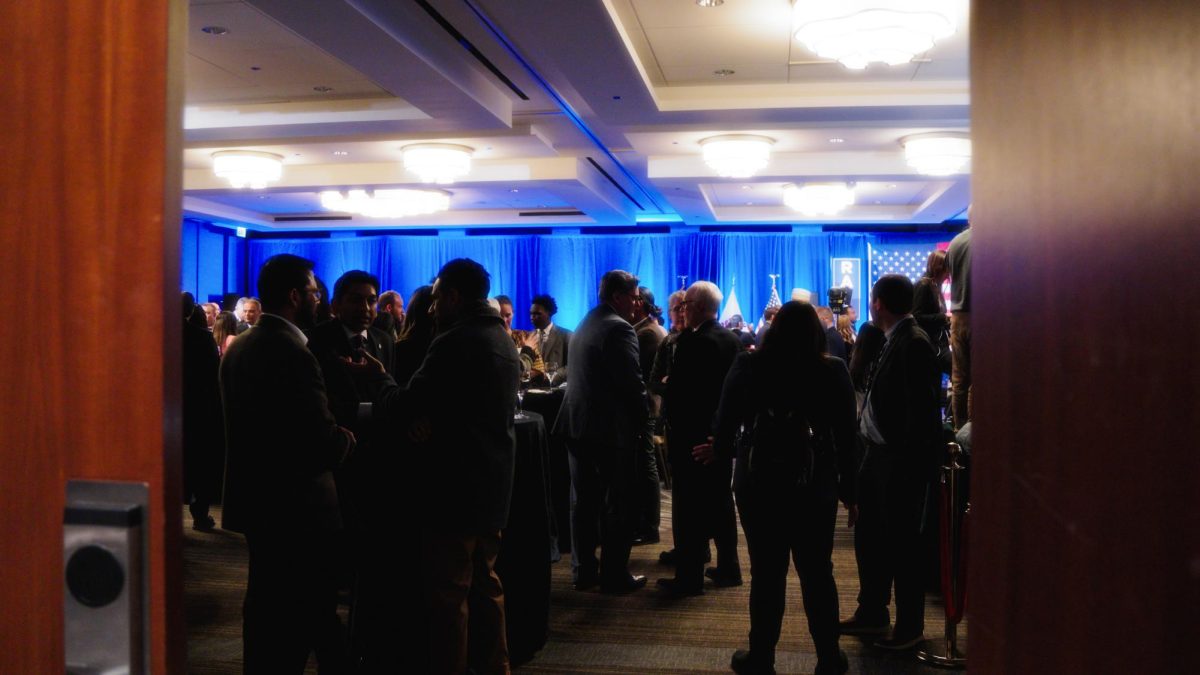
At a watch party in downtown Chicago for Krishnamoorthi, who ran against Stratton and eight other candidates for the coveted Senate seat, hundreds of people filled the second-floor ballroom of the Westin Michigan Avenue hotel on the Magnificent Mile.
Federico Sciammarella, the executive director of the Illinois Manufacturing Institute, said he has met Krishnamoorthi a few times and was interested in learning more about what he is trying to achieve.
Sciammarella stressed the importance of primary elections. “As citizens, we have to do our duty to vote and be informed,” he said. “For me, it’s always a privilege and an honor as an immigrant; the right to vote means a lot to me.”
He said that with such an open race, voters have a real opportunity to make a difference.
“Certainly we want to ensure that we’re represented by people who understand what really needs to happen not only in the government, but for the people,” Sciammarella said.
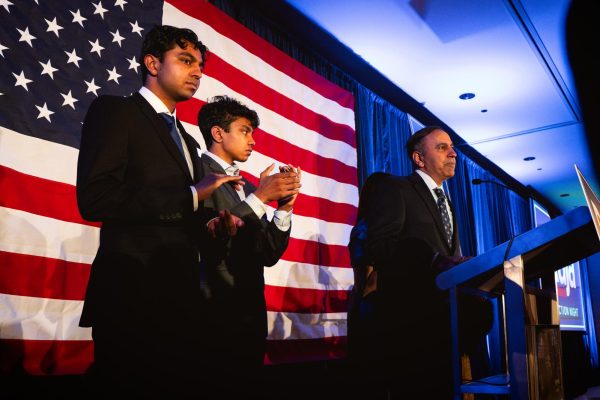
After the race was called for Stratton, Krishnamoorthi took the stage to give his concession speech. The crowd applauded and cheered his name.
“A very short while ago, I called Lt. Juliana Stratton to congratulate her on winning the primary, and I offered her my full support on the road ahead” Krishnamoorthi said. “Obviously, this is not the result we wanted, but unlike Donald Trump, I’m not going to question the outcome.”
Krishnamoorthi, a Harvard-educated attorney, said he was proud of the race he ran and offered gratitude to various supporters of his campaign, as well as his wife, three children and parents.
“Finally, I want to thank this country, the greatest country on Earth, for giving an immigrant kid and his family the chance to live the American Dream,” he said. “Only in this country could my story happen, and only in this country could a kid like me serve in the Hall of Congress.”
In his concession speech, Krishnamoorthi emphasized unity, signaling a shift toward the party’s effort to rally behind its nominee ahead of November.
“Now we must come together as Democrats and as Americans to make sure that we return to the principles that made us a beacon of freedom and opportunity for the world,” he said.
Illinois politics were uprooted last year following Durbin’s decision not to seek reelection for a sixth term. An intense game of political musical chairs has been underway since. Five members of Illinois’ congressional delegation — Reps. Robin Kelly, Jesús “Chuy” García, Danny Davis, Krishnamoorthi and Jan Schakowsky — announced they would not be seeking reelection in 2026.
In the 2nd Congressional District, which includes Chicago’s South Side and a wide stretch of the south suburbs, Cook County Commissioner Donna Miller defeated former U.S. Rep. Jesse Jackson Jr. in a closely watched primary, an upset against a candidate with deep name recognition in the district. The district is currently represented by Kelly, who did not seek reelection in order to run for the Senate.
Jackson, whose father, Rev. Jesse Jackson Sr. died Feb. 17, represented the district for more than a decade, resigned from Congress in 2012 and later served time in federal prison after pleading guilty to misusing campaign funds. His candidacy marked an attempt to return to elected office.
Evanston Mayor Daniel Biss beat several opponents, including state Sen. Laura Fine and progressive commentator Kat Abughazaleh, in the race for the 9th congressional district, currently represented by Schakowsky. The district covers parts of three counties across Chicago’s North Side and suburbs.
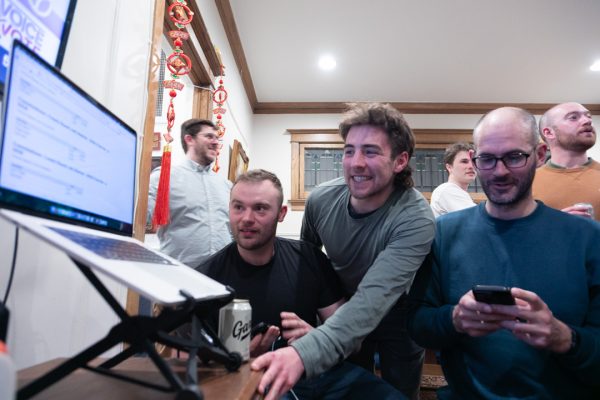
At the local level, attention also turned to the race for Cook County commissioner, where supporters gathered Tuesday night at Drake Warren’s watch party at a friend’s apartment in the Lakeview East neighborhood.
Warren won the race for the 10th district, which covers parts of the north and northwest sides of the city, including Lakeview, Uptown and Rogers Park.
He defeated incumbent Bridget Gainer with 56.3% of the vote in a race that challenged a longtime officeholder, according to the Chicago Board of Elections.
The Cook County Board of Commissioners oversees a multibillion-dollar budget and is responsible for major county operations, including public health services, the jail system and the court system. All 17 Cook County Board seats were on the ballot this year, though only a handful — about four — were open races without incumbents.
Warren, an industrial engineer and community organizer, campaigned on issues including health care access, housing affordability and ethics reforms in county government.
“It’s just gonna be a lot of hard work over the next nine months,” said Warren. “I’m going to spend a lifetime trying to be a public servant worthy of Chicago.”
Incumbent Cook County Board President Toni Preckwinkle also won on Tuesday, defeating Chicago Ald. Brendan Reilly and positioning herself for a fifth term leading one of the nation’s largest county governments. Preckwinkle, who has held the office since 2010, received about 68% of the vote with most precincts reporting, according to election results. No Republican candidate ran for the seat.
Early voting turnout in Chicago is running ahead of recent primary elections, according to the Chicago Board of Elections, which reports that early and mail-in ballot totals have already surpassed comparable points in the 2018 and 2022 cycles. Election officials say the higher participation suggests increased voter engagement in a primary that could exceed the typically low turnout seen in past years, as the Chronicle previously reported.
Tajuan Donald, a Chicago minister at Greater St. John Bible Church who was at Krishnamoorthi’s watch party, said primary elections are incredibly vital when it comes to creating long term change.
“What happens here in Chicago can affect what’s going to happen in D.C.,” he told the Chronicle. “These are our lawmakers who will be going to Congress.”
Additional reporting by Liam Rieber
Copy edited by Venus Tapang
Resumen en español
El martes 17 de marzo, la vicegobernadora Juliana Stratton ganó la nominación como demócrata al Senado de Estados Unidos, con 39,8% del voto. Esto la lleva a la elección general en noviembre, que decidirá no sólo si se mantiene un Senado democrático de Illinois, sino también el posible cuarto senador negro de Estados Unidos por Illinois, y la segunda mujer negra senadora de Illinois. Se llevó a cabo un evento de seguir y mirar los resultados en el centro de Chicago, donde asistentes expresaron la importancia de votar.
Resumen por Sofía Oyarzún