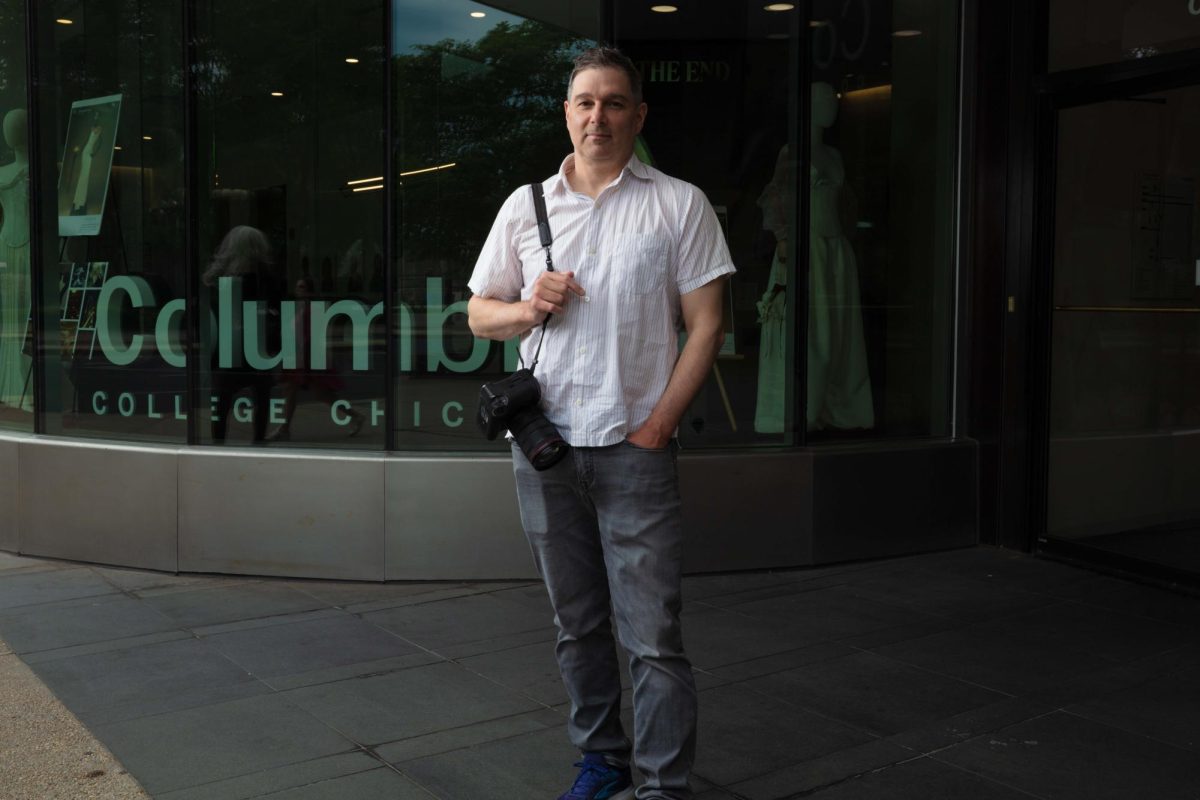
Columbia alum and Chicago Tribune photojournalist Chris Sweda contributed to the newspaper’s Pulitzer Prize-winning coverage of Operation Midway Blitz, a sweeping investigation documenting federal immigration enforcement in Chicago.
“It’s truly amazing to have worked on a project that went on to win a Pulitzer Prize,” Sweda told the Chronicle. “The ultimate goal is to capture and present the story to the readers no matter whose name is under the photograph. The Midway Blitz project expands that idea even more.”
Sweda, who graduated with a bachelor’s in photography in 1996, said about 75 staff members were part of the project, which was awarded the Pulitzer Prize for local reporting.
Operation Midway Blitz was a federal immigration enforcement operation launched in Chicago by U.S. Immigration and Customs Enforcement in September 2025. According to the Department of Homeland Security, the operation focused on arresting immigrants with criminal records.
Sweda said one of his most significant contributions to the project was documenting the reunification of Ruben Torres Maldonado with his family after an immigration judge granted him bond Oct. 30, after several weeks in detention.
“He had been arrested by federal immigration agents at a Home Depot,” Sweda said. “Maldonado’s return home to Chicago’s Portage Park was met with an embrace from his wife and two children, including daughter Ofelia, 16.”
Ofelia Torres was being treated for Stage 4 cancer at the time and died in February.
Pulitzer Prize-winning photojournalist and Columbia part-time instructor John H. White said he witnessed Sweda’s start as a photojournalist in the early 1990s.
“He’s a wonderful person to be around. I’ve known him for many years,” White said in an interview with the Chronicle. “I don’t know if anyone in photography or who has been through photography who has been more consistent than Chris.”
Junior photography major Kevin Ramirez-Gonzalez said seeing Sweda’s work made a career in photojournalism feel more attainable.
“For students like me who want to pursue this field professionally, seeing his work makes the path feel more possible and more real,” Ramirez-Gonzalez said.
Sweda said the recognition represents not just individual achievement, but the collaborative work of dozens of journalists, photographers and editors who helped document the story over the course of 64 days.
“We recognize awards like the Pulitzer, but great photojournalism happens every day on the most simple and mundane stories that get very little attention,” Sweda said. “And it starts with a respect for our subjects, showing up on time, getting names correct, sometimes speaking to them for a time in advance of making any photographs at all.”
Copy edited by Venus Tapang