
THE SUSTAINABILITY ISSUE
For many Columbia students, recycling and cutting back on everyday conveniences can feel insignificant as they question how much individual actions can meaningfully address climate change.
On campus, waste in common areas, frequent delivery orders and reliance on energy-intensive technologies reflect habits that contribute to environmental impact.
Sophomore illustration major Ozzy Squeo said they didn’t think about their effects on the environment until after they moved off campus, as the bills between gas and ordering food waned on them, and they found that living sustainably also had a positive impact on their spending habits
“Everything just seems so compact and put together in The Dwight. At least for me, I didn’t have to worry about that as much,” they said. “I’ve been unplugging stuff that isn’t turned on. It’s good to save on the electricity bill.”
Campus leaders, however, are continuing efforts to make sustainable choices more accessible for students.
Ann Kalayil, associate vice president of Facilities and Construction at Columbia, said the team has worked closely with the Student Government Association to improve recycling signage and accessibility across campus.
“We partnered with SGA, and we have actually placed recycling posters everywhere,” Kalayil said. “It basically tells you, in our recycling containers, what you can put in each of them, and recycling containers are available on every floor of every campus, in every campus building.”
The team also hopes to create a program where students and faculty can recycle unused art supplies for next semester’s classes. To Kalayil, who feels that many art supplies are left over at the end of each semester, this initiative will allow students to access these reusable items so they don’t end up in landfills.
However, living sustainably on campus goes beyond physical waste, as students point to academic pressure and convenience as barriers to more eco-friendly behavior, particularly when it comes to reliance on AI tools and delivery services.
Sophomore film and television student Natan Mekonnen said students who use AI should accept the possibility of failure instead of relying on models to finish their assignments to avoid the environmental effects of the technology.
Because of this, Mekonnen wishes that younger people would “just get out of their head” when dealing with AI.
“You know, it’s better to fail and stand behind it and be like, ‘Okay, I didn’t make it, but here’s what I can do to not let this happen again’ rather than, ‘Okay, I’m about to fail. Let me cover it with a Band-Aid,’” he said.
Despite differing perspectives, many students expressed a shared sense that individual actions alone are not enough to address climate change.
“The people who mostly should change for the sake of the environment and saving our planet are often people you don’t know, people who you will never meet and people who have more power than you could ever have in your life,” Mekonnen said.
Part-time instructor Richard Di Maio, who teaches a “Natural Disasters” course at Columbia and a “Climate Change” course at Loyola University Chicago, said both personal habits and political engagement play a role, but policy ultimately drives large-scale change.
Di Maio said students can take small steps to reduce their environmental impact, such as using public transportation instead of rideshare services and limiting food delivery.
“Get your lazy ass out of bed and walk someplace and buy it,” Di Maio said. “Relying less on the creature comforts that are connected to fossil fuels and making sure that your vote is going in the right direction, I think, are the two most important things that young people can do.”
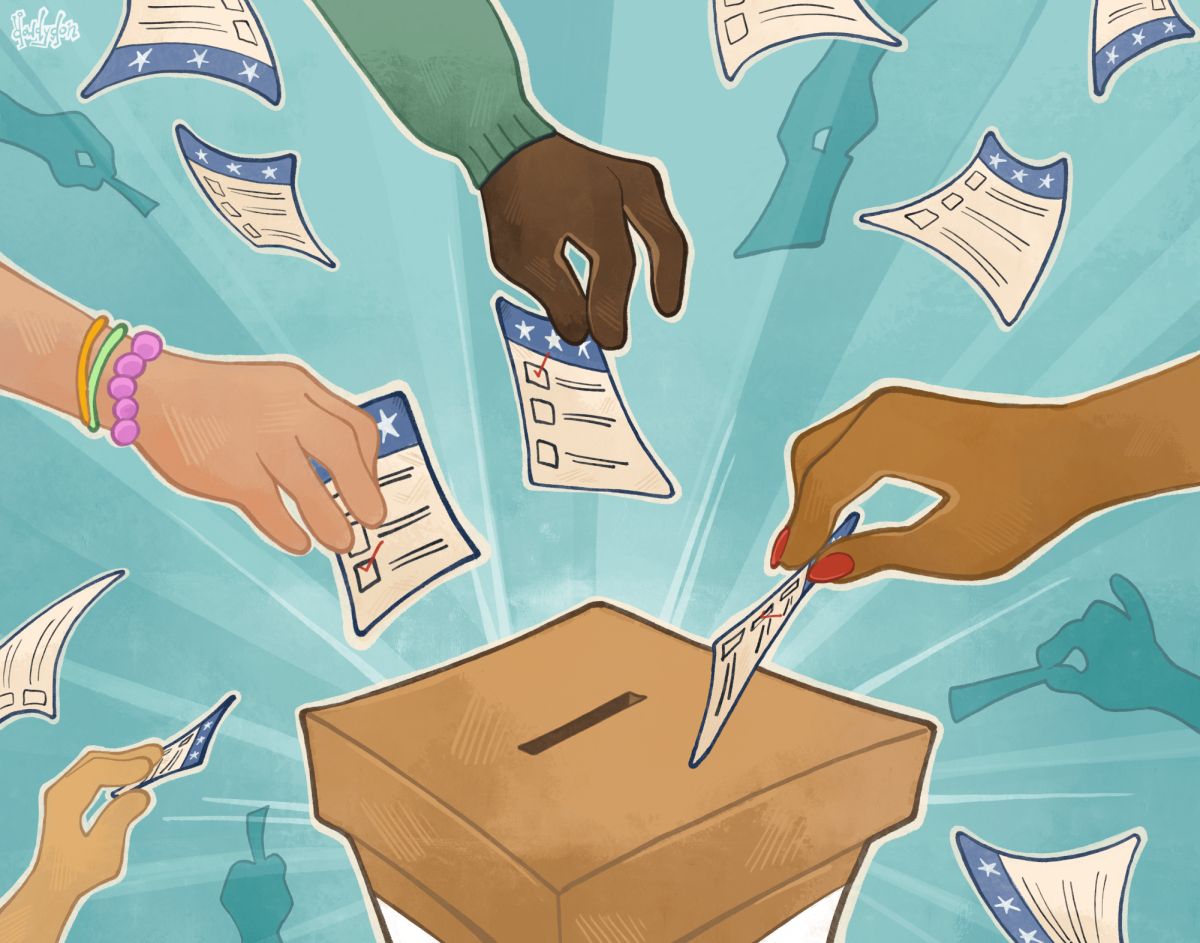
However, Di Maio also said individual habits have limits, but collective action, especially through voting and policy change, can give students and Gen Z greater influence over those in power.
“When it drizzles down to a student, they don’t realize how important their spoken word is and how important their vote is because individually, you’re not going to be able to get much done from recycling,” Di Maio said. “Doing something about it is trying to get the government to go back and continue to invest in renewables, which the Biden-Harris administration was doing quite well.”
Mekonnen repeated this sentiment.
“I think there’s always room for change. There’s always room for something to be done by everyday people to change the world around them. Sometimes it just takes a radical action. Sometimes it takes a really strong, really aggressive call to action.”
Copy edited by Venus Tapang