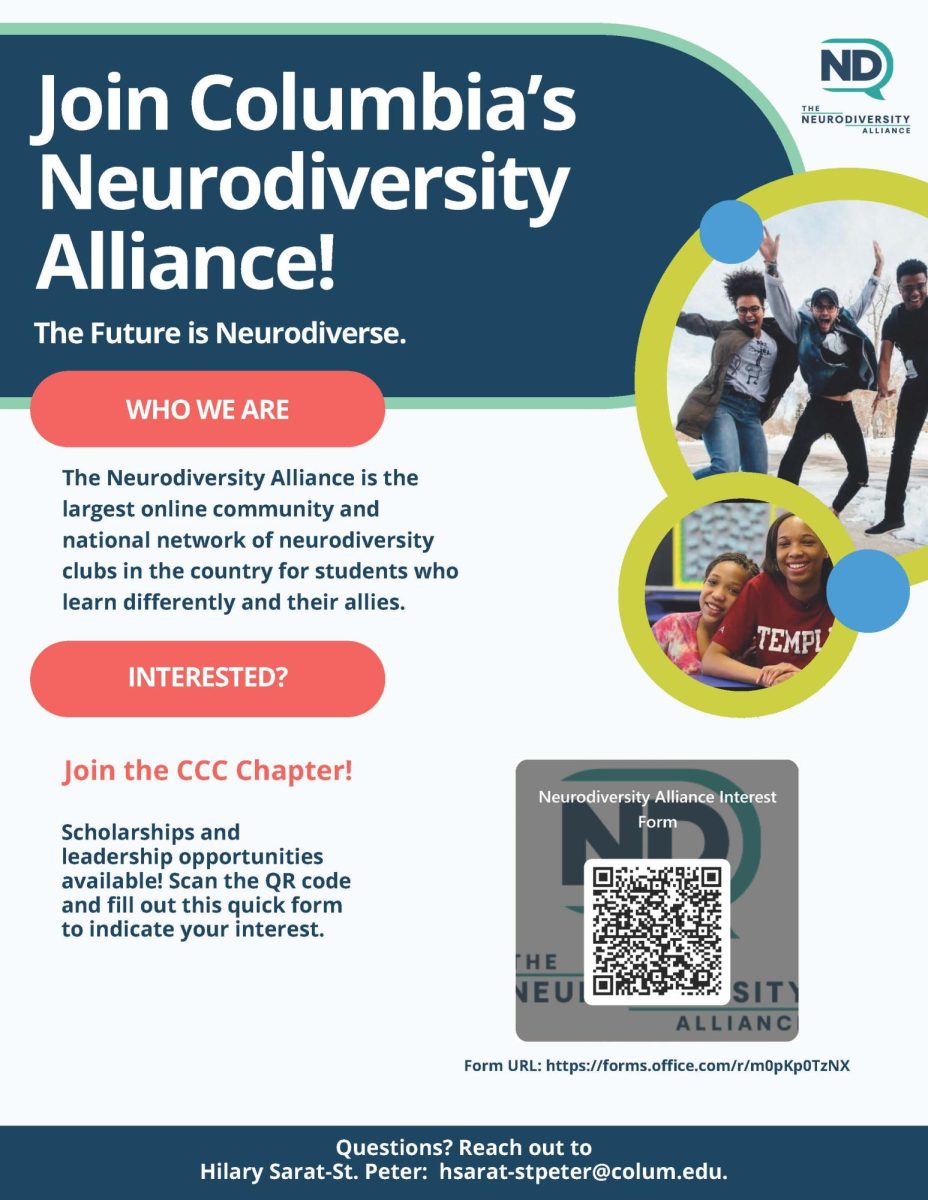
Columbia will launch a new student organization this fall aimed at helping neurodivergent students build professional connections, access career opportunities and find community on campus.
The Neurodiversity Alliance, a chapter of the national nonprofit organization of the same name, will offer students networking opportunities, professional development resources and connections to scholarships, grants and mentorship programs.
“This is a club that’s about empowerment,” said associate English professor and club faculty leader Hilary Sarat-St. Peter. “It’s about professionalization; it’s about getting out and having new experiences.”
Columbia’s neurodiversity alliance will be a chapter of the national neurodiversity alliance, a nonprofit organization dedicated to providing resources to neurodiverse students that will allow them to succeed in both school and their careers.
Ames Hawkins, the interim director of the School of Communication and Culture, proposed the idea of bringing the neurodiversity alliance to Columbia after encountering them at a conference last year.
“The national organization has all kinds of headliner opportunities,” they said.
Sarat-St. Peter said partnering with a national organization will help connect students with professional and academic resources.
“Working with a national organization gives us the opportunity to make sure that students have access to work opportunities, scholarships, grants and opportunities to meet high-profile neurodivergent people,” she said.
Emmet Pickens, a sophomore illustration major who attended an informational meeting for the group, welcomed the resources the alliance will bring.
“It’s like college opportunities, but more so geared towards people with mental disabilities, and you don’t often hear disabled folk being the conversation of college opportunities,” he said.
Along with the professional focus, the alliance will place a large emphasis on building a community for neurodiverse students to meet and build relationships with fellow neurodivergent students as well as allies.
“It’s here for everybody, every major, people who are neurodiverse or people who are allies,” Hawkins said.
Pickens was excited for the opportunity to meet more people in the neurodivergent community.
“I’m hoping to see more people and more disabled faces,” Pickens said, adding that the club will help improve the culture here at Columbia by “redefining expectations and biases” about neurodiverse people.
Sarat-St. Peter said she hoped to see the club grow within the coming years.
“I would like to see this become a college within a college, where students who identify as neurodivergent, or are allies, or have an interest in going to a field where they work with neurodivergent students have a community base to turn to for that part of their shared experience,” she said.
Copy edited by Katie Peters