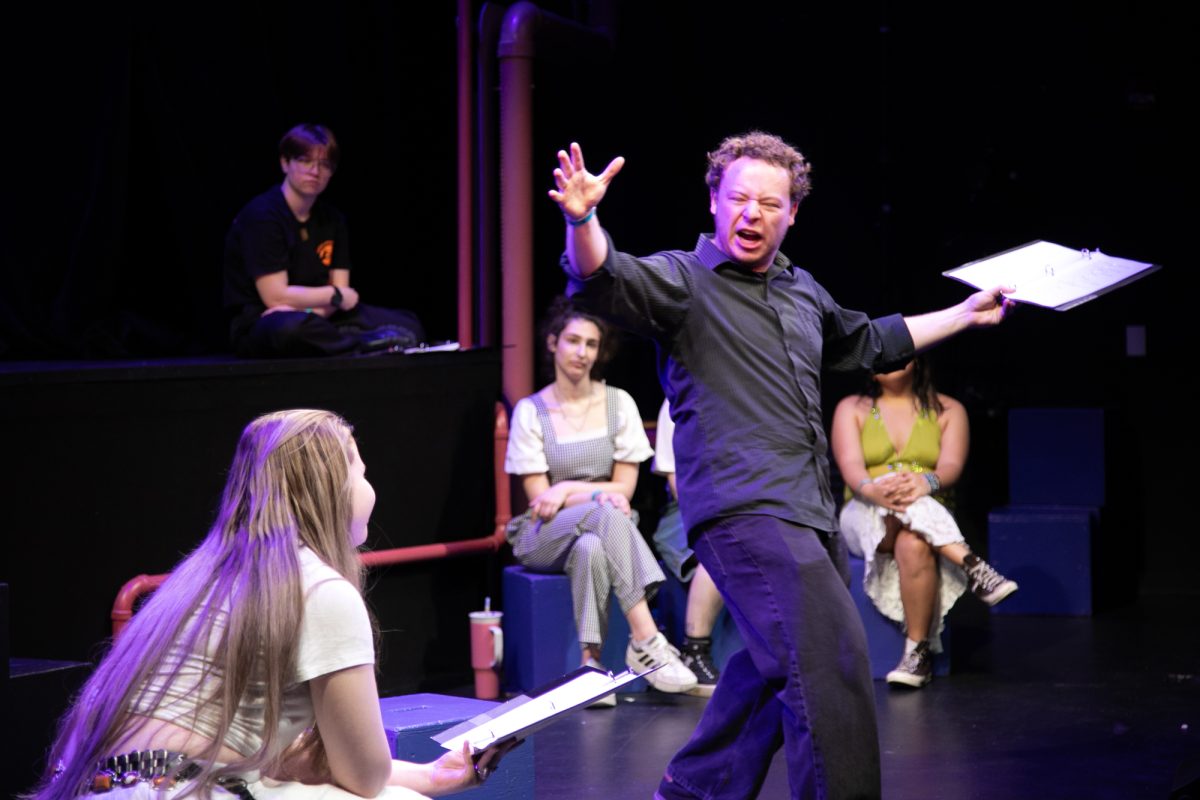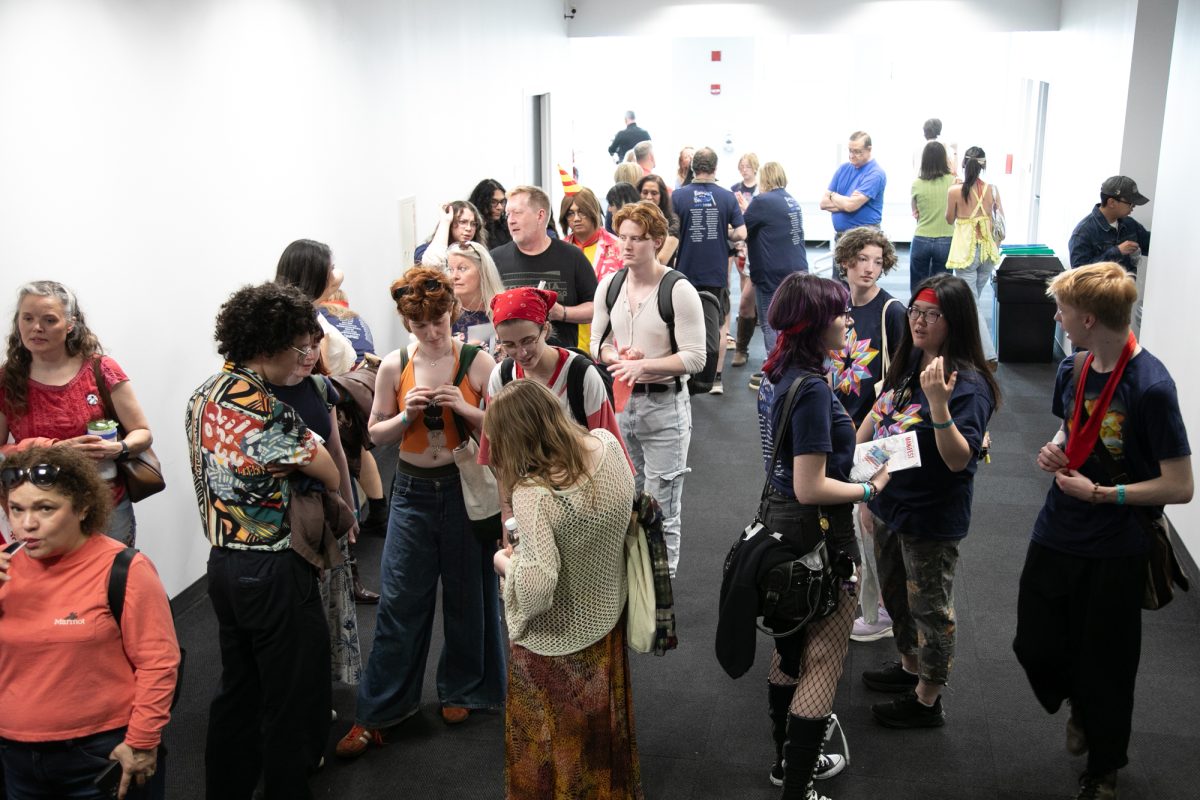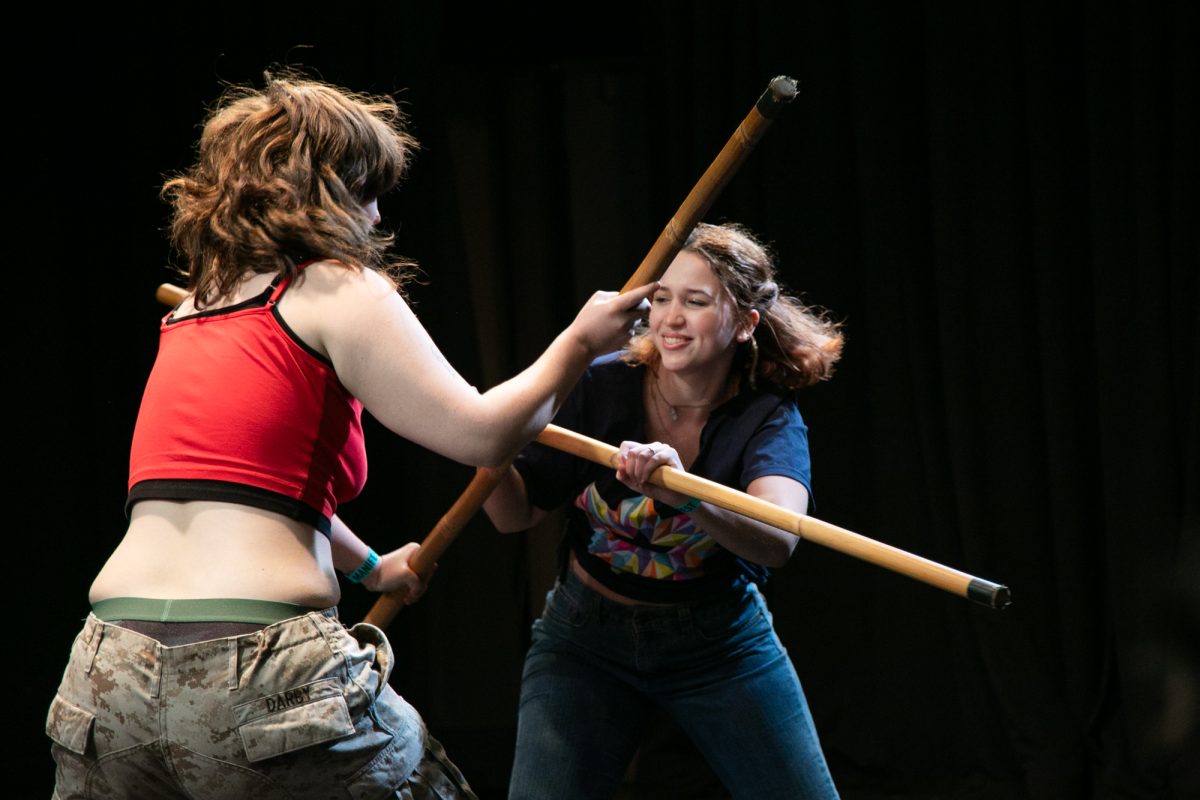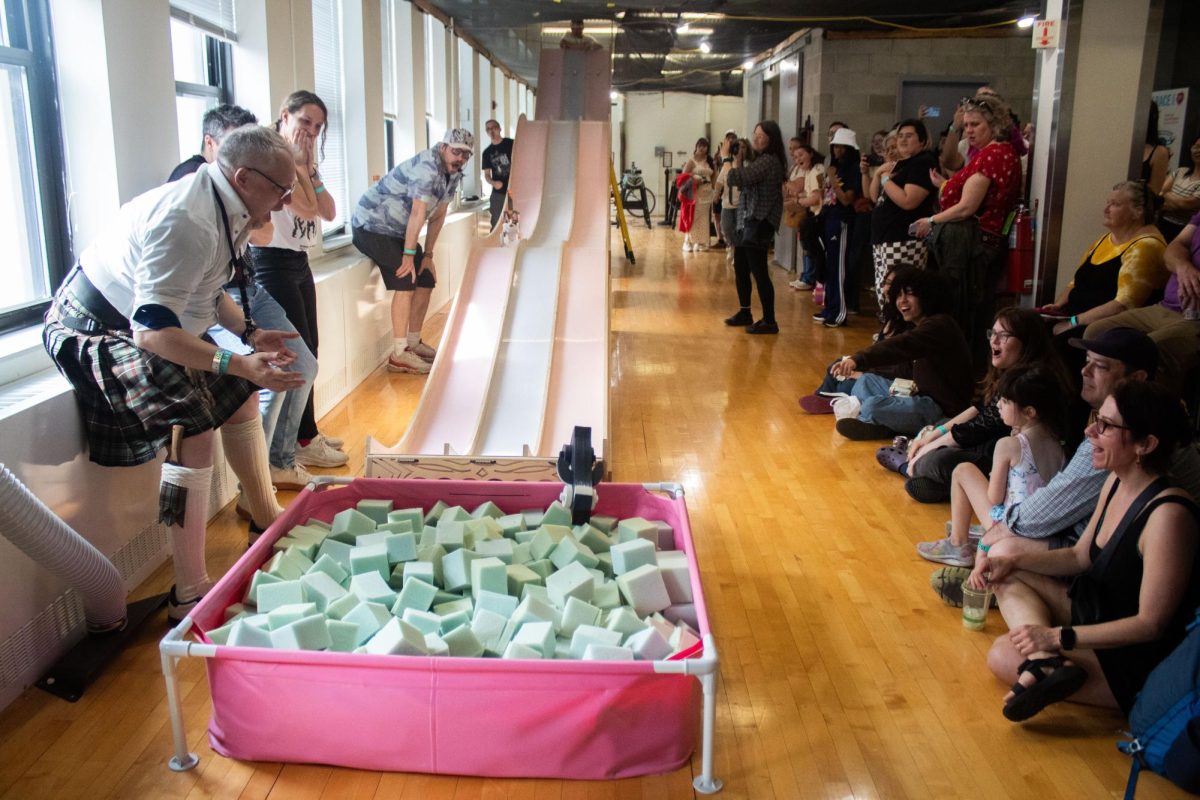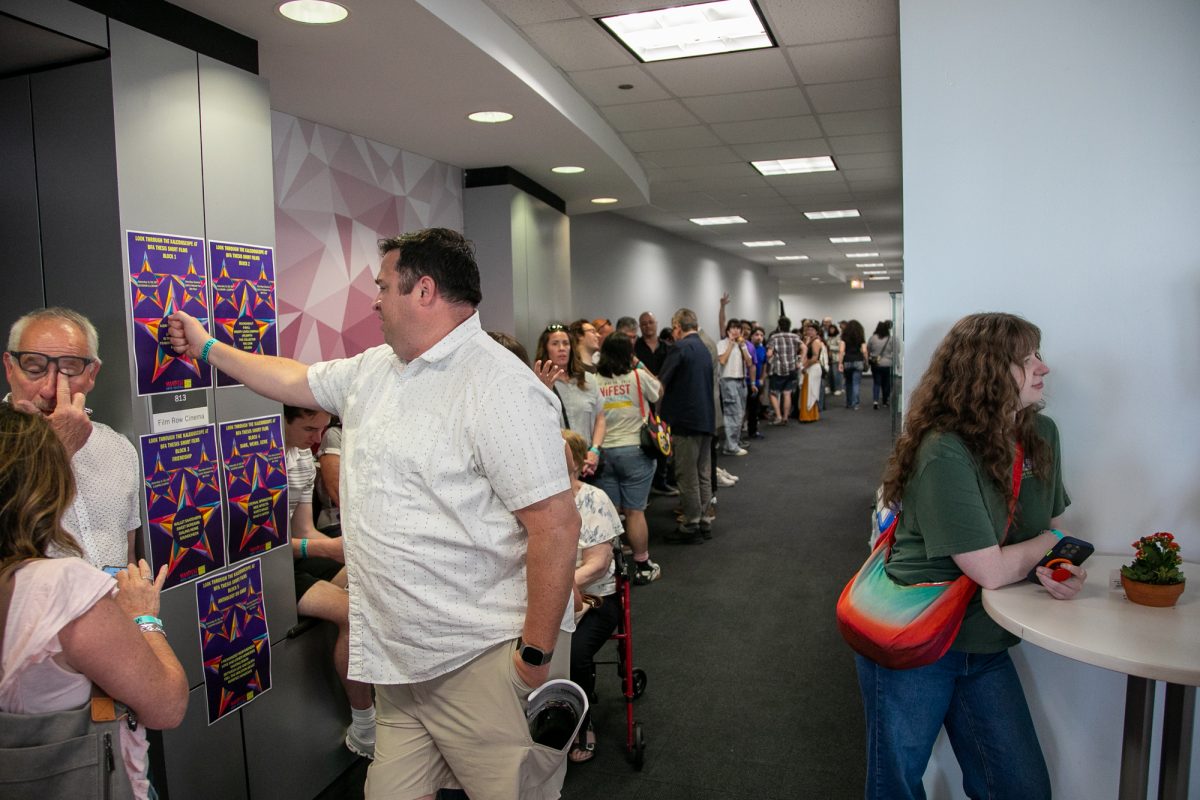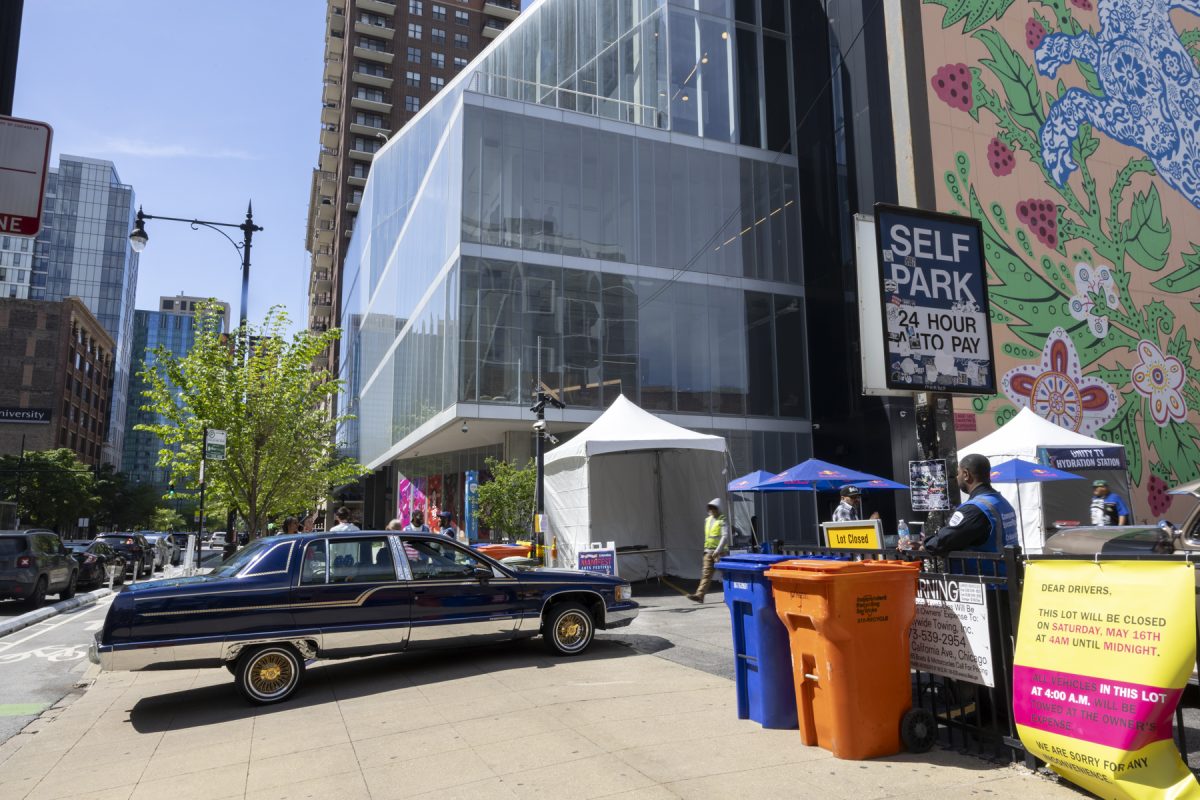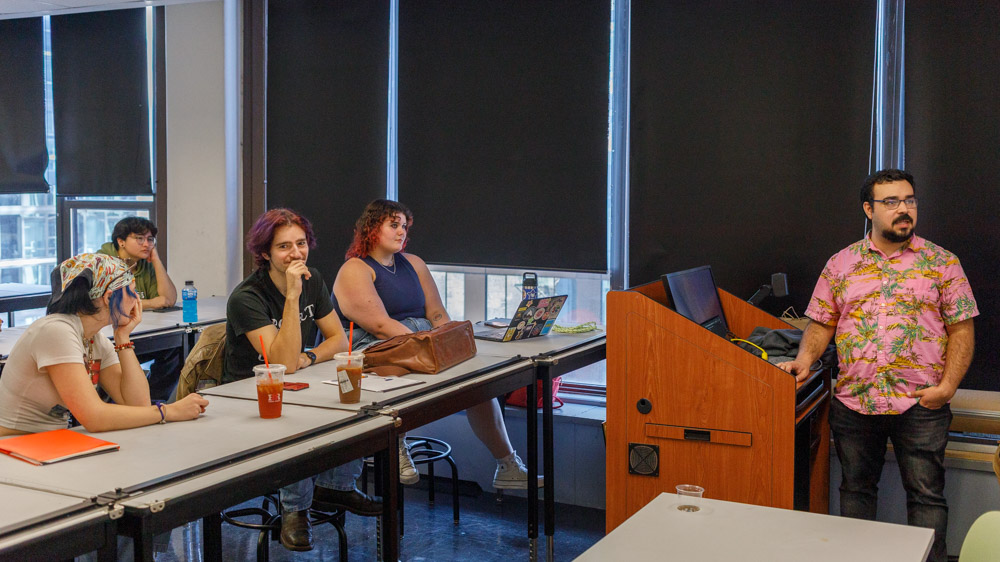
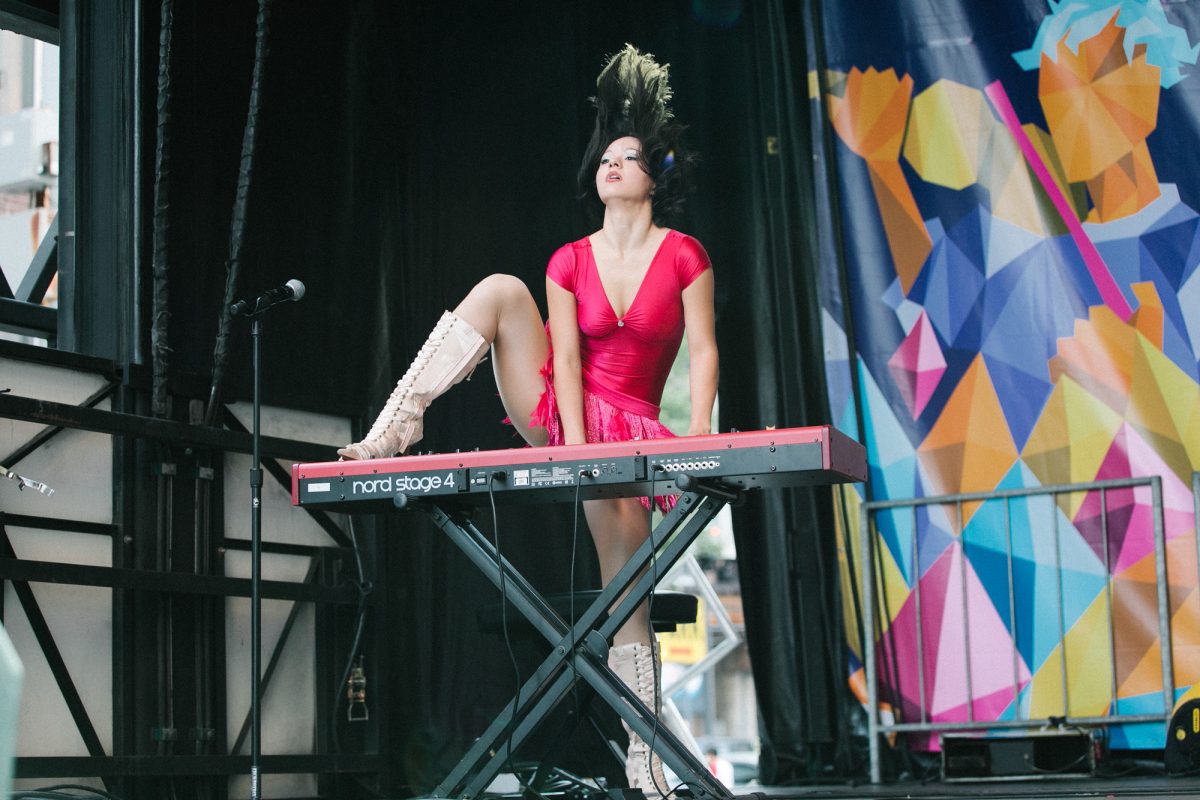
Students packed in front of the mainstage for one final dance, jumping and singing along as alternative rock band Mistrophia helped close out Manifest after a day of exhibitions, performances and celebrations across campus.
The Columbia student band, which won this year’s Biggest Mouth competition, opened for Manifest headliner Mikayla Geier.
In previous years, the winner of Biggest Mouth would be the headliner for Manifest’s closing performance. However, this year, artists were competing to be the opening act. Guitarist Matthew Flynn clarified this was always the plan.
“We were always supposed to just be the opener for the headline,” said Flynn, a junior performance and songwriting major.
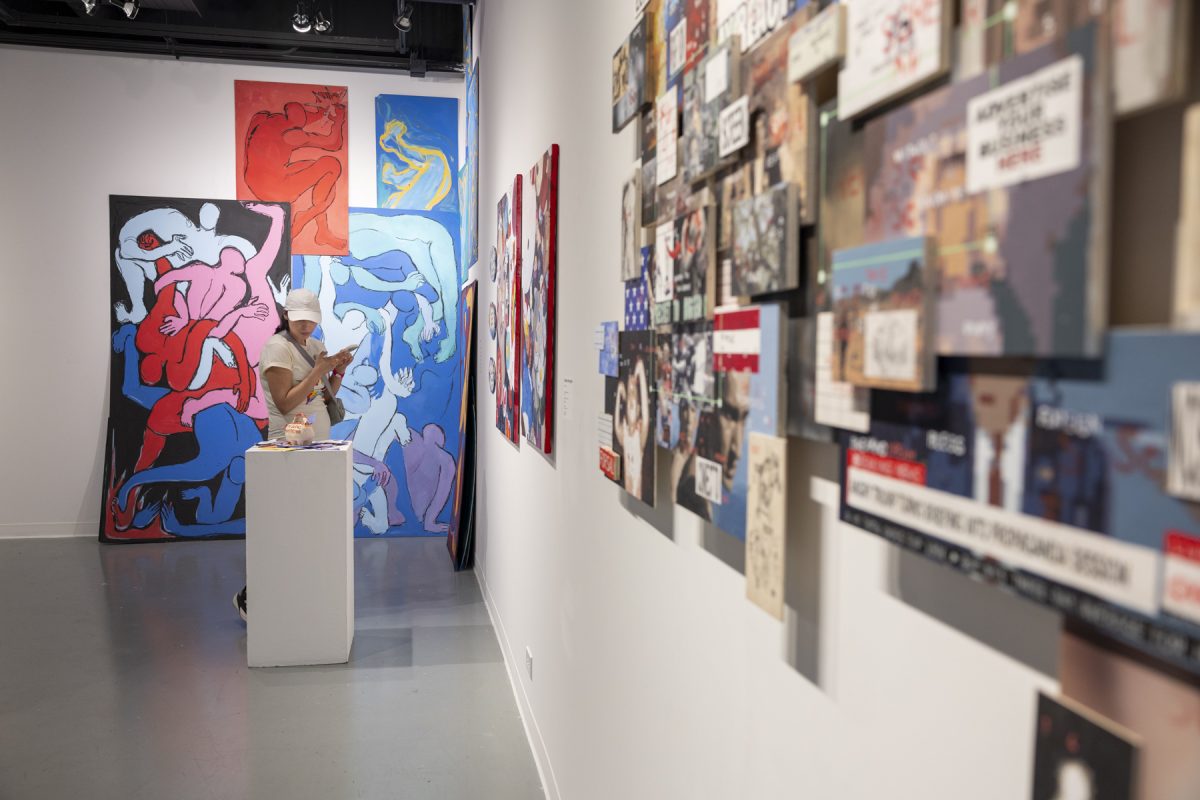
Flynn spent part of the day exploring student exhibitions, including Open HAUS at 623 S. Wabash Ave., where Mistrophia performed during Manifest last year.
“There were some really good performances,” they said.
Junior fashion design major Adelaide Hendrix said that Manifest was a needed energizer after finals, adding that seeing her fashion designer friends walk the runway was “inspiring.”
“It makes you want to immediately go home and create whatever you want to create,” Hendrix said.
Parents and friends also enjoyed the festivities. Jim Jones, dad to a senior film and television student, was impressed by the opportunities Columbia gives its students.
“You get the life experience before even leaving the school. I didn’t get that,” Jones said, whose daughter was helping to film performances on Manifest’s Mainstage.
Shortly after, headliner Mikayla Geier, a Canadian singer-songwriter, took the stage.
She said to Columbia students, “shine brighter than the Chicago Bean.”
What followed was an energetic, crowd-pleasing pop performance that continuously told Columbia college students that they are “divas.”
Senior film and television student Natalie Tadda said Geier had an “incredible stage presence,” with a performance that had a “Lollapalooza” feel.
She repeated Geier’s sentiments about Columbia students.
“Oh yeah, we’re divas all the way,” Tadda said.
Copy edited by Venus Tapang