THE CREATIVE CAREERS ISSUE
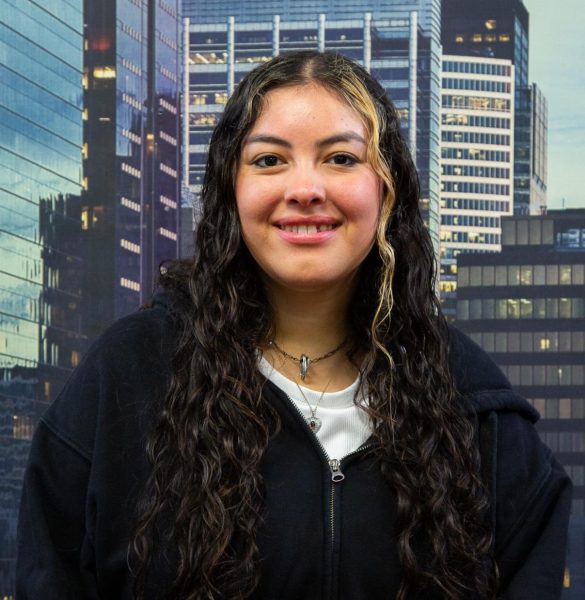
Sophomore film and television major Denzel Howard started posting his short films on Instagram two years ago. He now has over 18,000 followers, with millions of people viewing his reels.
His most viewed post on instagram is a selection of clips from his short film “Push and Pull.” The reel was viewed by 3 million people and received 476k likes.
“I think it’s just the cheapest and most accessible way for people to get their names out there right now,” Howard said. “You can make a video about anything. And who knows, it might get a billion views. I don’t know why you wouldn’t do that.”
For student artists, social media can provide an inexpensive way to build an audience, promote their work and find professional opportunities. But the pressure to attract likes and views can also shape their creative decisions, influencing what they make and how they present it.
“People like to say they create for themselves, but I feel like everybody who does art also gets enjoyment from other people enjoying their stuff,” Howard said. “So I’m very lucky to have a platform where I’ll make something, and a lot of people want to watch it and a lot of people get pleasure from it because that’s why I create art, to make people happy.”
Piper Estok, a first-year musical theatre major, uses social media to promote performances and connect with potential audiences.
“Posting shows and advertising ticket links is what gets people in their seats,” Estok said. “If you don’t sell tickets to your show, then your reach isn’t as broad.”
For artists, promoting their work on social media requires more than posting about upcoming projects. They also have to understand which platforms and formats will help their work reach an audience.
Laurence Minsky, a professor in the School of Business and Entrepreneurship, said social media is uniquely fitted for artists hoping to advertise themselves.
“Social is a very visual medium, particularly Instagram or TikTok, which was developed originally as a music promotion vehicle,” Minsky said. “You have to find the right vehicle for your art. It’s very intentional.”
Minsky said that while the opportunity to have so many people see their art is exciting to artists, some can develop a negative fixation on the engagement their posts are getting, possibly changing what they create.
In a 2019 study published in New Media & Society, researcher Kelley Cotter examined how Instagram influencers respond to the platform’s algorithms. Through an analysis of online discussions, Cotter found that influencers develop strategies based on their understanding of what the platform rewards in an effort to increase their visibility.
“You get your endorphins when people like and share. So if it doesn’t happen, it can affect a certain population in a negative way,” Minsky said. “If you keep looking at the shares and the likes and the reactions you get, then you might alter what you start producing artistically when you want to be true to yourself and what your artistic vision is.”
Howard has found himself falling victim to this cycle, especially when it comes to comparing himself to other artists.
“You see what other people are doing, and you want to compare yourself to them,” Howard said. “Then you start beating yourself up for not being at X amount of followers or not being at a certain number.”
His experience reflects a tension researchers have also identified among social media creators. Engagement metrics can be difficult to ignore, even when creators question their value.
A 2026 study published in New Media & Society examined how social media influencers interpret likes, views and other engagement metrics. Based on interviews with 16 influencers, researcher Victoria O’Meara found that creators have conflicting relationships with those numbers, sometimes rejecting them as measures of their worth while also internalizing them as indicators of their professional value.
Beyond tracking engagement numbers, artists can also compare their work with what other creators are posting.
First-year film and television major Annika Munson said comparing her work hasn’t stopped her from sharing her own projects.
“There’s been times where I have felt really confident in what I’m working on,” Munson said. “And then I’ll see someone did something similar and I’m like, ‘Oh, I don’t know if I should do this anymore.’”
Munson has recently used GoFundMe to raise money for her short film “The Mimic Mask” by sharing the link in her Instagram bio. She is just $300 short of her $1,800 goal.
Howard tries to make sure social media doesn’t affect his stories too much. While he does try to make sure his art is entertaining, he never wants to change his story in the name of engagement.
“When it comes to the structure of film, I am constantly trying to make the most engaging film possible because the goal is always to get as many eyes as I can on it,” Howard said. “But I would never change plot points because I think it would perform better. Story over everything always.”
Copy edited by Venus Tapang
This story also appears in the Chronicle’s fall issue.