Columbia’s production of “Fun Home” embraces many identities at once: joyful, meaningful and, as some cast members put it, unapologetically gay. Through rehearsals and performance, the cast and crew found themselves not just telling a story, but turning the process into an experience that extends beyond the stage.
Based on the graphic memoir by Alison Bechdel, the musical follows a lesbian cartoonist reflecting on her upbringing and her relationship with her father. Moving across timelines, the story examines memory, identity and what it means to come of age in different generations of queer life.
Director Elizabeth Swanson, a part-time instructor in the School of Theatre and Dance, describes the musical as an exploration of the past.
“It’s an adaptation of that memoir, where we see Alison as a character exploring her past and looking at different scenes from her childhood and college years, trying to stitch together a better understanding of her relationship with her father,” Swanson said.
At the center of the musical is Alison’s relationship with her father, Bruce, a closeted gay man who lived before the Stonewall uprising helped spark the modern gay rights movement. Alison, by contrast, comes of age in a later, more open era.
“They had two very different queer experiences,” Swanson said, noting that the story becomes a process of “trying to make peace with this and find a way to help herself move forward.”
For Greyson Holste, who plays Bruce, that generational divide is central to the performance.
“Part of that is the pre-post-Stonewall idea of just seeing the difference with how Bruce processes the fact that he is gay versus how Alison processes it,” said Holste, a junior theatre major. “Their comfortability with themselves and their comfort with their relationships with others and their comfort with processing the past is worlds different.”
While “Fun Home” is a queer story, Holste said it is also a college coming-of-age story.
“This is a story about being queer, but also about ‘how the fuck do I grow up and get out of my family, and get out of being in my parents’ house, and how do I find my place in the world after living at home for my entire childhood?’” Holste said.
That familiarity helps explain why the musical continues to resonate with audiences.
“There’s the secrets you hold, there’s the joy you find in your queerness, there’s the memories you sift through to try to build your identity,” Swanson said.
Abigail Ehrenberg, a junior musical theatre major who plays one of the versions of Alison, emphasized the emotional duality of the story.
“It gets heavy, and it gets rough at the end, but I think at the center of the show is queer joy,” Ehrenberg said.
That balance between joy and tragedy is reflected across the entire production. Senior theatre major, Mary Elizabeth Rose, who was the scenic designer for the play, described the Bechdel home as a carefully constructed illusion.
“He’s curated this environment that’s like a Victorian revival,” Rose said. “You build this great image for us of this Victorian house and then we get to break it.”
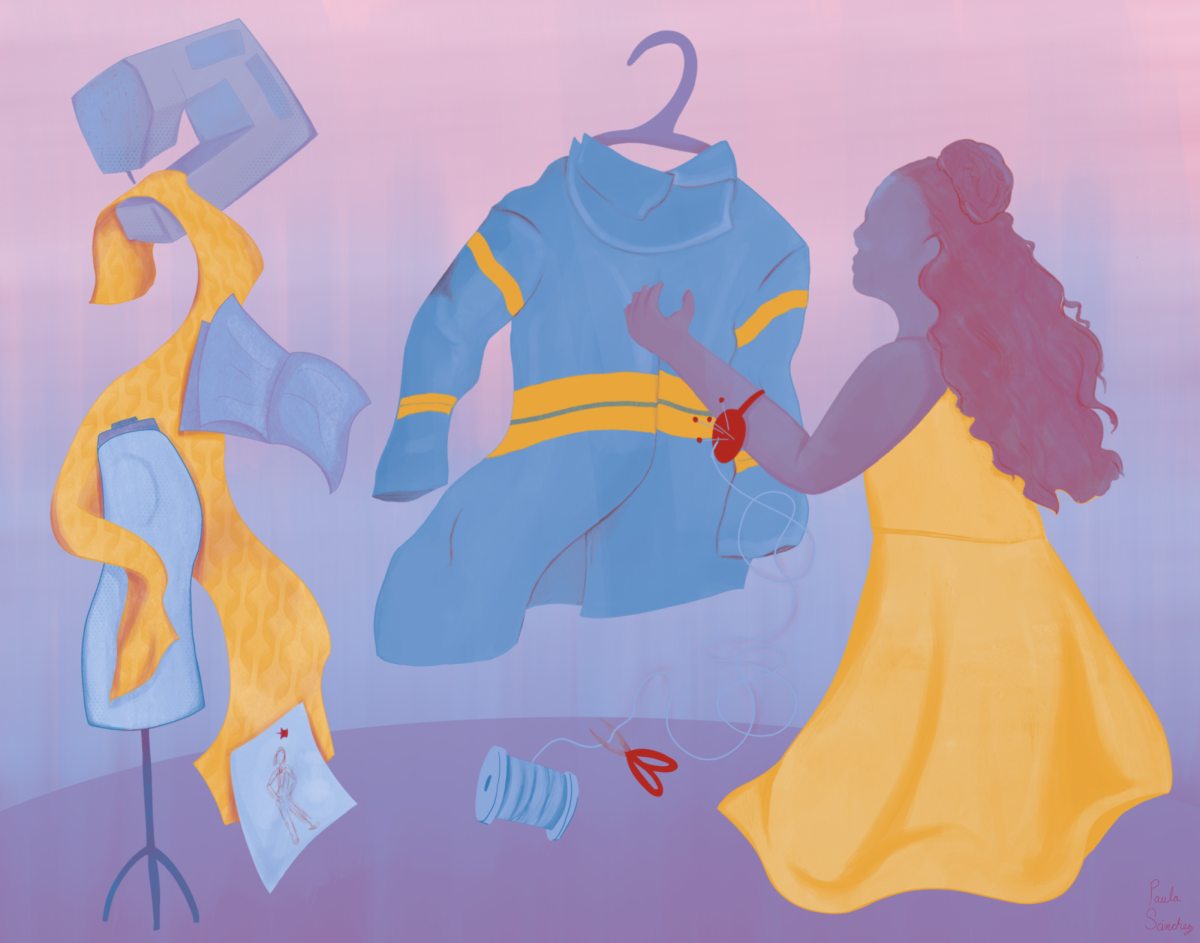
Design elements also ground the show in specific eras. Senior theatre design and technology major Jason Sullivan, worked across three timelines as a costume designer for the play: 1969, 1979 and 2001.
Sullivan said that they pulled inspiration from archival sources like Sears catalogs to stay true to the respective time periods.
Similarly, Emma Jean Golden, a senior theatre design and technology major who helped with prop design focused on historical precision.
“Modern cans of Pledge don’t look like cans of Pledge from the ‘60s and ‘70s, and so I designed labels to match the ones from that time,” Golden said.
These details help reinforce one of the show’s central ideas that identity is shaped over time, even when time itself is not linear.
“There is no chronological certainty to this musical,” Swanson said. “There’s only the certainty of her chasing after what she thinks and hopes might be true.”
For many involved, the show’s significance also lies in representation.
“It’s one of the only lesbian plays I’ve ever seen,” Sullivan said.
Ehrenberg said audiences will find the story deeply relatable. Whether it’s navigating family expectations, questioning identity or searching for a sense of belonging, the themes reach beyond the specifics of the story. The play encourages audiences to see parts of themselves reflected onstage, even if the experiences may not mirror their own.
“Even now, there’s so many people that can relate to the story of not being accepted in that space,” they said.
Included with its heavier themes, the production process itself has been marked by connection.
“It’s a really beautiful thing to see a little microcosm of queer community grow in the rehearsal room,” Swanson said.
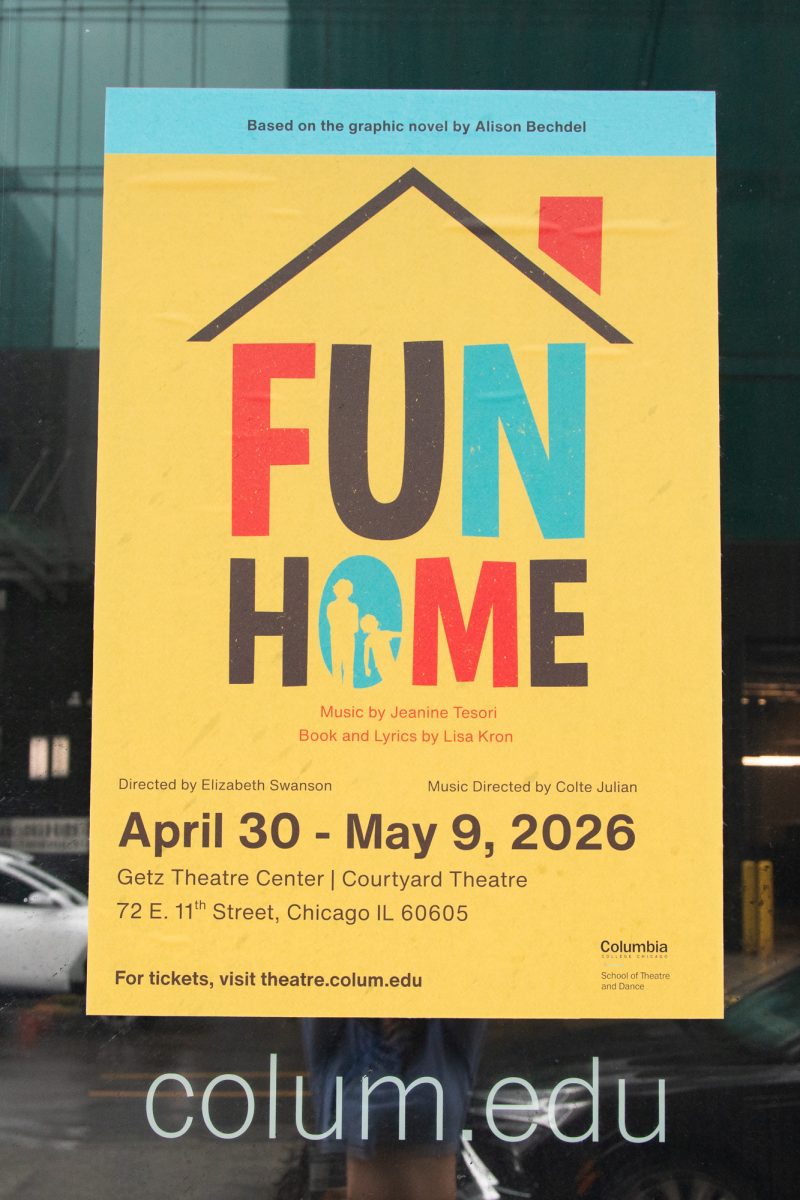
“Fun Home” will run from April 30 to May 9 at 7:30 p.m. in the Getz Theatre Center, with additional 2 p.m. matinee performances on Saturdays. Paid tickets are available on Eventbrite.
Copy edited by Katie Peters