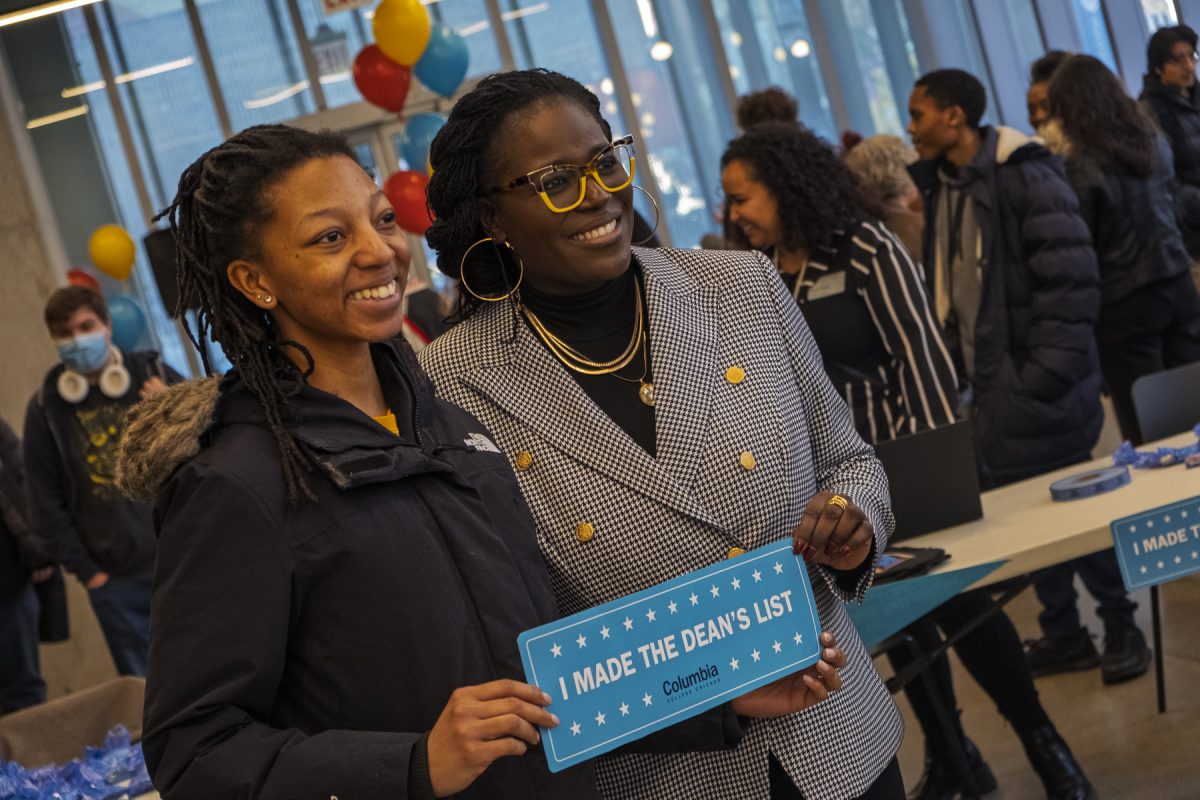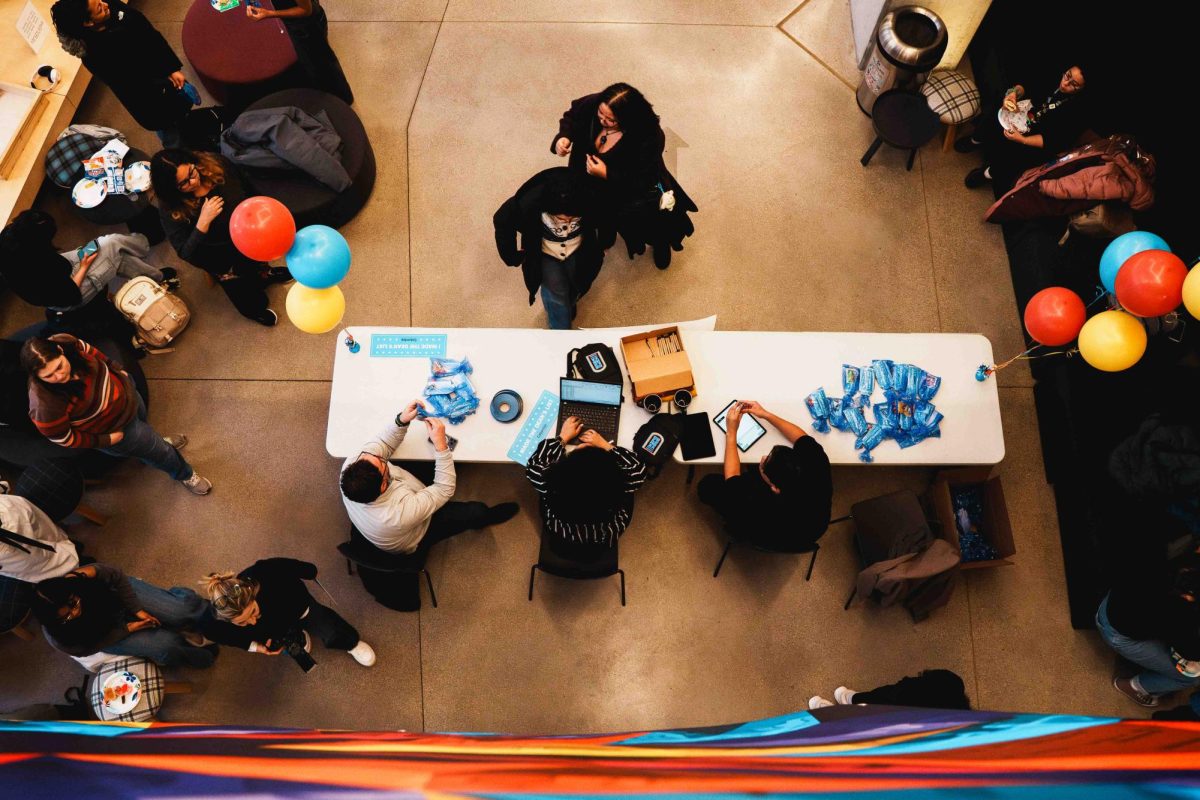
Matthew Rillie discusses DEI resources and upcoming events to get you engaged in a more diverse community.
Transcript:
0:07: Welcome back to Conversations.
0:09: I’m your host, Levi Libson.
0:14: Today, we’re diving into something that shapes every collaboration, every classroom and creative space on our very own campus: diversity, equality and inclusion.
0:24: I talked with coordinator of student support and engagement, Matthew Rillie, about upcoming events designed to bring people together, resources available to students, and what it truly means to build a welcoming community in a creative college environment.
0:37: I personally believe that whether you’re looking for support, connection or ways to get involved, this episode will be of great importance to you.
0:44: I’m Matthew Rillie, and I’m in the office of Student Diversity and Inclusion.
0:51: I’ve been here for, this is my 10th year.
0:53: Pronouns for me, anything is fine.
0:57: I mostly use they or he, but really anything said kindly is completely fine.
1:02: What resources exist for first generation students or students from possibly underrepresented backgrounds?
1:09: Good question.
1:11: So we think a lot about who we are as a college.
1:14: So our institution is over 50% 1st gen.
1:19: And is over 50% LGBTQ, students of color, first gen background.
1:26: This is what we think about all the time.
1:29: So our resources, whether they be explicit to them or just how we look at how we do programming overall, we think about it all the time. This is who our college is.
1:40: For us, we are a program heavy space.
1:43: So we have a lot of different cultural events, different smaller discussion events.
1:48: Anything from “I’m a first generation student, and I’m trying to navigate what it looks like to understand financial aid or my first job” or something like that, we can help point you to the right space.
2:01: We talk about, how does community look like in a space like ours? How does accountability look?
2:07: How does a welcoming space actually look when you’re thinking about diversity in practice?
2:14: Really, we try to embed everything we do, recognizing who we are.
2:18: If you ever feel as if you need to reach out to the student DEI office or just want a comfortable place to be, it’s located on the fourth floor of our 618 S. Michigan Ave. building.
2:28: We tend to be kind of the catch-all for DEI overall.
2:32: So I think we can be a really fantastic starting point of: I’m experiencing something like this, I’m trying to navigate my college with the identities or backgrounds that I hold. Now what?
2:45: We try to be really well-resourced with the city overall.
2:50: So if students are navigating the housing, support or mutual aid work or trying to find a food bank in the neighborhood that they live, those are things that we don’t direct, but we always try to know what is available in the city that we’re in, especially the places that our students live.
3:12: So if we can be a catch-all for anything, we’re happy to do so.
3:17: Student diversity and inclusion has hosted several useful events this last year, ranging from community-driven get-togethers to important info sessions.
3:25: We were thrilled. This month was a lot of fun because we host a lot for Black History Month.
3:31: March is Women’s History Month, and we have our annual uplift showcase on March 12th from 6 p.m. to 8 p.m. in the Hive. Anywhere from different art, open mic night, performances really centered on celebrating women and how much beautiful art has been centered in our movements around that.
3:52: The end of March, we’re also hosting a job panel discussion.
3:58: We’re really wanting to make a space to discuss our students, our diverse population that we have here.
4:04: We’re thinking about identities that we hold as we’re looking for those jobs. So how to navigate oppression, identity, how to think about still being true to who we are while looking for places to get paid and meet our needs.
4:19: What challenges would you say colleges face today when trying to create inclusive spaces?
4:24: Yeah, I mean, I don’t know if you’ve heard the news in the past year, but DEI is constantly being attacked in a very surface level way.
4:33: I think when you come to Colombia, you really start to experience what DEI actually means.
4:40: It is a diverse group of people wanting to make an inclusive space.
4:48: I think when we think about the worries of office rebranding or funding, or even if offices like ours can exist, we’re very proud that we’re still here. We’re very proud that our work is very true to ourselves.
5:02: I think we’ve done what we needed to do to make sure that we’re still here.
5:05: If changes continue to have to come, we will make sure that we are still here and doing this type of work.
5:10: But it’s unfortunate that there’s always this glooming threat about the importance of this work or if this work will go on. This is something that is very important to Columbia.
5:23: What are some small actions that students can take to contribute to a more inclusive campus culture?
5:28: Yeah, I love that you ask that because it really is the small things.
5:33: You know, we were at our Black Souls welcome event two weeks ago.
5:37: We had a very wide range of identities, of experiences, of art forms, and just the way that they uplifted each other, that they were ready to cheer on, the way that they expressed their own blackness.
5:50: Even if it wasn’t how they themselves would do it, they were so thrilled that this wide range of affirmation was there.
5:57: I think that is something that we continue to do.
6:00: There’s no one right way to do DEI, but we do think what’s core to this work is being willing to celebrate when things go right and being willing to change when things go wrong.
6:12: And I think we see that every day here, but those can feel like small things, but that really is the core of what DEI work can be.
6:21: Make sure to stay up to date with campus and metro news at columbiachronicle.com.
6:25: I’m Levi Libson.
6:26: Thanks for listening.
Copy edited by Katie Peters