A world-premiere play about love and survival in a climate-ravaged future is bringing Columbia students, alumni and faculty together onstage and behind the scenes at Redtwist Theatre.
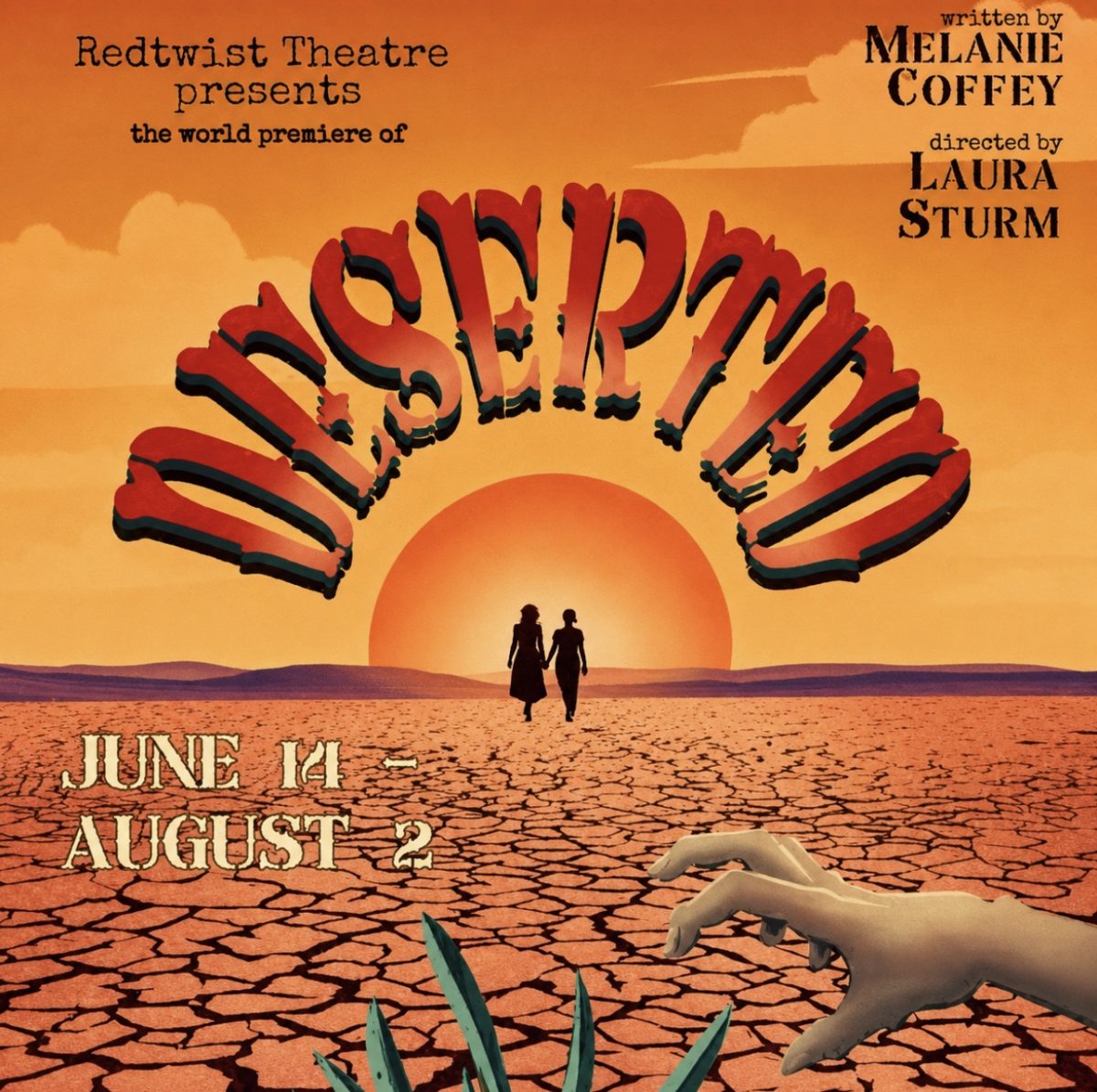
Written by playwright Melanie Coffey, “Deserted” follows two women navigating environmental collapse, dwindling resources and isolation. The script immediately caught the attention of Columbia adjunct professor Laura Sturm, who signed on to direct the production.
Sturm encouraged Columbia students to join the production after being drawn to its hopeful portrayal of a queer relationship and its nuanced approach to climate change.
“I love that it’s a love story about a few women, but it’s not about any sort of trauma,” Sturm said. “They just happen to be a married couple who happen to be women.”
Sturm said she was also drawn to how the play addresses environmental issues without making the message feel too direct.
“It sort of talks about, if we’re not careful, this is what a lot of our country could turn out to be,” Sturm said. “It’s a warning.”
When Coffey began writing “Deserted,” she wanted to explore something often overlooked: dirt.
Inspired by her mother’s interest in soil science and a documentary about desertification, she created a story set in a future where environmental changes have made resources like water and fertile soil scarce.
While the play explores climate change and environmental collapse, Coffey said the story ultimately focuses on the relationships and human experiences shaped by those challenges.
Coffey said she wanted the climate crisis to serve as a backdrop for exploring personal relationships and the challenges of trying to build a life.
“As a millennial, the ability to settle down is nearly impossible,” Coffey said. “The ability to own land or buy a house is so difficult, it’s not even on our radar.”
Coffey said the play uses the struggle to grow plants as a metaphor for people trying to establish roots in a changing world.
“I wanted to explore this desperation to just be able to own a house with a yard and put these roots down metaphorically,” and mirror it with “the soil that won’t take roots any longer,” Coffey said.
As a world-premiere production, “Deserted” allowed the creative team to collaborate directly with Coffey throughout the rehearsal process.
Wick Laipple, a senior musical theatre major and assistant director for “Deserted,” said having the playwright involved created a unique experience.
“Because this is a world-premiere, we were able to really work with our playwright in rehearsals and change and adapt things as we worked the piece to fit our actors and vision, while keeping true to the playwright,” Laipple said.
Laipple said Coffey’s involvement allowed the team to adjust parts of the script as the production developed.
“There were a few times something just didn’t land and the script would change slightly, or our playwright Melanie would have a realization about one of her characters on the spot to tweak something,” Laipple said.
For Laipple, the production also marked a personal milestone.
“This was my directing debut, so there has definitely been a lot for me to take away just by observing the rehearsal process and the inner workings of Redtwist,” Laipple said.
Behind the scenes, stage management helped keep the production organized throughout rehearsals and performances.
Moe Kuhlmann, a senior theatre arts production and practice major with a concentration in stage management, who is the stage manager for “Deserted,” said the role involves much more than what audiences see during the performance.
During rehearsals, stage managers track blocking, lines and production notes. During performances, they oversee technical cues and help ensure the show runs smoothly.
“During performances, you call the show,” Kuhlmann said. “You have all the cues written down for when lights go and when sound goes, and you will tell the board operators when to go.”
For the production’s understudies, “Deserted” offered a chance to prepare for future roles. Samantha Inciong, a senior acting for stage and screen major and the understudy for Cam and Hiker in “Deserted,” said understudies take on a unique responsibility.
Inciong compared understudies to substitute teachers, explaining that they must know the character’s lines and blocking well enough to step into the role if needed.
“It’s possible to spend hours learning lines, blocking, etc., and not have the chance to perform in front of an audience,” Inciong said. “So I am thankful for Redtwist Theatre giving us understudies the opportunity to perform the show for two nights.”
For Inciong, the experience provided insight into the realities of professional theater after college.
“I know all productions are going to be different, with different experiences and learning curves,” Inciong said. “But I’m thankful this production taught me to stay on my toes, do my part and trust the process.”
The actors also played a key role in shaping the characters and themes of the production. Shenise Danyèl, an interdisciplinary arts alum and the actor portraying Cam in “Deserted,” said creating a character who had never been performed before required understanding Cam’s motivations and purpose within the story.
Danyèl said Cam represents the difference between having good intentions and creating meaningful change.
“Cam is that type of character that really brings the realization that your intentions are different from your impact,” Danyèl said.
Danyèl said the role also reminded her that every character, regardless of size, requires the same level of preparation and commitment.
“There is no small role,” Danyèl said. “Every role is important.”
While the production explores a fictional future, Sturm focused on creating a world that felt like a possible extension of the present.
Through the set, costumes and sound design, the creative team built an environment where water and fertile soil became precious resources and the vast, isolated landscape reflected the loneliness of the characters’ struggle for survival.
“I felt like in this world, their situation is dire,” Sturm said. “They could potentially starve or die of thirst.”
Coffey said seeing the play move from the page to the stage deepened her understanding of the story. While the environmental themes remained important, collaboration with the cast and creative team helped emphasize the relationships at the center of the play.
One challenge was finding the balance between the climate crisis and the human experiences within the story.
“No one really is going to be like, ‘Wow, I’m obsessed with dirt now,’” Coffey said. “The people are what the audiences are going to latch onto.”
The production’s connection to Columbia extended across multiple areas of the creative process, with students, alumni and faculty members contributing to the show. Coffey said she appreciated the trust and collaboration from the team as they developed the production.
“I felt very safe,” Coffey said. “I really, really trusted my director.”
For Laipple, the most rewarding moment came during the first full technical rehearsal, when the different elements of the production finally came together.
“It was the first time I really got to see the whole picture and everything we’d been working on all together,” Laipple said.
Through the work of Columbia students, alumni and faculty members, the production offers a glimpse into how emerging theater artists transition from classroom experiences into professional creative spaces.
“Deserted” runs through August 2 at Redtwist Theatre at 1044 W. Bryn Mawr Ave. More information and tickets are available on Redtwist Theatre’s website.
Copy edited by Venus Tapang