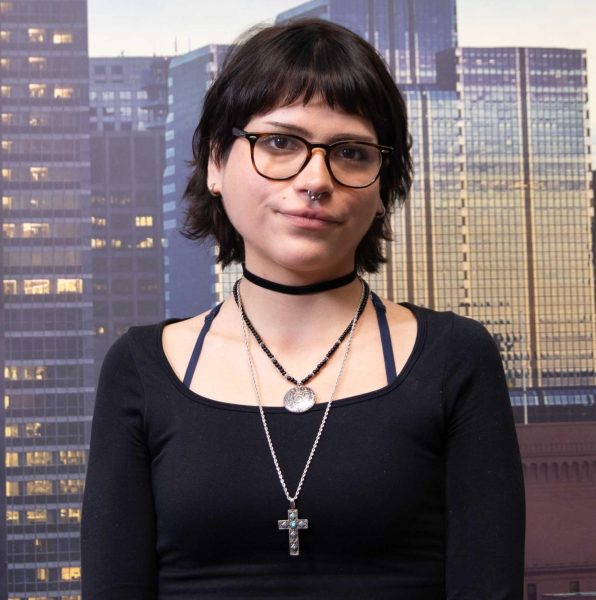
For Camila Rivero Pooley, a 2018 Columbia alum and the artist behind MATADORA, rage is not something to suppress. It is something that can be transformed.
“I was always demonized,” Rivero Pooley said. “I was made to feel like a monster when I was just denouncing things I felt were unfair.”
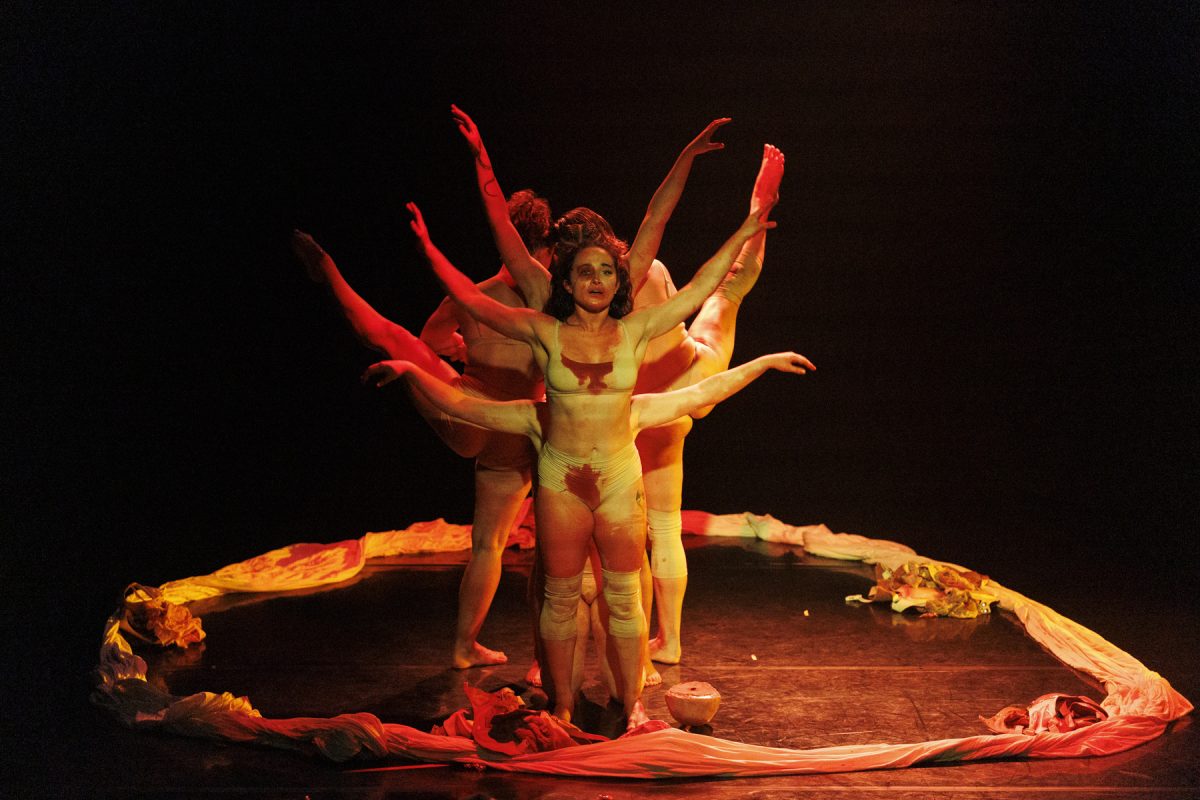
The hour-long dance theater production premiered Thursday, Sept. 24, at Columbia’s Dance Center, combining choreography, physical theater, lighting, sound and body horror to explore feminine rage, identity and transformation.
INSÉKTA describes MATADORA as a “spectacle of divine horrors.”
“For me, MATADORA is like a new archetype with the understanding that rage is a source of power and self-possession,” she said.
The production follows a creature-like figure through a mythological journey involving rage, the psyche, misogyny and machismo. Throughout the performance, the dancers shift between human and monstrous forms, using their bodies to explore what anger can become when it’s no longer treated as something that should be hidden.
The idea came from INSÉKTA’s own experiences with anger and gender expectations. Born in Lima, Peru, and raised in Caracas, Venezuela, she said she was often made to feel her anger was something that made her a “monster.”
Through MATADORA, INSÉKTA said she wanted to create an archetype that could resonate with women and gender-diverse people while embracing the complexity of emotions that are often suppressed.
The production’s grotesque imagery developed alongside that exploration.
INSÉKTA first began thinking about the project in 2024 before presenting earlier versions at Columbia in 2025 and 2026. She said the piece went through four to five iterations before becoming the production that premiered on Thursday.
Gabriela Chauta has been involved with the project since an earlier version of the work. For the dancer, the process has been one of transformation as well.
“MATADORA has been a meaningful process for me,” Chauta said. “The feeling I have when we rehearse and perform is one of female rage, metamorphosis, challenging the boundaries of the norm and a crazy but ecstatic energy.”
Chauta said working with a Latina choreographer has also made the experience particularly meaningful.
“As a fellow Latina, I feel so proud to learn from and be inspired by a powerhouse like INSÉKTA,” Chauta said.
The production extends beyond choreography. Lighting designer Alé Favila translated INSÉKTA’s visual references and color palette onto the stage, while sound designers Hugo Flores García and Samuel Osorio created an electronic soundscape using improvised recordings.
Osorio said he and Flores García worked with INSÉKTA to record live material over roughly two to three weeks. They later selected sections of those recordings and assembled them into the final sound collage.
The result is intentionally unsettling, with sound and lighting helping to create the world surrounding the dancers.
Costume designer Jacky Kelsey helped shape the visual language of MATADORA, designing around the dancers’ intense physical movements and the production’s distorted view of the body.
“I knew I wanted something that looked a little bit constricting or contorted the body in some way,” Kelsey said.
The designs evolved into sculptural harnesses and fleshy, prosthetic pieces made of foam.
“So many shapes are made just with their bodies,” Kelsey said.
Together, the costumes, lighting and sound help create the mythology surrounding the dancers, turning the stage into the world of MATADORA.
The production also asks the audience to participate after the performance.
Eduardo Favian, who worked on marketing and public engagement, helped create an interactive installation where audience members respond to the prompt “How does rage live in your body?”
Artwork that attendees made based on their responses will become part of an audiovisual archive connected to the production.
Audience members at Thursday’s premiere described the production as immersive, unsettling and difficult to look away from.
Amanda Kirschbaum, a sophomore dance major, said she was immersed the whole time.
“They were full-on creatures on stage,” Kirschbaum said. “There was not one moment where they lost it.”
Sara Larson, a sophomore dance major, said the production left her thinking about its meaning.
“I felt like I could relate to a lot of it,” Larson said. “Even though everything was kind of metaphorical in a way, I felt like I really resonated with all the feelings.”
That reaction is what INSÉKTA hopes the work can create. She said she wants audiences to experience it emotionally.
“I want to make things that make people feel things more than they think,” INSÉKTA said.
After the opening night performance, INSÉKTA said she was excited to see how audiences continued to respond to her work.
“We gave birth to a monster,” she said. “And I love it.”
MATADORA runs at the Dance Center through Saturday, Sept. 26.
Copy edited by Isaac Russo