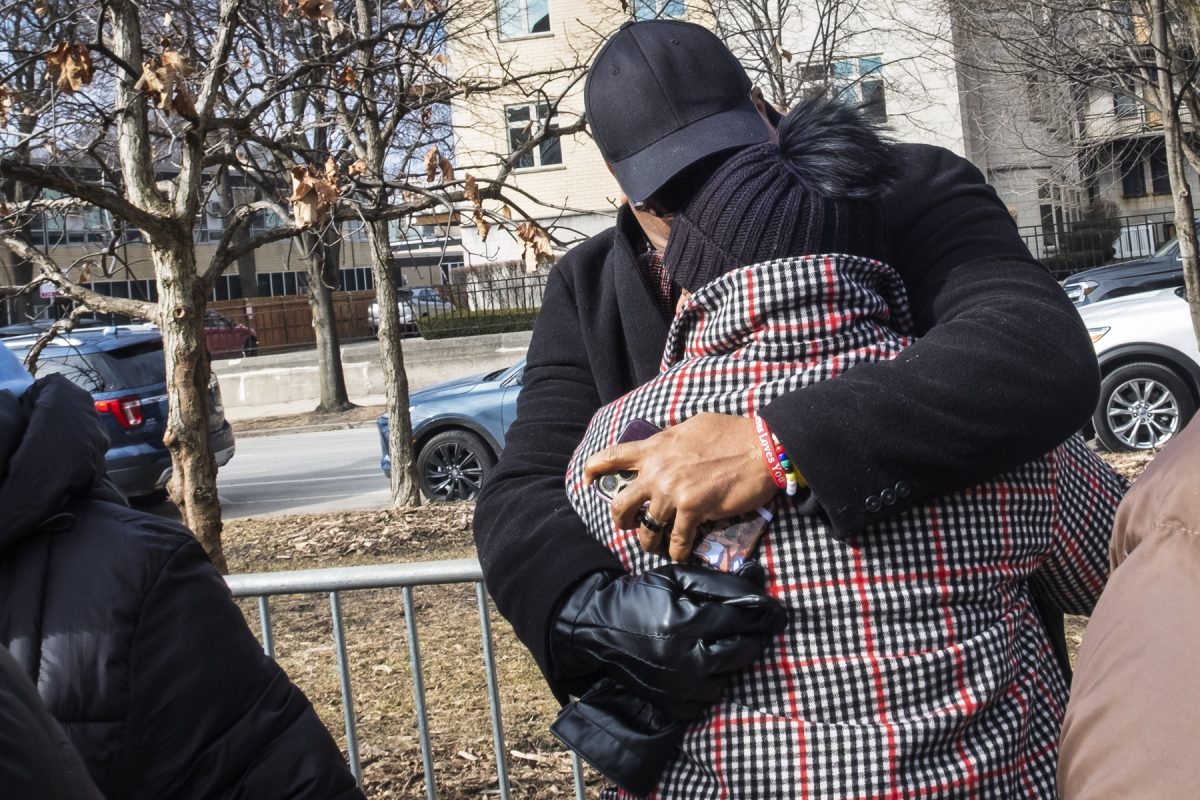
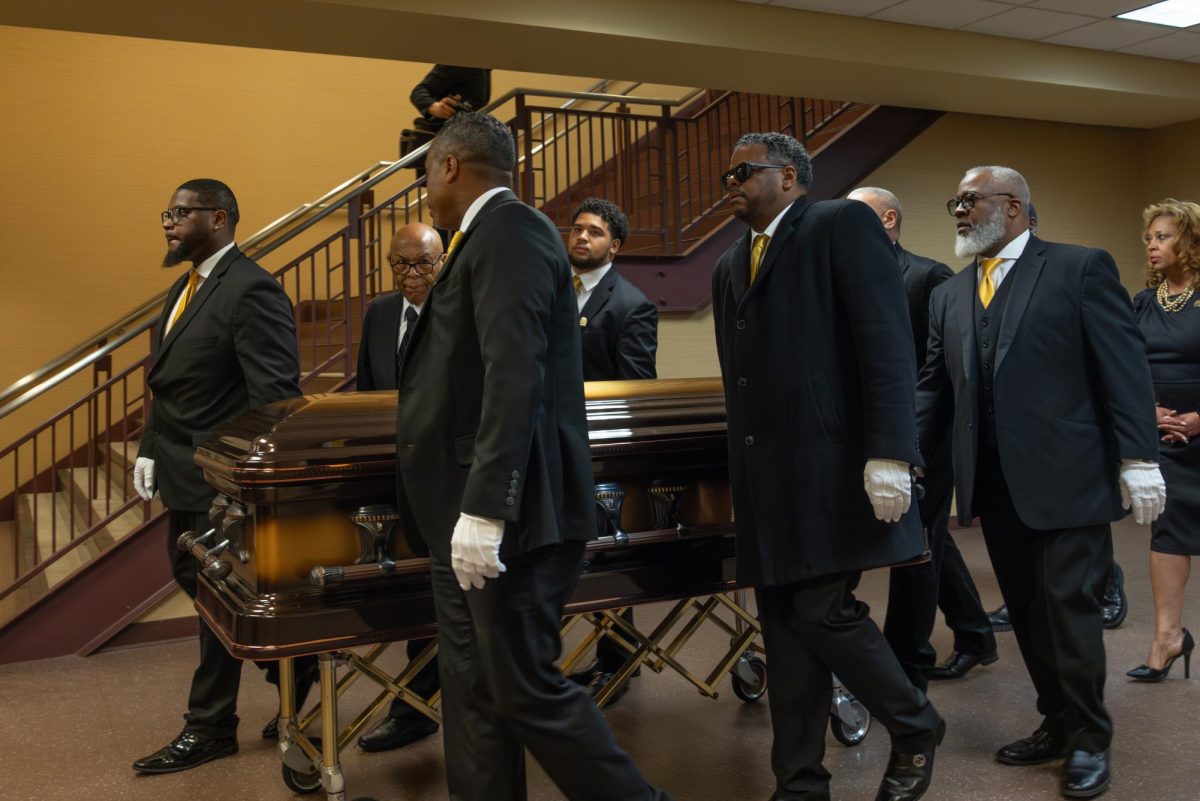
Thousands of mourners filled the House of Hope on Chicago’s Far South Side on Friday, March 6, for a jubilant public service honoring the life and legacy of the Rev. Jesse Jackson Sr., the civil rights leader, the founder of the Rainbow PUSH Coalition and former presidential candidate whose decades of activism reshaped American politics.
“This is not a homegoing, this is a celebration,” said Charles Jenkins, a Chicago pastor and gospel artist who spoke at the service. “Together we will celebrate Rev. Jackson’s life with much joy and much appreciation for all of his work.”
Jackson died on Feb. 17 at age 84. In the weeks since, thousands have paid tribute, beginning with a public viewing at the headquarters of the Rainbow PUSH Coalition in Chicago’s Kenwood neighborhood before memorial events in Washington, D.C. and South Carolina.
Former presidents Bill Clinton and Joe Biden joined former Vice President Kamala Harris and former President Barack Obama in honoring Jackson during the service.
During his remarks at the service, Obama said Jackson “paved the road” that allowed him to become the country’s first Black president.
“And it was because of that path that he laid — because of his courage, his audacity, that two decades later a young Black senator from Chicago would ever be taken seriously as a candidate for the presidential nomination,” Obama said.
Harris described the gathering as both a remembrance and a moment of renewal.
“This afternoon has been such a beautiful remembrance of his spirit, his life and his faith,” Harris said.
Clinton reflected on Jackson’s ability to distill complex ideas into memorable lines, recalling one of the civil rights leader’s most famous admonitions to young people about drugs.
“Whenever I get discouraged, I think about Jesse. I just laugh and think you gotta open your brains, not your veins,” Clinton said.
Clinton said the phrase captured Jackson’s gift for political and moral clarity.
“No matter how long I live and stay in politics, I may never have a single line that’s that good,” he said. “I mean, think about it. It’s totally brilliant.”
Many in the crowd said Jackson’s influence shaped their own lives and activism.
Keith Peroy grew up as a family friend to the Jacksons and described his relationship with the reverend to be like “a second father” to him in an interview with the Chronicle.
Peroy believes it is important to keep the movement “strong and unified” and to continue building off the groundwork laid by civil rights leaders such as Jackson and Dr. Martin Luther King Jr.
South Shore resident Alli Muhammad also shares a similar belief as the national leader of The Revolutionary Black Panther Party.
“Jesse Jackson represents a very strong continuity of the human rights struggle as he carried the Rainbow family dynamic on,” Muhammad said in an interview with the Chronicle.
Muhammad emphasized that Jackson’s message still resonates during ongoing struggles for justice.
“As we approach this and we’re in the midst of this battle to fight, that is important.”
Muhammad said. As Jackson “would say: when we fight, we win.”
Michael J. Garner, the citywide chief business diversity officer of New York, attributed his personal success to the influence of Jackson.
“He inspired me personally, inspiring me to reach the pinnacle of government,” he said in an interview with the Chronicle.
Garner said Jackson’s “positive impact on America” can be seen in voter registration and better educational opportunities in Black communities.
Jackson will be buried at Oak Woods Cemetery on Chicago’s South Side, where his final resting place will be alongside pioneering investigative journalist Ida B. Wells and former Chicago mayor Harold Washington.
Copy edited by Katie Peters