
THE SEX ISSUE
Ireland Cohrs, a sophomore acting major at Roosevelt University, recalls encountering misogynistic ideas as early as middle school. She remembers classmates repeating comments about women that felt rehearsed, language she later recognized as coming from online spaces.
“I remember thinking, ‘Where are you seeing this? You’re twelve years old,’” Cohrs said.
A few years later, videos of then presidential candidate Donald Trump making sexually explicit remarks about women circulated widely online. Cohrs was 13 when she first heard them. “Then he ended up becoming president,” she said.
For Cohrs, a former Columbia student, those moments marked a shift in how she understood gender and power.
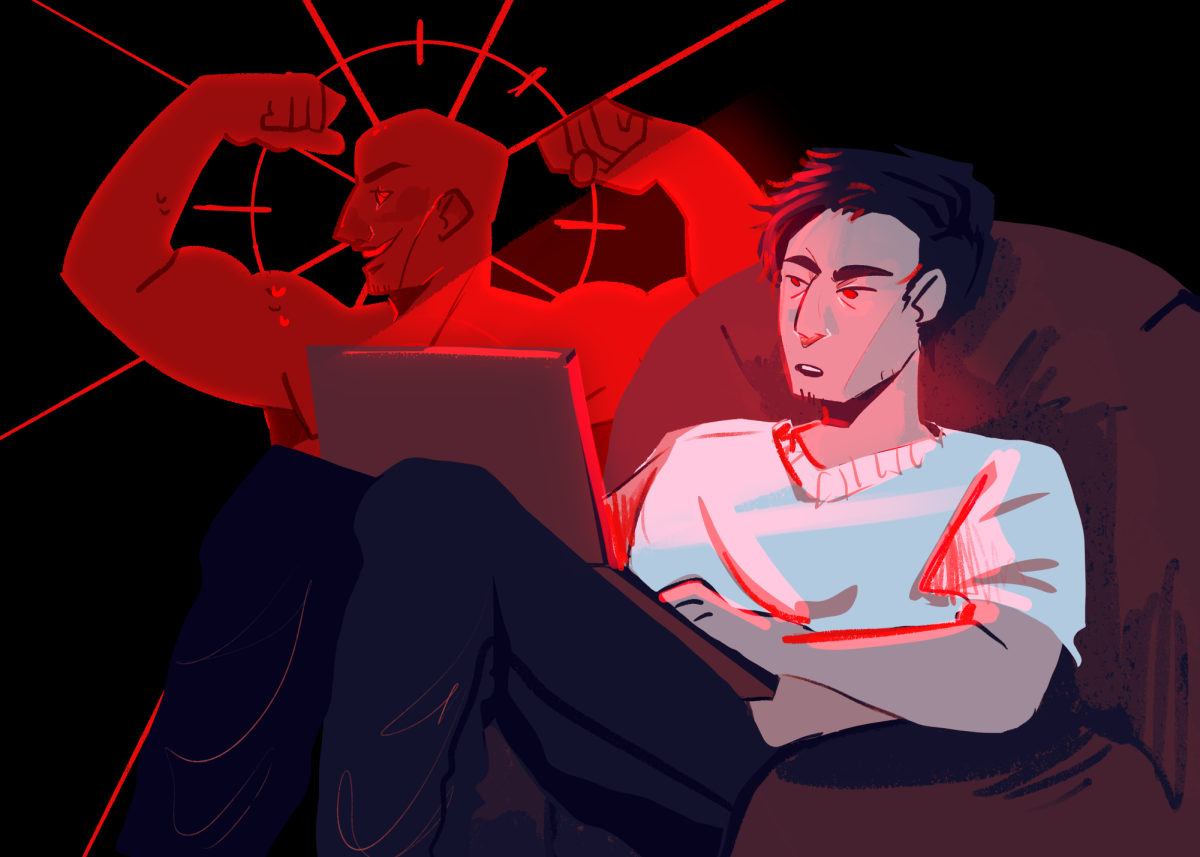
Once confined to niche internet forums, misogynistic ideas have increasingly spilled into mainstream social media, according to reporting from DW Global Issues. Platforms like TikTok and YouTube host “manosphere” content, a network of influencers who argue that feminism has undermined men’s place in society.
Often framed as dating advice or self-help, much of the content promotes rigid gender roles and transactional views of relationships. Algorithms amplify polarizing material, exposing many young people to these ideas unintentionally. United Nations agencies have warned that the normalization of misogynistic discourse online is shaping how young people understand relationships.
After President Donald Trump’s re-election in 2024, a clip of far-right political commentator Nick Fuentes went viral on social media. In the video, Fuentes confidently remarks, “Your body, my choice — the men win again.” The clip’s rapid spread highlighted how such rhetoric continues to circulate widely online, especially during high-profile political moments.
For many college-aged women, the impact is personal.
According to researchers at the University of Colorado Boulder, the “alpha male” perspective’s appeal isn’t purely ideological— it’s emotional.
“You learn to spot it faster,” said Jada Bland, a senior majoring in arts and entertainment management.
She said women now approach dating more cautiously, recognizing red flags earlier. “I see my friends putting their walls up more,” Bland said.
Olivia Montano, a sophomore music business major, worried about who encounters that messaging first. Montano has five brothers, some still in elementary school.
“Kids, especially younger boys, are really susceptible to peer pressure,” she said. “They don’t always know what’s right or wrong.”
Montano’s less concerned about herself, she said, because she’s able to walk away from people who hold those beliefs. “But younger kids don’t have that same choice,” she added.
DW Global Issues reports that these ideas are often encountered unintentionally, as algorithms funnel users toward increasingly extreme content, a process that affects not only boys consuming the material, but girls forced to navigate its consequences.
Cohrs said many women she knows feel safer keeping relationships casual. “If you’re actually dating someone, they need to have morals,” she said.
Cohrs said she now asks serious questions early and chooses clarity over comfort. After asking a man whether he saw a future with her and was told she was “putting too much pressure on him,” she pulled back, and ultimately declined when he later asked to reconnect. “I’d rather be single than get hurt again,” she said.
Others described dating as increasingly transactional.
“It feels like, ‘What can you give me, what can I get?’” Cohrs said.
Research supports that sense of exchange-driven intimacy. Recent studies examining “Red Pill Women” communities found that some women adopt these ideologies strategically, viewing relationships as competitive social markets where traditional gender roles are a way to maximize security or status. Even when women appear to benefit, researchers argue, those frameworks reinforce patriarchal power dynamics over mutual care.
For Cohrs, those ideas surfaced unexpectedly on a date after Thanksgiving break.
When she mentioned she wasn’t sure she wanted children, the man she was seeing responded, “But as a woman, don’t you want to be a mother?”
“That really bothered me,” she said. “I didn’t want to be around someone who questioned my worth as a woman because I didn’t define my life around motherhood.”
She stopped seeing him shortly after.
Livia Overton, a senior fashion design major, said social media has normalized that mindset. “It shouldn’t be a system,” she said.
Several women described encounters that confirmed those concerns, from men citing Andrew Tate to questioning their worth outside traditional gender roles.
Overton echoed that sentiment. “If it feels like you want me because I’m a body and not a person, I don’t care if you like me,” she said.
As harmful rhetoric continues to circulate online, students say awareness has become a form of protection, giving them the language to spot red flags, name discomfort and reject narratives that turn relationships into power struggles.
“Love shouldn’t be transactional,” Overton said. “It should make you feel seen, heard and valued.”
Copy edited by Venus Tapang