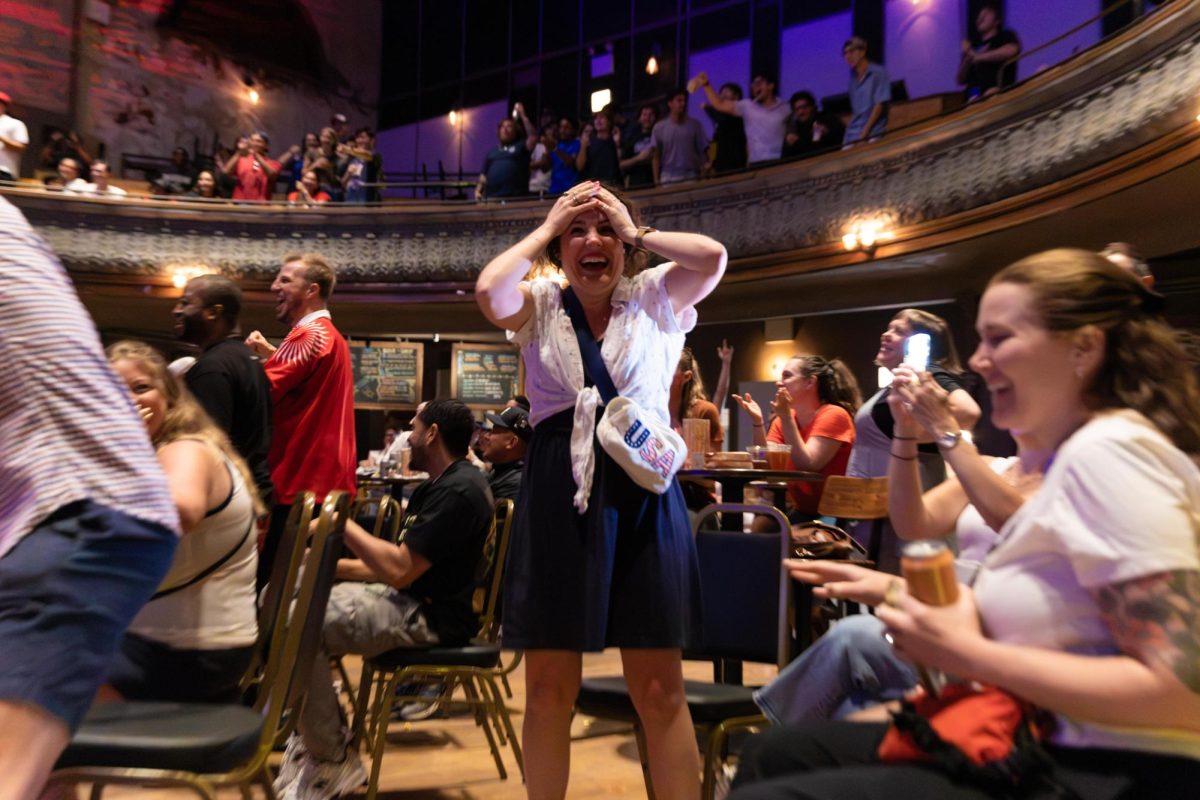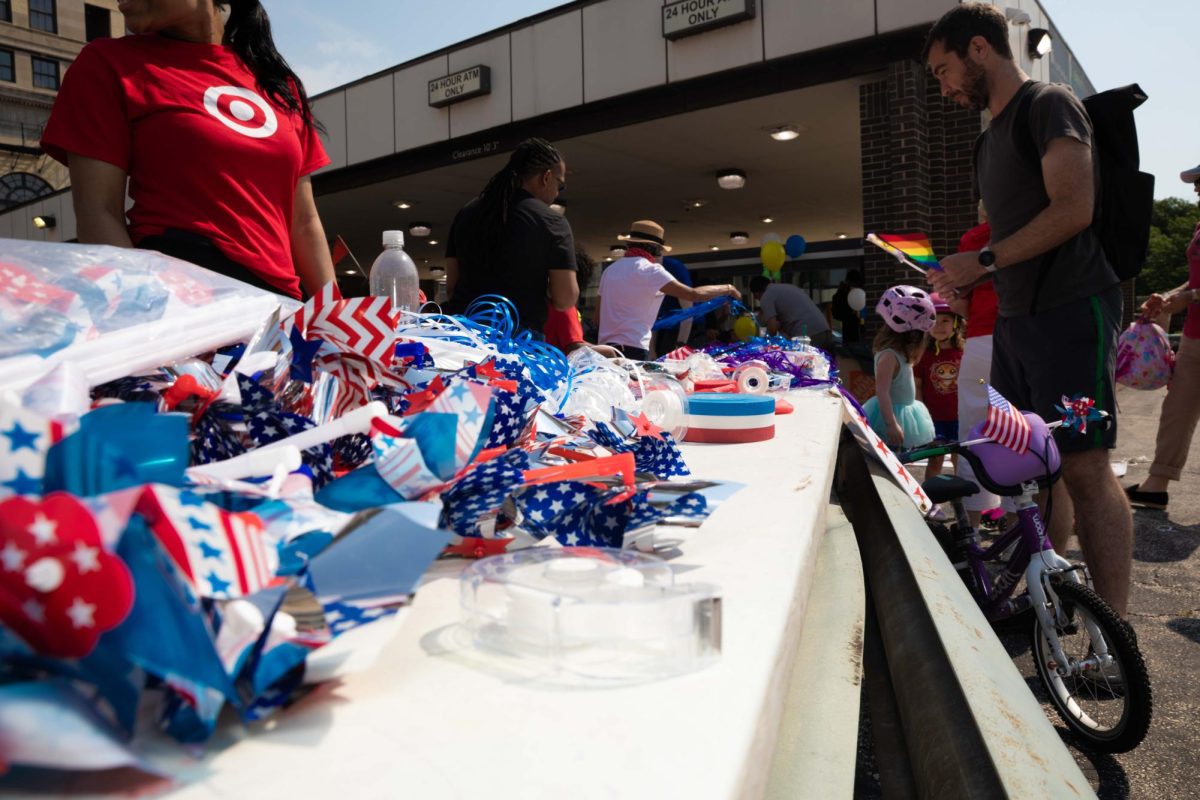
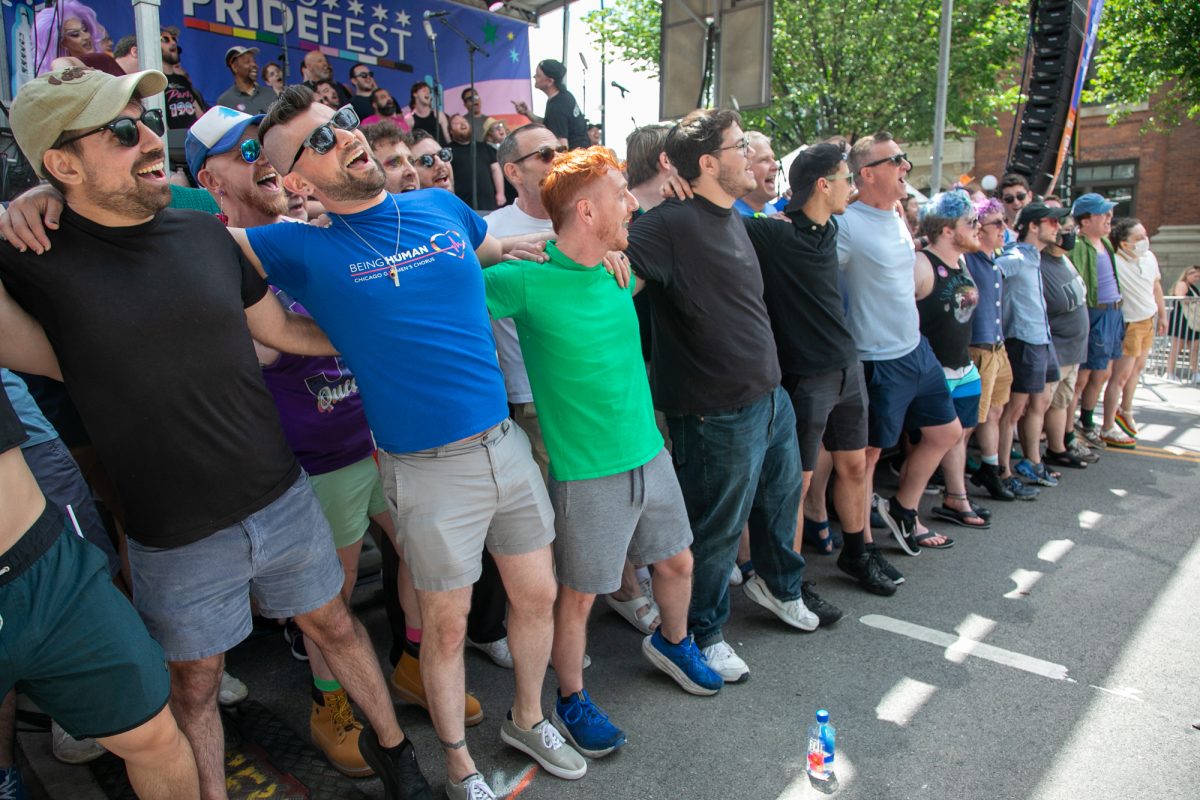
Thousands of people filled Northalsted on Saturday, June 20, as Chicago’s PrideFest opened its 25th year, bringing together LGBTQ+ community members, performers, businesses and advocacy organizations for the two-day celebration.
Amid live music, drag performances and vendor booths stretching along Halsted Street, attendees celebrated Pride Month while reflecting on how the event has evolved over the years.
Many attendees described a more subdued atmosphere and expressed concerns about the political climate and the direction of Pride itself.
“I’ve noticed that there are a lot more corporations,” said Isaac Hopper, who identifies as a gay transgender man. “It seems like Pride events will have less local resources now, and more corporate things, like advertising for banks or hospitals.”
Steven Baker, a gay man who attended his first Pride in 1985, said the festival itself felt familiar, but attendance among members of his generation has changed over the years.
“We’re both a little bit older, and a lot of our contemporaries aren’t necessarily going to Pride fests anymore,” Baker said. “They just don’t want to be on the street like we do.”
Despite those changes, the festival remained crowded throughout the afternoon as attendees browsed vendor booths, watched performances and connected with community organizations.
Vendors, food and resource centers lined the street. Small businesses sold jewelry, clothes and flags, while local resource centers such as Beyond Legal Aid handed out pamphlets detailing their mission.
“We direct our lawyers and our legal activists, and they follow suit,” said Hera Jay Brown, a volunteer for Beyond Legal Aid. “Grassroots organizers are the ones who are telling the lawyers we want them to work in these areas, or in these communities, and these are who qualify for services.”
Several attendees described this year’s PrideFest as more reflective than celebratory, citing ongoing political and legal debates affecting LGBTQ+ communities.
Bella Hoffman, a transfemme lesbian, said there has been a change in energy in Pride celebrations.
“The energy seems a little less partiful than it has in years past. I just kind of see people here at a queer street fair,” Hoffman said.
Hoffman’s observation echoed concerns expressed by other attendees, many of whom said conversations about transgender rights and the future of LGBTQ+ protections were difficult to separate from this year’s celebration.
Dani Ochoa, a vendor selling leather harnesses, defined the main issue the queer community is currently facing as “It is, and it always will be, trans rights.”
“The horrors!” Ochoa said, joking.
Ochoa’s comments reflected concerns raised by several attendees about transgender rights and legal protections for LGBTQ+ people.
In June 2025, the U.S. Supreme Court ruled that a Tennessee law restricting certain gender-affirming medical treatments for transgender minors does not violate the Constitution. The decision allowed similar laws in other states to remain in effect.
Attendees also referenced ongoing national debates over LGBTQ+ rights, issues that several said were difficult to separate from this year’s Pride celebration.
Teyanna Traid, drag performer local to Chicago, said the biggest issue the community is currently facing is lack of support.
“I think it’s really scary to hear a lot of things that the politicians are saying,” Hopper said. “At least in my experience, there’s a lot more love and support out there and you just have to remember that even though these hateful and scary people are louder, there’s so much more beauty in the world.”
Copy edited by Antonio Chaves