THE SEX ISSUE
Jamey Rabon has been searching for love long enough to know when the algorithm isn’t on their side, making finding their “one” a daunting, almost impossible task.
Rabon, a senior creative writing major, was introduced to dating apps at a young age, both through their mother’s use after her divorce and because they grew up as queer in the South, which makes traditional, in-person dating unsafe. But, they quickly realized that this form of dating wasn’t how they wanted to find a partner.
Rabon said they see dating apps as a way for businesses to make money — an aspect of the current dating scene they say has deeply soured their experience of finding a partner.
“They’re designed to keep you from meeting the people you want to meet so that you pay for a subscription — which I’ve paid for subscriptions for dating apps before. Hasn’t gone anywhere,” said Rabon, who works in the college’s TRIO office.
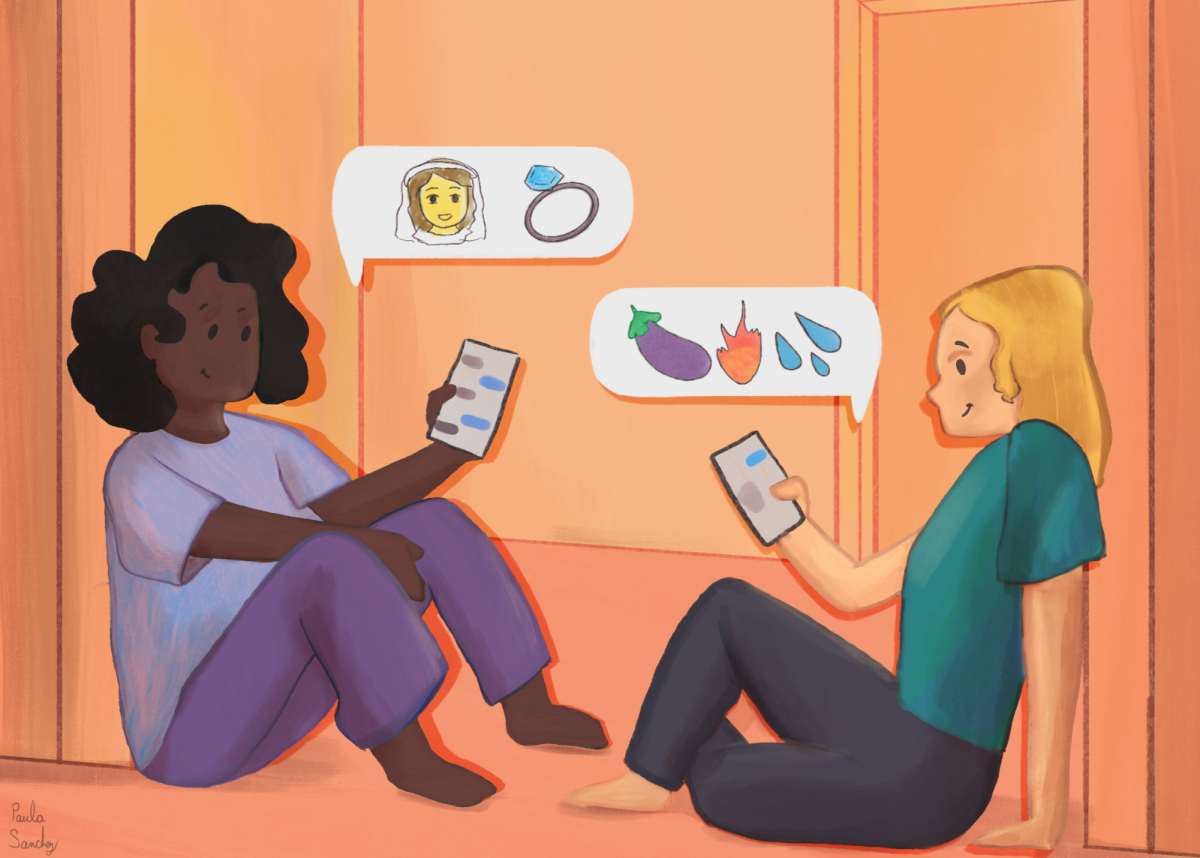
Rabon isn’t the only student who’s stopped swiping for love. Across Columbia, students are weighing what commitment looks like in a dating landscape shaped by apps, academic pressure and early career uncertainty.
While he uses dating apps, senior English major Kameron Murray said that he isn’t actively looking for a relationship because he wants to focus on school and his career, but he also doesn’t care for the vanity that is associated with profile-building on dating apps.
“I feel like pictures don’t do much justice,” Murray said. “I can’t imagine someone having a good impression of me just based on that. I feel like I have so much personality. I feel like I’m a nice person. But looking at my profile, I don’t think that’s gonna attract other people.”
Their concerns align with a longer-term trend: Americans are waiting longer, or opting out entirely, when it comes to formal commitment.
According to 2022 data from The U.S. Census Bureau, 34% of people over the age of 15 have never been married, up from 23% in 1950. The increase is attributed to a variety of causes, including economics.
According to a study from the Lumina Foundation, 64% of college students work while in school, and 40% have full-time jobs.
Senior dance major Elizabeth Moran would like to get married soon, but her partner of three years wants to abide by a five-year plan that will allow the two of them to get on their feet before committing to that decision.
“I always roll my eyes out of it,” Moran said. “I think it definitely is kind of a limitation, but it’s not something that we can’t work through. It’s not like I’m upset about it, but it’s definitely something that has been a strong conversation between us.”
Sociologists have argued that declining marriage rates may reflect a shift among Gen Z, away from viewing marriage as the primary marker of commitment.
“I don’t need the state to be a determining factor in my relationship status,” Rabon said. “Marriage is and has always been very patriarchal and obviously heterosexual. I am pro-marriage equality, but the concepts of marriage are passed down from a heteronormative society.”
Some students still embrace marriage. Julia Ravelo, a senior film and television student, met her now-husband at a summer camp when she was eight years old. During the height of the COVID-19 pandemic in her senior year of high school, she had limited opportunities to meet people in person.
She was in a digital chatroom when she finally asked her longtime crush out — which he promptly accepted.
Just a few years later, Ravelo went on a date with her boyfriend wearing the dress she was supposed to wear to her senior prom, which was canceled due to the pandemic. That night, he proposed. The two married in June of 2025 and are now looking into buying a house.
“Just this morning I was frustrated because I’m very stressed out about house hunting, and he took the time to ask, ‘Why are you frustrated? Tell me why you’re frustrated,’” she said. “He takes care of me the way that I need to be taken care of.”
Ravelo said she understands she was privileged to have the emotional and financial support from her family to get married so young. Marriage, for her, was just making official what she already knew: that she found the one for her.
“Getting married and changing your last name is a sign of your love and a sign of becoming one with that person, trusting that person with your well-being and trusting that person to take care of you,” she said.
Standards for commitment are changing, and whether they are finding it online, in person or elsewhere, many members of Gen Z are looking for the same thing: someone they can be themselves with.
“I know once I marry my partner, I don’t think anything is really going to change, other than he’s my husband,” Moran said. “And we just have this commitment. But we already kind of have that commitment towards each other, and we already know we want to be with each other forever.”
Copy edited by Venus Tapang