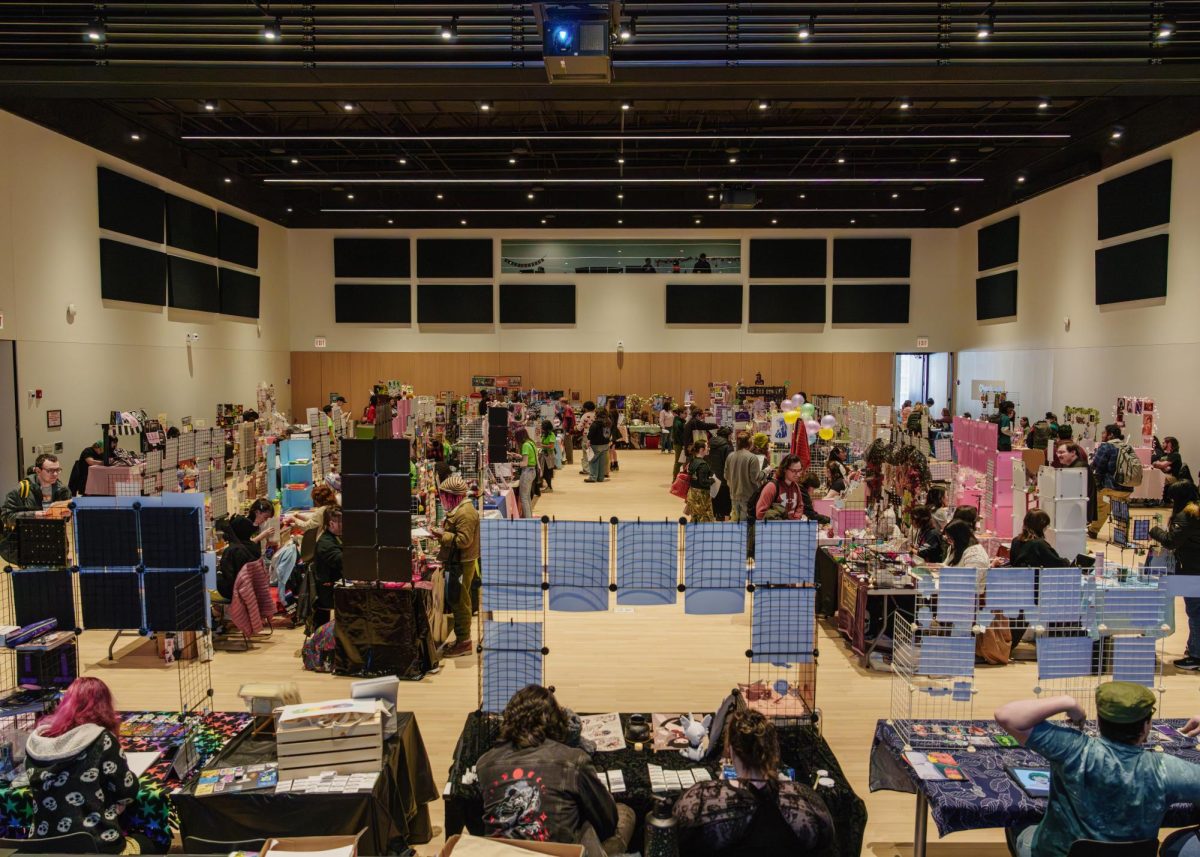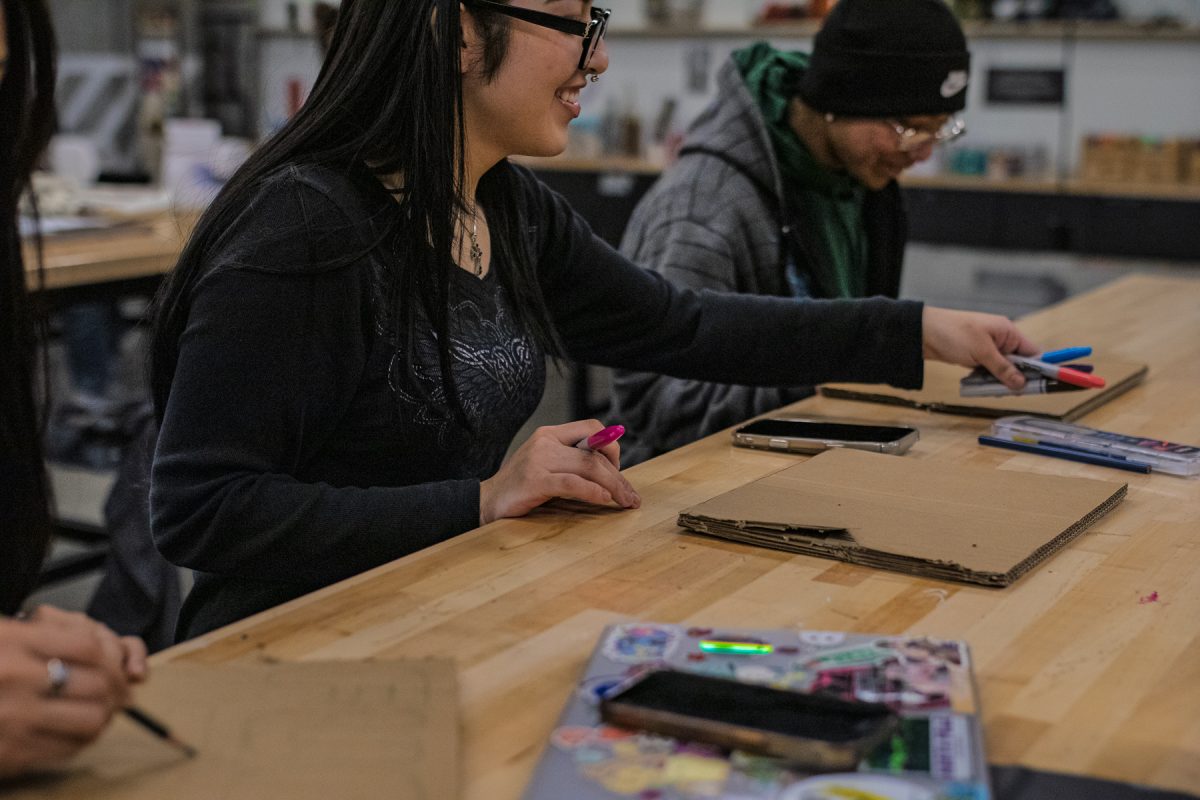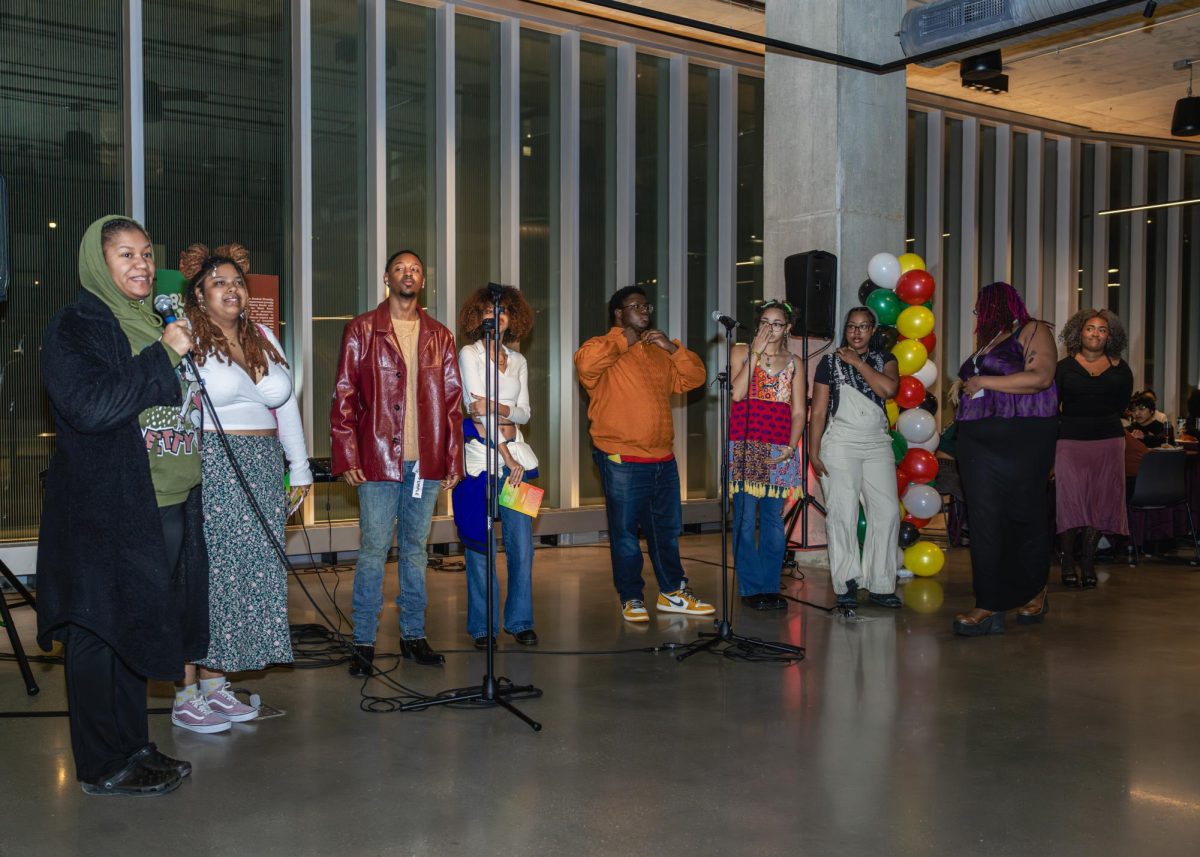
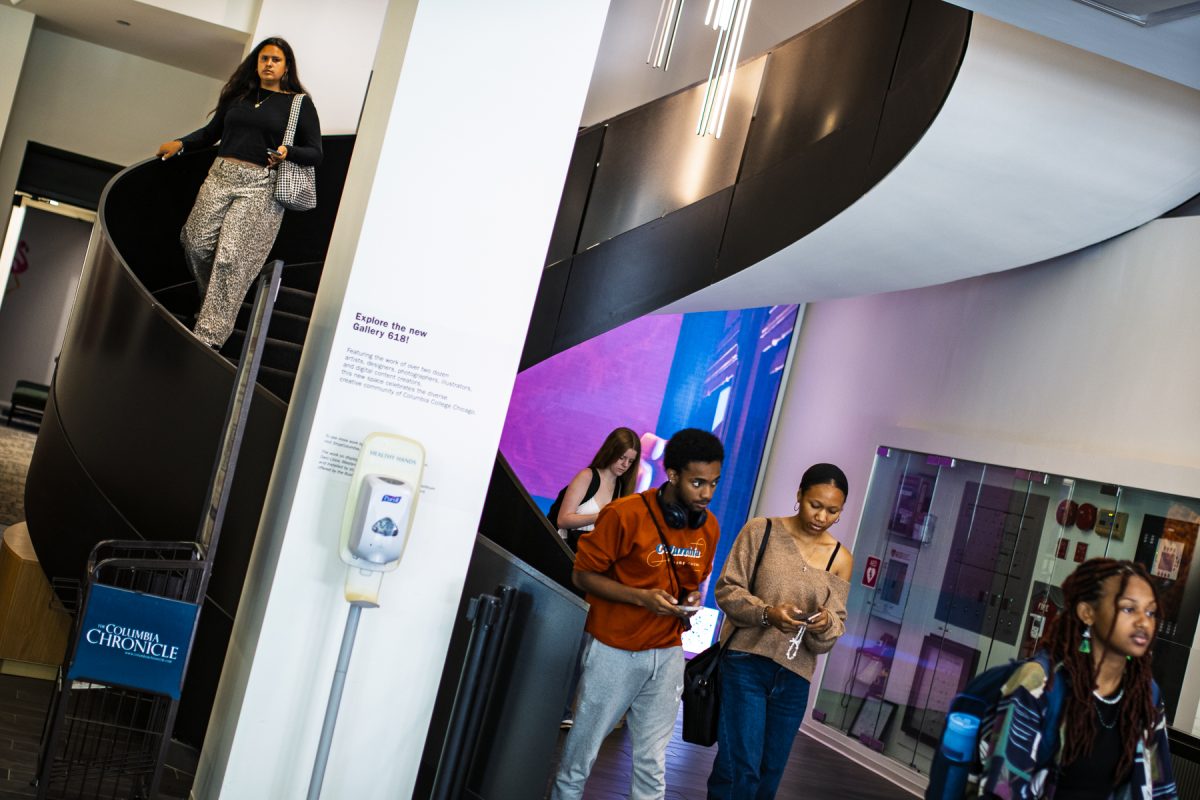
On the first day back, the sight of crowded hallways, friends reuniting and students hurrying between classes filled Columbia’s buildings, as many shared their hopes of finding new routines and deeper connections this semester.
In the Digital Print Center at 623 S. Wabash Ave., Manoela Cardinot, a junior game art major, was resizing small animated figures on her screen to fit the proper printing metrics.
Cardinot said she felt “anxious” returning to school but was excited to see friends and attend her first set of lab-based classes.
“I’m actually looking forward to the experience of being a junior, because it’s my first semester as a junior, and getting to work in lab classes towards what I want to be a professional in,” Cardinot said.
Just a few steps away, outside the Hokin Gallery, first-year journalism and communication major Sh’Mara Chism was chatting with a friend after finishing her first class of the week.
“I’m loving it. I’ve had no struggles so far; everyone’s been helpful,” Chism said.
As she begins her journey at Columbia, Chism said that she’s looking forward to meeting more people and getting to know her professors in the coming days.
Like Chism, other first-year students were also finding their footing on campus.
Antonio Young, a first-year film and television major, was working on the first floor of the Student Center after his first class, and said he was pleasantly surprised by his first day, after built-up nerves from high school.
“One thing I’ve noticed — it seems like everyone is always together,” he said. “There’s always people talking; it seems like a very close community, kind of like family.”
While students like Young were just beginning their college journey, others were navigating different kinds of transitions. International students, in particular, face added worries from visa restrictions and political uncertainty over the past few months, as the Chronicle previously reported.
Sophomore audio arts major Victoria Tupper, who came to Columbia from Costa Rica, this fall brings a stronger sense of belonging after a year of transition.
“Being back at school brings back memories from my first semester,” said Tupper, “except this year I feel like I can manage myself better and am a new person.”
On the fifth floor of the 33 E. Ida B. Wells building, senior acting major Arianna Munoz waited for her next class at a table near the window, scrolling through her phone to pass the time.
As a commuter, she said it can be challenging to get involved in campus activities.
“Something that I’m looking forward to is definitely participating in more things. I’m a commuter, I feel like it’s very hard to get into things,” Munoz said. “I’m really excited to audition for Playwrights Aloud and hopefully get more involved than I have been.”
Munoz is part of a large portion of Columbia students who commute to campus. According to a 2023 survey, 53% of students rely on public transportation to get to and from classes, making the balance between commuting and campus engagement a challenge.
Meanwhile, students living in the residence halls were also navigating life on their own for the first time.
“I’m from a really small town, so being in Chicago is definitely very different on top of college stuff,” said first-year fashion design major Eliot Cymbalist, who lives in The Dwight residence. “This is the first time I’ve been on my own, and just being able to meet people completely by myself is probably the biggest part of it for me.”
Additional reporting by Samantha Mosquera, Julia Martinez Arroyo, Miguel Loza-Sanchez, Anna Bitz, Marc Balbarin, Uriel Reyes, Sofía Oyarzún and Matt Brady
Copy edited by Vanessa Orozco
El gobernador de Illinois JB Pritzker en una conferencia de prensa el martes 2 de septiembre anuncia que la Guardia Nacional está preparada para entrar en Chicago.
El Presidente Donald Trump declara que Chicago es “La ciudad más peor y peligrosa del mundo”.
Autoridades locales advirtieron que las tropas federales podrían anular la autoridad estatal y municipal, escalar tensiones de la ley migratoria y poner en peligro a comunidades que ya son perjudicadas por las redadas federales.
La Secretaría de Seguridad Nacional Kristi Noem confirma que la administración de Trump pronto expandirá las operaciones de ICE en Chicago pero no comentó sobre la Guardia Nacional.
El alcalde de Chicago Brandon Johnson ha hecho claro que: “No queremos ni necesitamos la ocupación militar en nuestra ciudad.”
La vicegobernadora de Illinois, Juliana Stratton, avisa a residentes que conozcan sus derechos en el sitio web del Free Migration Project. La línea directa de apoyo familiar es 1-855-435-7693.
Resumen escrito por Brandon Anaya
Resumen editado por Manuel Nocera