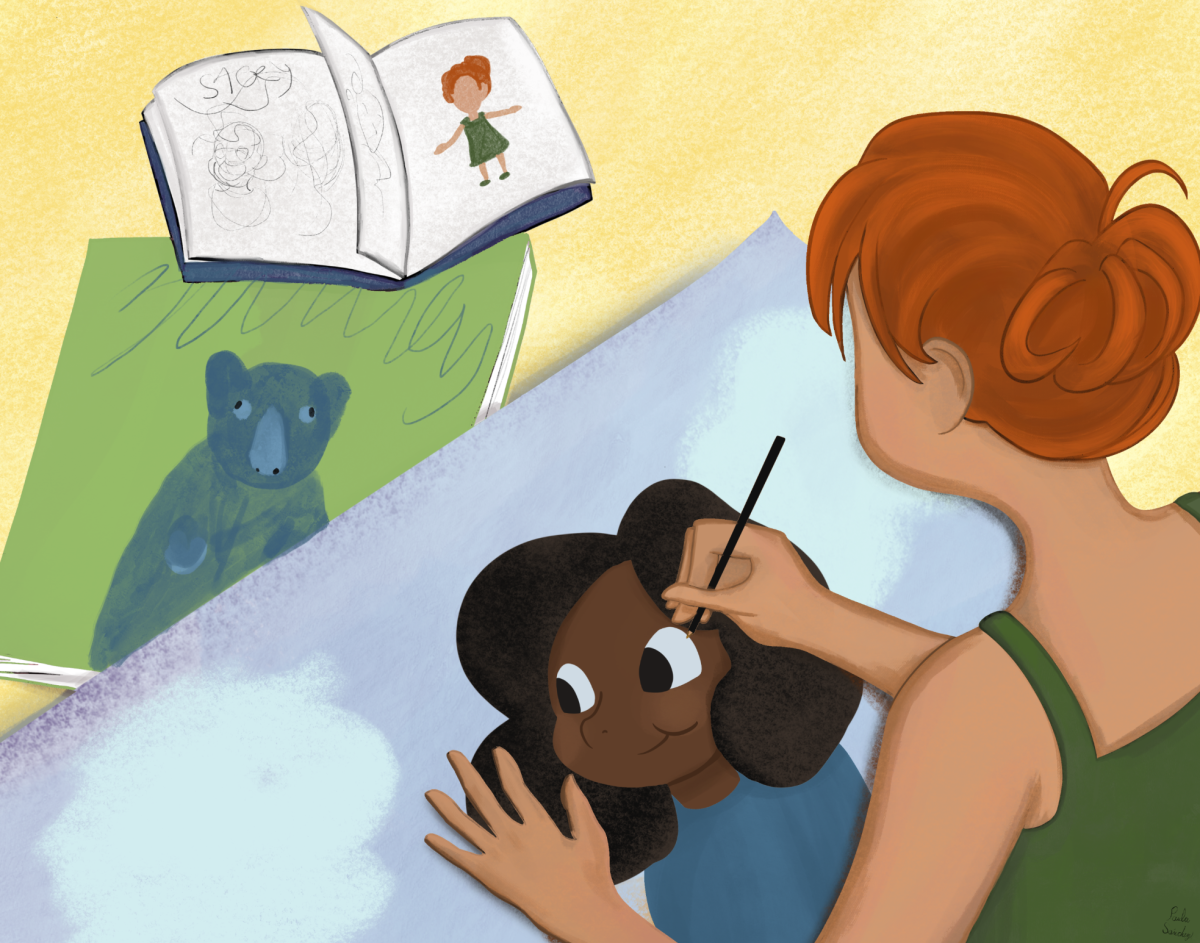
From illustrating childhood memories to designing their own books, students in Columbia’s Children’s Book Illustration class are learning the creative and professional skills to enter the publishing industry.
Taught by Jacqueline Alcantara, an adjunct professor in the School of Visual Arts, the course introduces students to a range of illustration techniques, from picture books, graphic novels and young adult novel covers.
Through these hands-on projects, students also learn how to build a portfolio and submit their work to publishers and literary agents.
“Having knowledge about how a book comes to be is incredibly important because it is going to give them a leg up on any other applicants,” said Alcantara, who has taught the course for the past six years.
Students are able to explore within their preferred art styles and develop skills to create for a young audience.
Amar Farraj, a senior illustration major, said students are also able to bring in their previous work and redevelop it into their designs for the class.
“I think this class is important because not only are you looking back on things that you have worked on, so you’re able to replicate them, there is also a focus on the industry of children’s book illustration,” Farraj said.
Currently, the class is working on sequential illustration page spreads about a personal childhood experience.
Sequential art is a style where artists convey a story through simple, arranged images. This style is commonly found in graphic novels and animation.
“We designed ourselves as little five-year-olds and made ourselves do little actions,” Jules Rush said, a senior illustration major.
Rush wants to pursue tattoo art in her future career, and hopes that narrative storytelling will help if people want to have a story tattooed on them.
Rush hopes this class helps her get better at narrative art, artwork that tells a story as one captured moment and drawing sequences of events.
Students learn with a hands-on approach and get to be storytellers with simple tools like paint, glue and scissors.
“I’m always trying to share different art styles that appear in children’s book illustrations,” Alcantara said.
Thanie Garavito, a junior illustration major, wants to be an environmental artist, an art technique that engages with nature and human relationships to nature.
Garavito feels like the sequential art they are doing now is a “good way to draw and show character progressions through simple illustrations like comics.”
Duncan Baader, a senior illustration major, is excited for later in the semester, where they’ll touch more on young adult novel cover illustrations and comic book art.
“I want to be a comic artist, and my goal is to eventually write and illustrate my own comics,” Baader said.
Alcantara has illustrated children’s books in the past and makes an effort to keep a beginner’s mindset.
“The process is the fun part,” Alcantara said.
The final project of the class is creating a “book dummy,” where students write their own manuscript, illustrate and assemble a physical three-page book.
“These are things that you are going to remember, if you publish a children’s book, for the rest of your life,” Farraj said.
Copy edited by Isaac Russo