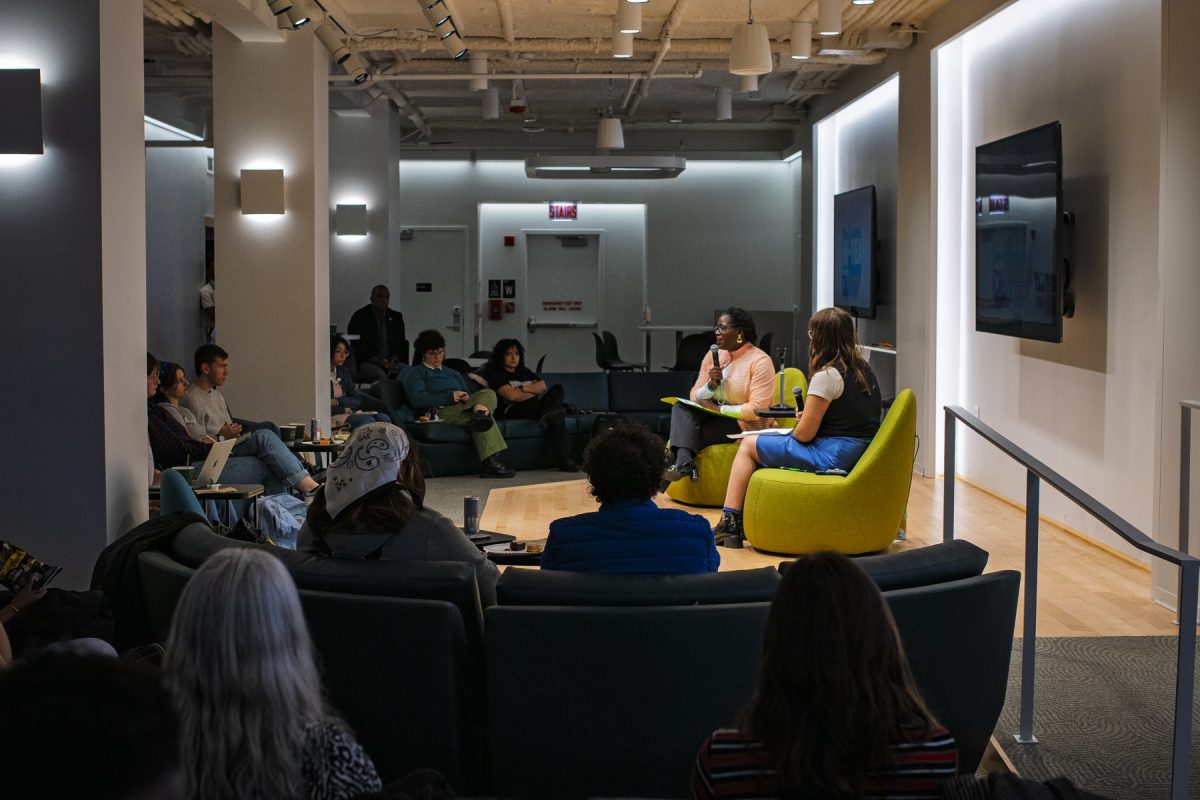
In her first sit-down meeting with students since assuming her role this summer, President and CEO Shantay Bolton said she is considering a tuition increase and will have a definite answer in the coming weeks.
“We are actively looking at the data in terms of what we can do with that,” she said, “I don’t have the exact number, and I can’t make a commitment right here today, but I do want you to know that this is top of mind for me, and so my goal is to try to make sure that we’re containing the cost to the greatest extent possible.”
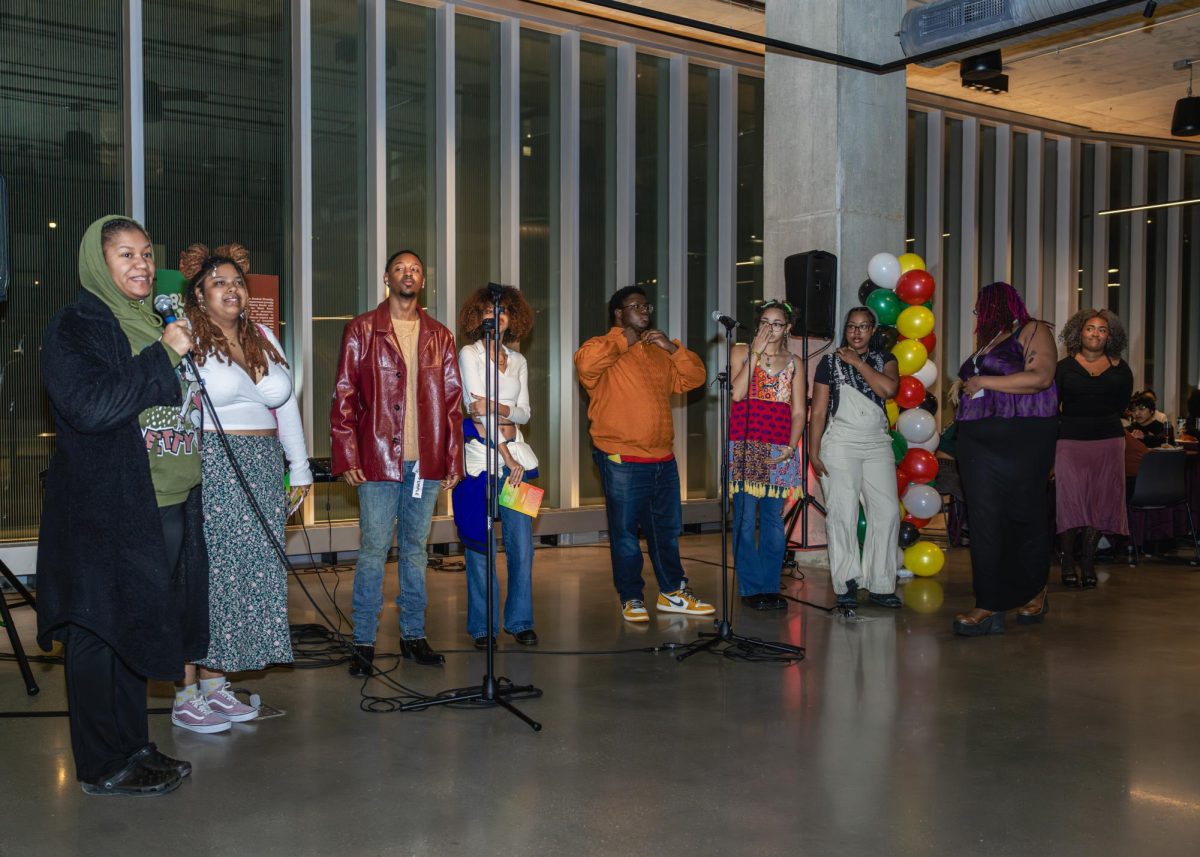
Bolton made the remarks during the Student Government Association’s “Hi-Tea” event on Tuesday night, Oct. 21, where students asked questions ranging from financial aid to campus resources.
Tuition rose 5% this school year for continuing students and 10% for new students. The college has raised tuition the past three school years, with a 10% increase in 2022 and another 5% in 2023 as the Chronicle previously reported.
At the time of the last tuition increase, Columbia was facing a $17 million deficit. The gap has now widened to $40 million.
“I am very, very mindful of the cost of tuition and the public concerns around the cost of higher education,” Bolton said. “At the same time as the president, I have to look at the administrative costs that we incur to keep the lights on and the doors open in the classrooms and the studios. So I’m trying to find the right balance between that, but to be very sensitive to ensure that the affordability is there.”
Bolton also said she is exploring ways to give alumni access to campus facilities during the summer, part of her push to strengthen ties with graduates.
“We want to look at how we can support, but I will be honest with you all, the first priority is the students who are here and having access,” Bolton said. “Think about activating the summer months, how do we leverage giving access to our campus for alumni to come back and use our campus to create — maybe their next movie, their next album, their next whatever it is they’re looking to create?”
The event, held at The Hive at 618 S. Michigan Ave., also gave students a chance to raise concerns directly with Bolton.
Jevon Covington, a U.S. veteran completing a bachelor’s degree in graphic design and a master’s in strategic communication through Columbia’s combined program, said the college is missing an opportunity to offer work-study positions for veteran students.
Covington transferred to Columbia from Harold Washington College that had better support for veterans, including a dedicated space.
“I think that if the school takes some extra steps and look out for us and get that program up and running here, which it would take no time to do. I think it’ll help me out.” Covington said.
Bolton said she would look into a veteran work study program.
Destiny Styles, a junior film and television major who transferred to Columbia in Spring 2025, said she did not feel well supported. “I just hope for better communication between the school and the students,” Styles said. “The school wasn’t really communicating to me about anything that was going on, any resources that were available to me until I asked.”
In response, Bolton said she’s been having conversations with local community college presidents to understand the mindset that transfer students go to in order to get better at engaging with and helping students.
Senior music major Simon Monroe said many campus resources go underused, telling Bolton how his roommate struggled to afford textbooks without realizing there was a resource available.
Bolton pointed out that other students were nodding their heads and said she was open to suggestions for what ways she can help.
Monroe told the Chronicle later that Bolton didn’t exactly answer his question but he understood that there wasn’t a lot of time.
“I feel like the president seems to have a lot of good ideas and a decent mindset.” Monroe said. “She wants to do new things but isn’t trying to just do everything different for the sake of it.”
This “Hi-Tea” event follows a long-standing tradition of using one of SGA’s weekly meetings to connect students with the college leadership.
SGA President Jenna Davis said events like this gets everyone — students and the college — on the same page.
“It gives them an opportunity to get to know the new president, just as a person, and what her goals are and where her vision is at,” Davis said. “SGA created the entire event. We created everything, the structure, all of the questions that will be asked in half of the event.”
Bolton, who describes herself as a “student-first president,” said it’s important for her to hear directly from students about their concerns and ideas for how the college can address the issues that matter most to them.
“Students oftentimes have a creative lens on the solutions, and we may over complicate things when we don’t listen to them,” Bolton said. ”I just think it makes the process easier, and it opens up the dialogue for a two way street, as opposed to us, just as administrators telling the students what to do.”
This annual event was previously called “Let’s Chat” during former President and CEO Kwang-Wu Kim’s tenure and “Conversations with the President” under former interim president Jerry Tarrer, now the college’s senior vice president and chief operating officer
“This time around, we really wanted to reinvent it and the way it looked,” said Amelia Lutz, SGA executive vice president. “We wanted to bring it to a little more casual space and invite students to have a much more broad conversation with President Bolton than they have felt like they could in the past.”
While faculty and staff were not able to ask questions during the Oct. 9 State of the College address, students were given that opportunity when SGA opened the floor for questions after the structured Q&A during the first half of the meeting. About 35 students, faculty and staff were in attendance.
“This event has always been student-run, by Student Government for the students,” Davis said.
The majority of the President’s cabinet members were present, also weighing in on some of the questions students had about scholarships and enrollment and campus resources. Their presence, Bolton said, was meant to ensure that student concerns were heard directly by senior leadership.
Bolton said she wants to create more ways for students to share ideas with her and campus leadership, beyond structured events like Hi-Tea. She said she often talks with students in classrooms and around campus.
“Some of you all have had the privilege of being on the elevator and having to do that elevator conversation of, ‘Where are you from? What are your interests? What are you going to do after college?’” Bolton said. “I always want us to have an open dialogue.”
Copy edited by Emma Jolly