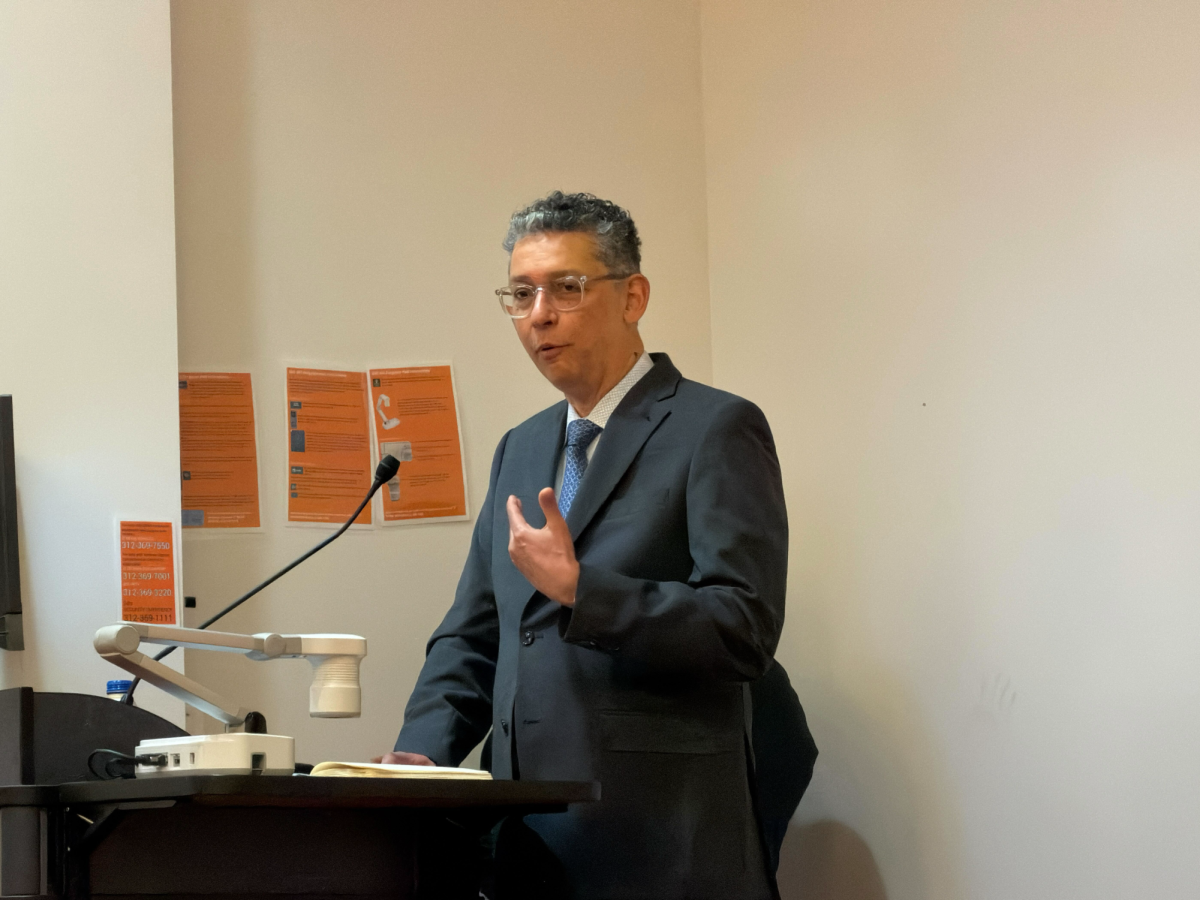
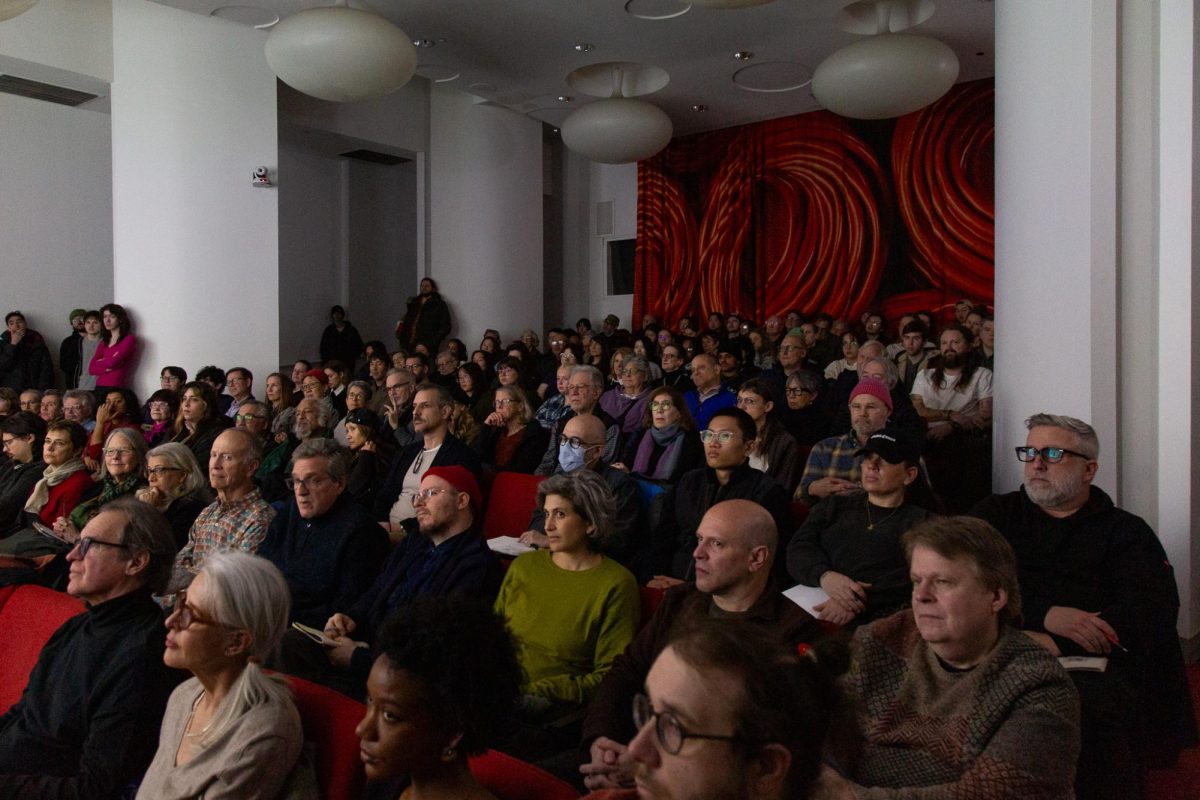
Working in color was once considered “career suicide,” photographer Joel Sternfeld told a packed Ferguson Lecture Hall audience this week.
When he first began taking photos in the 1970s, there was a sort of taboo against taking photographs in color.
He chose it anyway, and it ultimately shaped his career, Sternfeld said during a lecture on Thursday, Feb. 26. The event was sponsored by the Museum of Contemporary Photography as part of their ongoing 50th anniversary celebration.
Sternfeld primarily works in landscape photography and quickly became interested in using color. He said he was particularly inspired by the German-American artist Josef Albers and the ways in which color interacts with each other. As an example of this, he showed a photograph of a couple in a turquoise Thunderbird who were wearing matching turquoise sunglasses.
“The color was definitional to the picture, and that became a working model for me,” he said.
He began experimenting with this in the summer of 1975 in a series entitled “Nags Head,” the name deriving from the town Nags Head, N.C.
One of the people in attendance, Zachariah Vargas from Newport News, Va., was particularly interested in the “Albers” method described by Sternfeld, who was born and raised around art in Brooklyn, N.Y. Both his parents were artists, though not photographers.
“That was a new perspective,” Vargas said. “I’m also a photographer that travels throughout small towns in Illinois and I find myself having to kind of be a part of their environment.”
Sternfeld began to describe his most long-winded project called “American Prospects.” In this collection, he traveled across the country and photographed mainly landscapes and some portraits while using his “Albers” method for around eight years.
Sternfeld photographs were shown on the screen of various American landscapes and sceneries, some ranging from New York all the way to California.
For some of the photographs in his slideshow, Sternfeld would point out and recount the stories behind them. For instance, he showed a photo he’d taken from a man’s condo building. From there, he had to hide after the man left him alone and came back with his angry girlfriend. Another photo was of a car stuck in a ravine after a flash flood, and he described how the Salvation Army had brought him to this site.
“‘American Prospects’ has a kind of fantasy utopian organization,” Sternfeld said, “but it also has a seasonal look.”
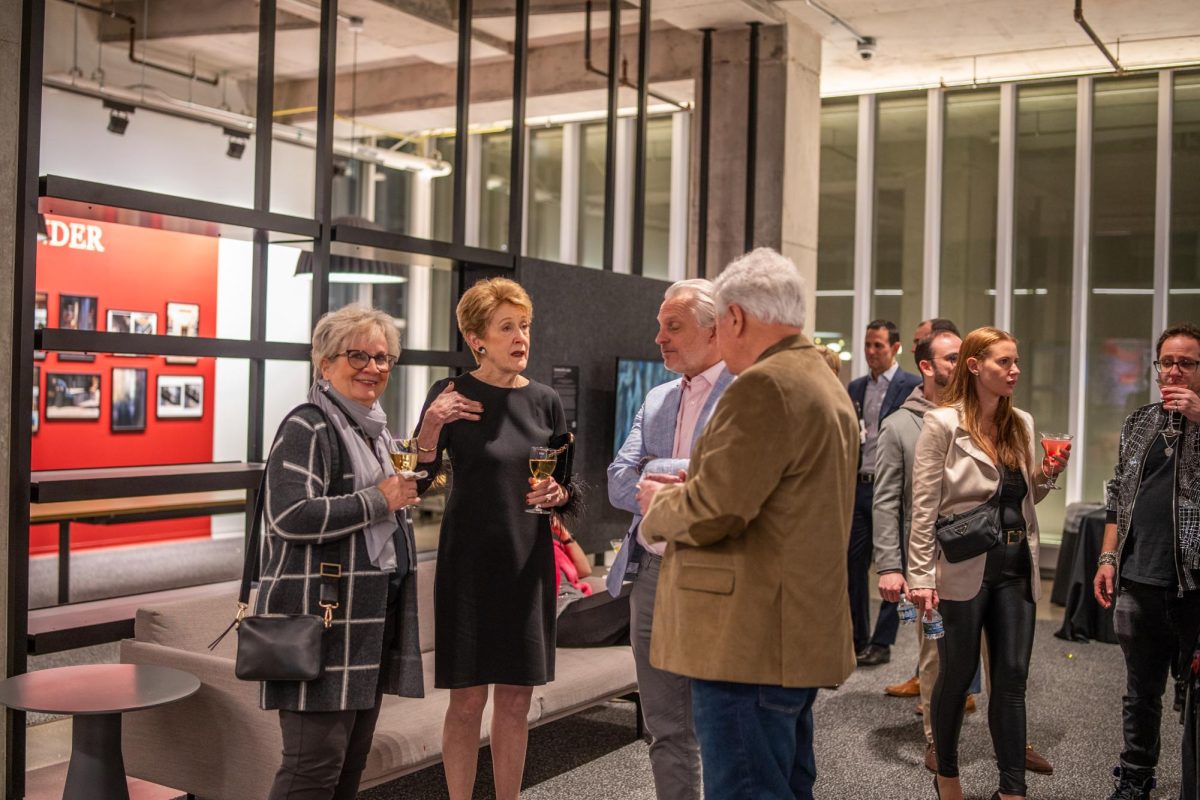
The audience was packed with people from all over the country, and even some people from around the world. Caroline Lucebello, who is from Italy but now resides in Paris, said that she found the lecture to be accessible.
“It was very clear for me,” she said. “I am not an English-speaking lady but it was comprehensive and I really enjoyed it.”
Other collections he showed included “Our Loss” and “On This Site” which center on more somber topics. “Our Loss” shows the memorial site for American activist and lawyer David Buckel, and “On This Site” contains a series of places where a violent act had occurred.
He concluded the lecture with one photograph: a black-and-white photo of a snowy golf course taken at night while he was a student at Dartmouth College. A Q&A session followed afterwards, where audience members were able to ask Sternfeld questions like where the future of photography is heading in the age of AI and what he will do with his writing.
“I have been a very lucky photographer,” Sternfeld said to a round of applause.
Matt Perez, a Chicago-based photographer, who attended the lecture was already familiar with Sternfeld’s work,
“I think it’s amazing to just be here in the same room with him,” Perez said. “And a lot of these guys, I mean, they’re getting older and we might not have these opportunities. So I’m glad to just be here now and ready to attend these [lectures] when I can.”
Similarly, for Jeffery Dionesotes, he knew some of the photographs shown but hadn’t known that they were all from Sternfeld.
“There were other pictures I knew that I didn’t realize were his and they were in there too, so it was like seeing old friends,” he said.
Others in attendance, like Joel Diaz, came in without knowing who didn’t know about Sternfeld’s work. But Diaz left with a fresh outlook on photography.
“I always try to strive to better myself with vision, other people’s perspectives, why they do certain things,” Diaz said. “I think that was the coolest part for me.”
Copy edited by Samantha Mosquera