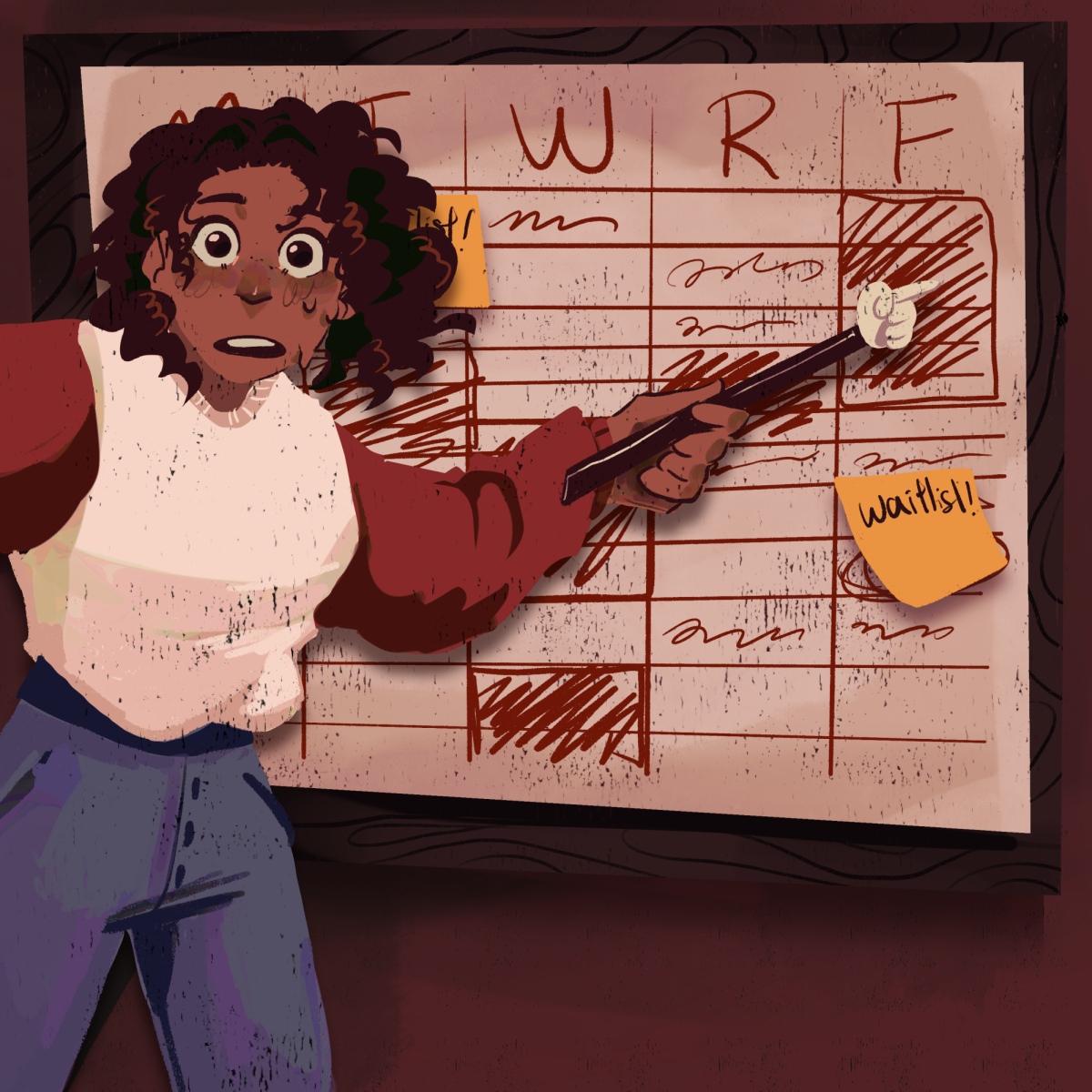

Like many off-campus students, sophomore creative writing major Alexander King sacrificed living farther away from Columbia’s South Loop campus for cheaper rent. However, King will still have to dedicate about 80% of his savings to rent his studio apartment in the suburban city of Park Ridge, about 14 miles northwest of downtown Chicago.
King will be “begging places” to hire him so he can afford his $1,500 rent this fall, he said.
“I’m worried about how much the whole move costs and being able to pay rent for even the first month,” he said.
This situation is not unique to student renters. Many residents across the city face similar challenges.
Over half of all renting households in Chicago are considered ”burdened with rent,” which means that renters are paying more than 30% of their income on housing, according to a 2024 report by DePaul University. Furthermore, three out of four low-income households are forced to pay more than half of their income on housing costs.
Joseph Schwieterman, director of DePaul University’s Chaddick Institute for Metropolitan Development, said unaffordable housing is a result of intensive downzoning that occurred throughout the 1970s. Through downzoning, the city limited the size of new buildings, which, in turn, limited the number of housing units that could be built.
Chicago “reduced allowable density to the point where it was hard for developers to provide housing at a scale where it could be affordable,” Schwieterman said.
The city needs an estimated additional 120,000 affordable homes in order to meet current demands. In addition, housing costs continue to climb faster than household incomes can keep up.
Anthony E. Simpkins, president and CEO of Neighborhood Housing Services of Chicago, said the “closing of critical industries” that provided jobs and “under-investment in neighborhoods of color” leave few opportunities to advance a household’s income level.
“As housing prices rise, these barriers make it impossible for low- and moderate-income residents to keep up,” Simpkins said.
According to a 2024 report by Illinois Policy Institute, rent has increased by over 41% in the past 10 years. On average, Chicago renters pay close to $2,200 a month.
In the last year, rent in the South Loop has increased by 5.4%, with studio apartments averaging $2,175 a month. Furthermore, the cost of on-campus housing in the South Loop has also risen by 6.1% as well, according to housing rates from Columbia College.
In the South Side, an area popular with off-campus students, rent in neighborhoods such as Hyde Park has risen by up to 4.6%. However, monthly rent in this area is cheaper than the citywide average. Rent ranges from $820 in Kenwood to $1,117 in Hyde Park for a studio apartment.
While the city has worked to maintain and create affordable housing through programs such as Preservation of Existing Affordable Rentals and the Affordable Housing Ordinance, students may not be eligible for the benefits they provide.
Through these programs, housing is considered affordable if households earning a certain percentage of the area’s median income can pay the rent. However, this percentage is applied to the entire city rather than individual neighborhoods.
For students living on part-time or minimum-wage jobs, even housing that meets these citywide affordability standards can still be out of reach, especially in neighborhoods close to Columbia’s South Loop campus or to transit.
“A lot of us are trying to balance school, work, and sometimes creative projects or internships,” said Dasha Mattei, a senior photography student.
Mattei said her family helped pay the $2,000 a month it costs for their studio apartment in the South Loop, not far from campus.
“If housing were cheaper, I could work fewer hours and put more focus into my classes,” she said.
Schwieterman said the city government hasn’t done enough to create incentives to provide housing without mandates.
Incentives such as expedited review for “attractively priced” housing and changes in zoning that would allow an increased density, which will allow developers to “speed up the pace of development,” he said.
Nick Uniejewski, a North Side progressive and community organizer, said that housing reform is needed not only in Chicago but also across the entire state.
A March 2025 report by Housing Action Illinois and the National Low Income Housing Coalition found that there are only 34 affordable and available rental homes for every 100 extremely low-income renter households in Illinois. In the Chicago metro area, only 28 affordable and available homes exist for every 100 extremely low-income renters. Nationwide, the gap is 7.1 million homes, according to the report.
“If we do it all city by city, that’s great,” Uniejewski said. “But doing it statewide will accelerate the timelines so we can actually get more housing on the market and make it more affordable for people.”
Copy edited by Manuel Nocera