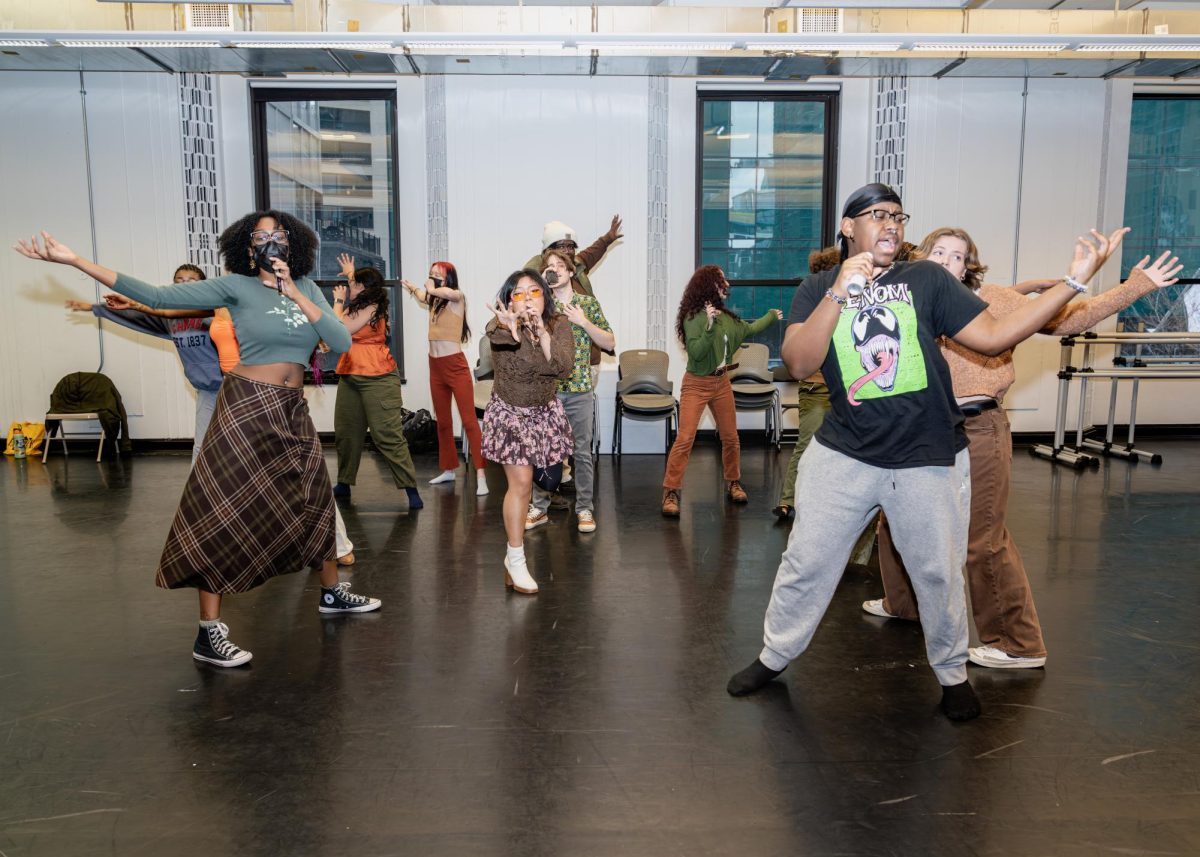

Columbia Main Stage’s final musical of the semester, “Grease,” will premiere this Thursday, Nov. 13, with a diverse cast of students.
Director Daryl Brooks said Columbia’s version of this cult classic holds a more modern perspective. He purposefully wanted to cast an inclusive group compared to the majority of renditions that highlight only white actors.
It was important to him to create an authentic and culturally rich production that is reflective of the college’s diverse student body.
“‘Grease’ is one of those shows that is completely, almost whitewashed.” Brooks said. “It’s showing only one type of people, when everybody knows if ‘Grease’ is based off of a school in Chicago, it was diverse,” Brooks said.
The musical, written in 1971 by Jim Jacobs and Warren Casey, is set in Chicago and follows the story of 10 working-class teenagers in the 1950s as they navigate the complexities of transitioning into adulthood. Some of the themes tackled during the production include peer pressure, politics, personal morals and love.
The main characters of “Grease” are Sandy, the “good” girl, and Danny, a “cool” guy. The pair fall in love during the summer, but as the school year begins and they reunite unexpectedly, they must confront the reality of their relationship.
Brooks said that even though a cult classic like “Grease” comes with a set of expectations, he wants to create a space for the cast to find their own version of their character as he directs. He encourages actors to take time in and out of the theatre to find their voice, their culture and what they want to represent on stage.
“I wanted to make sure that we are telling the same story, but in a diversified way with different cultures,” Brooks said. “We’ve done it with the costumes, we’ve done it with the character development. It is all there.”
Lillian Urresti, a senior musical theatre major, plays Rizzo in the show. She said that the freedom to develop her own version of the character has also helped her discover new aspects of herself.
“I think that my version of Rizzo, I really wanted to focus on her strength. ” Urresti said. “I think that a lot of women as well can relate to that. Rizzo is just very real, very relatable to a lot of people that I know and like myself as well.”
Sophomore musical theatre major Jordan Thompson plays Danny in “Grease”, but was also under Brooks direction last year during “Rent”.
“It was comforting to already know how he runs his rehearsal spaces.” Thompson said. “He doesn’t really enjoy telling you exactly what he’s expecting. He wants you to sort of play around and live in this character’s world.”
Thompson also acted as Danny in his high school production of “Grease”, and said he is honored to be back in the role as it is a full-circle moment in his career.
“Going to the theater as a Black man, it’s almost disheartening.” Thompson said. “There’s not a whole lot of roles tailored specifically for Black men.”
Thompson wanted to bring a new light to Danny, something Black characters don’t often get to represent.
“I wanted to show more of a dumb teenage boy. Dumb,” he said. “Just so much of it is rooted in like, not truly like meaning harm, but is like a place of like young discovery.”
Sophomore musical theatre major Sofia Romero was surprised when she got the role for Sandy. She never thought that a first generation Latina like herself could play the part.
“I’ve never seen a production where Sandy wasn’t a white, blonde haired, blue eyed girl,” Romero said. “I resonated more with Rizzo, having to put on a strong facade. A certain degree of thick skin just to navigate the world.”
Romero had grown up watching “Grease” on a VHS tape, so getting the chance to be part of this production is special to her.
While preparing for playing Sandy, Romero brought the already existing Catholic identity of Sandy and tied that in with her Latina identity.
“To me Sandy means she is a true story of self-identity and acceptance.” Romero said. “I think with her it’s really just about not being afraid to show your roots and learning to love and grow into who you truly are.”
She also wants people to realize Latino people and people of color in general, existed throughout all time.
“You know, there was no sudden, you know, big explosion. And then we became about, you know? No, we’ve always been here, but history has never fully shared our stories,” Romero said.
Brooks, at the end of the day, wants audiences to have a good time. “It’s a story of togetherness. A sense of realness.” Brooks said. “To be able to find themselves in some of those characters and laugh.”
“Grease” will be Urresti’s last show at Columbia.
“One of the main themes of our production of ‘Grease’ is it’s just what it is and what we have,” Urresti said. “It’s special, unique, raw and real, and I think that makes it so much more interesting and beautiful.”
Copy edited by Matt Brady