Columbia is considering increasing the standard teaching load for tenured faculty by one additional course each academic year, a move designed to prevent more faculty layoffs and help address the college’s $40 million deficit, the interim provost said at a town hall on Wednesday, Feb. 18.
Tenured faculty would shift from a 3:3 teaching load to a 4:3 load, meaning four courses per semester and three the other semester. Tenure-track faculty would remain at 3:3. Teaching-track faculty, who have fewer service and scholarship responsibilities, already teach a 4:4 load.
Interim Senior Vice President and Provost Suzanne McBride said the move is in response to ongoing budget pressures.
“I absolutely think that could help save jobs, because basically we have the $40 million-plus deficit,” McBride said. “We’re not going to reduce that in a year.”
Since January 2025, the college has laid off 48 full-time faculty in three separate rounds of cuts, as the Chronicle previously reported.
McBride said no further faculty layoffs are currently being planned, although she said she could not rule them out if fall enrollment does not increase next academic year. Administrative cuts, however, are possible, she said.
“The president has said and has encouraged me to share this with whoever asked the question about administrative burden. She absolutely does not think that it should continue to be at the faculty and staff level,” McBride said. “So I do expect that there could be some administrative cuts.”
The teaching load change is under consideration by the Statement of Policy Committee. The same committee is considering altering the college’s severance policy by reducing guaranteed compensation and benefits for laid off tenured faculty, the Chronicle previously reported.
Both proposals come as the Spring 2026 Faculty Survey reflects declining participation and strained morale. Survey response rates fell from 73% in 2017 to 21% this year, a drop some faculty say signals disengagement and fatigue.
In open-ended responses, professors described rising class caps, uneven service loads, limited support for creative and scholarly work and ongoing concerns about salary adjustments that have not kept pace with inflation. While many respondents praised their colleagues and students, the overall picture pointed to burnout and uncertainty about the college’s direction.
“I think it says something, the absence of how many people, and it’s sort of indicative of morale,” said Madhurima Chakraborty, an associate professor in the School of Communication and Culture.
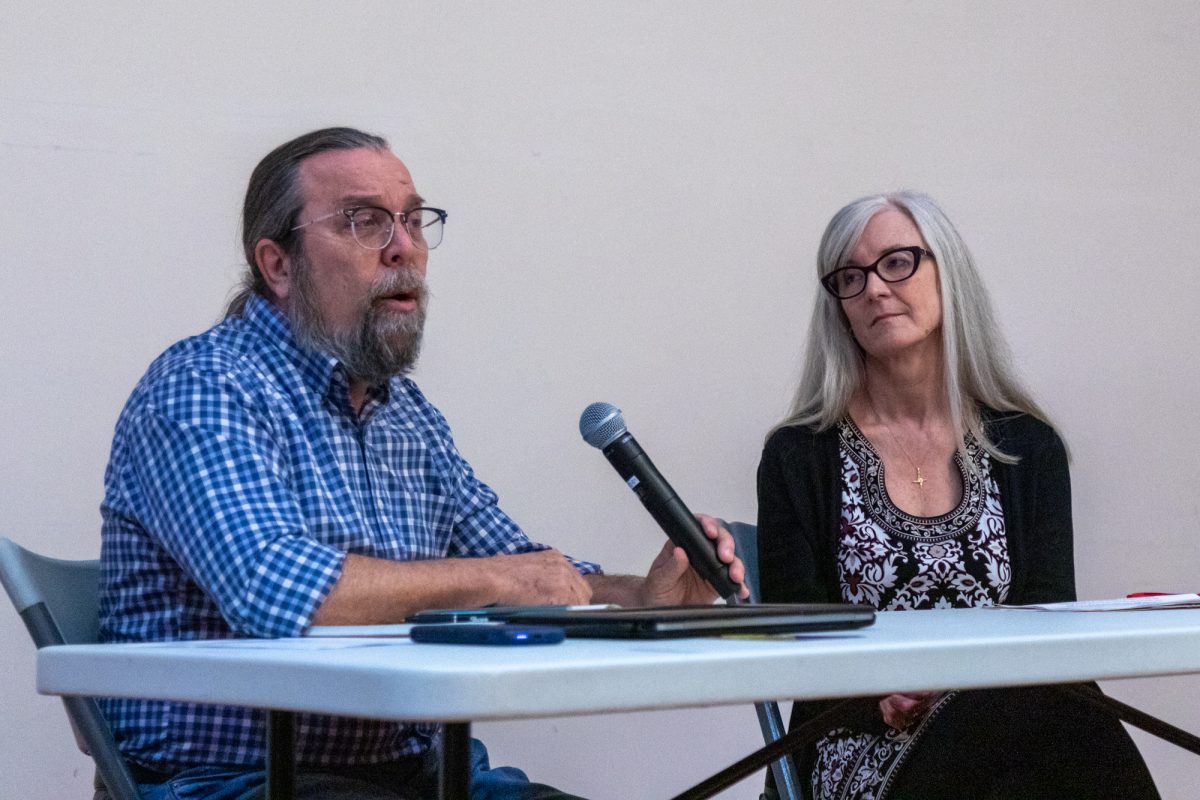
At the town hall, an annual conversation hosted by the Faculty Senate, faculty raised concerns about what a 4:3 load could mean for their creative and scholarly work, limiting time for research and artistic production.
“What we do is teach, and the expectation of a 3:3 teaching load is that we are expected to have our creative and scholarship work and our service to the college be part of our identity,” said Chakraborty, a former Faculty Senate president. “And of course to diminish that means something.”
In the meeting, Erin McCarthy, an associate professor in the School of Communication and Culture, said a 4:4 teaching load is the standard at many institutions, although she added that she was not advocating for it.
She said faculty should not expect that they’d have a 3:3 load if they left for another school.
“I’m not saying that we aren’t overworked and things haven’t been expected of us, but we really, really should make ourselves aware of what is going on,” McCarthy said.
Dawn Larsen, an associate professor in the School of Business and Entrepreneurship, urged colleagues to think about the moment the college is in and to do everything possible to help Columbia survive.
“We need to make some sacrifices that we might not be thrilled about, but if we’re gonna keep going, certain things have to happen,” Larsen said.
But Chris Shaw, an associate professor in the School of Design, said the lack of clarity about the college’s long-term plan has left some faculty uncertain about their own futures.
“I should have been applying for jobs for the last three years, but I haven’t been because I’ve been working so hard at Columbia, doing the things people asked me to do,” he said.
Both proposals are expected to be finalized by spring break, with a vote by the college’s Board of Trustees anticipated in early May. If approved, the teaching load policy would take effect next fall.
“Columbia is different than any other place,” Larsen said. “We’re urban, we’re gritty and we’re cool as hell and I, for one, do not want to see Columbia be a thing of the past, I want it to be a thing of the future.”
Additional reporting by Kate Julianne Larroder
Copy Edited by Samantha Mosquera