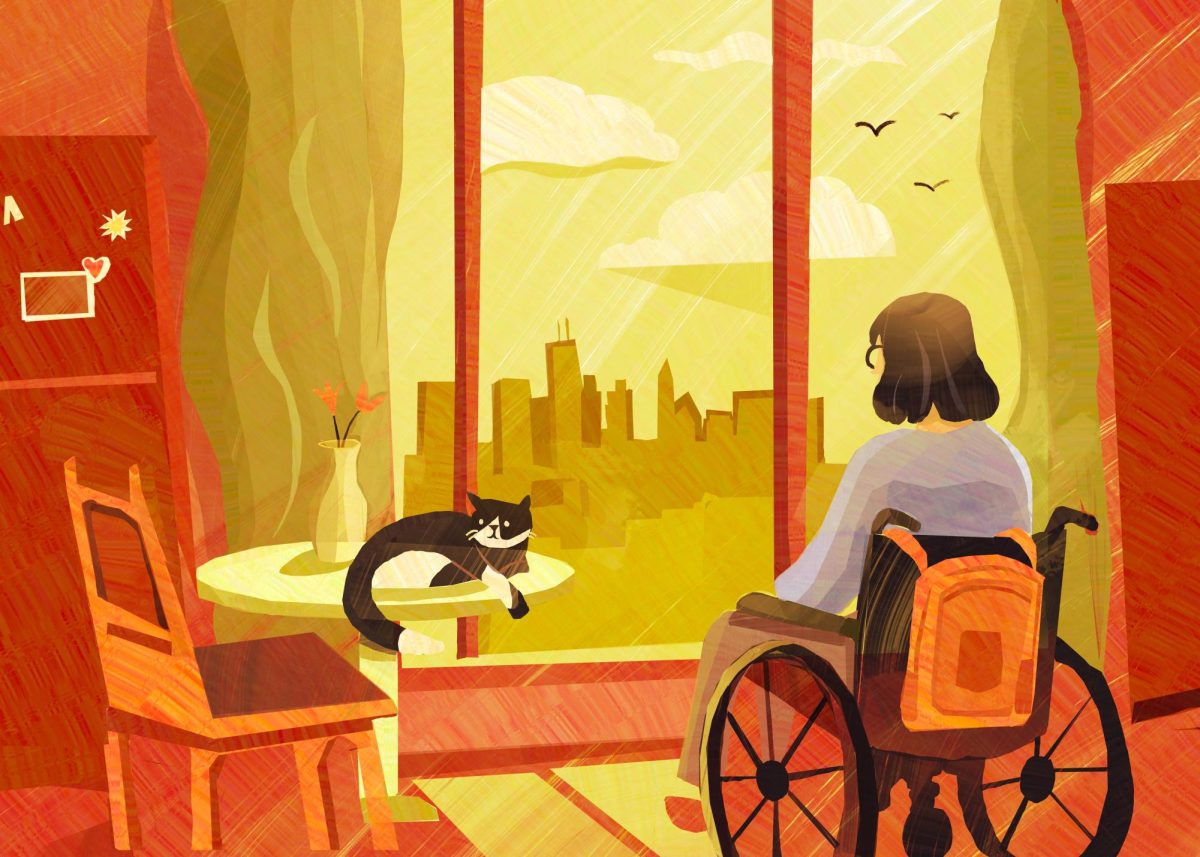

The first thing I remembered was the ambulance ride to the rehabilitation center. A sudden cardiac arrest in early Febuary 2023 left me with a brain injury, the kind of disability no one can see but that reshapes every hour of your life. Until I moved into the rehabilitation center for the next month, invisible disabilities weren’t really on my radar.
Now, they define my daily reality.
At first, things were very hard all at once, and my memory was horrible. Things my mom had just said to me left my brain almost immediately. Anytime I would forget something, it only upset me more. Not because I couldn’t remember, but because of the deeper reminder that my life in my first year of college had changed in ways most people wouldn’t notice.
As I began adjusting to life with a brain injury, I learned I was part of a much larger community of 5.3 million Americans who are currently living with brain injury-related disabilities.
This fact did make me feel a little better, but still, everyday was a fight with my brain.
I spent most of those first months out of rehab and in out-patient therapy just straight up annoyed and wondering why me? I was 19, newly disabled and had just missed out on my second semester of my first year at college.
For people with brain injuries, the effects run deep: memory problems, constant fatigue, unpredictable mood swings, anxiety and depression. They are all part of everyday life, shaping relationships and routines.
Even with medical advances, adjusting to life with an invisible disability like a brain injury requires continual adaptation and resilience.
So many of us struggle with our disability every single day, yet people still don’t even give hidden disabilities a second thought. We deserve and need greater awareness.
I returned to Columbia six months later, although I had to retake some of my classes in the fall. Housing applications were already due by the time I made the decision to return.
Fortunately, several workers at the Students with Disabilities Office at Columbia assisted and made sure I had a place to stay for the school year.
Most of the time, I didn’t need many of the accommodations that the SDI office offered, aside from the note-taking services.
But when I had to take a test during my J-term study abroad in Ireland, I panicked. I barely had half of it filled out when the time was up. Suddenly, I was painfully reminded that my brain didn’t work the way it used to, and I had to accept that I did need extra testing time.
Again, the SDI office was able to help make sure I had what I needed for future tests.
The tools and accommodations Columbia provided gave me the structure I needed, but managing everyday tasks still requires constant organization on my end.
I often feel like a madwoman with the amount of Post-it notes and phone reminders I have to set up for myself. Without them, I just wouldn’t get things done.
I also constantly live in a state of panic, wondering if I forgot something, and then I hope that whatever I inevitably forget is not that important.
It’s not an easy way to live, truthfully, and for a while, it made me angry. My own brain didn’t work how it used to; it felt like the biggest betrayal in the world.
Even with the defibrillator I have implanted inside of me, a safeguard in the unlikely event it happens again, the thought of it going off looms over me. So many things race through my head when I think of it.
What happens if it goes off? I guess I will go to the hospital. Then I have to get a new defibrillator.
How long will I have to stay there? They will probably want to do blood work. I hate blood work.
But I try my best not to think about any of that; otherwise, it consumes me.
I may always be a little sad for that angry teenager whose life changed forever that winter day in Wisconsin, but I understand her now in a way I couldn’t back then.
One of the hardest parts of having a brain injury is knowing how easily my needs can be overlooked because my challenges aren’t immediately visible.
An invisible disability is still a disability. The struggles I carry every day are real, and I deserve to be supported, believed and understood — just like anyone else, whether their disability can be seen or not.
Copy edited by Matt Brady