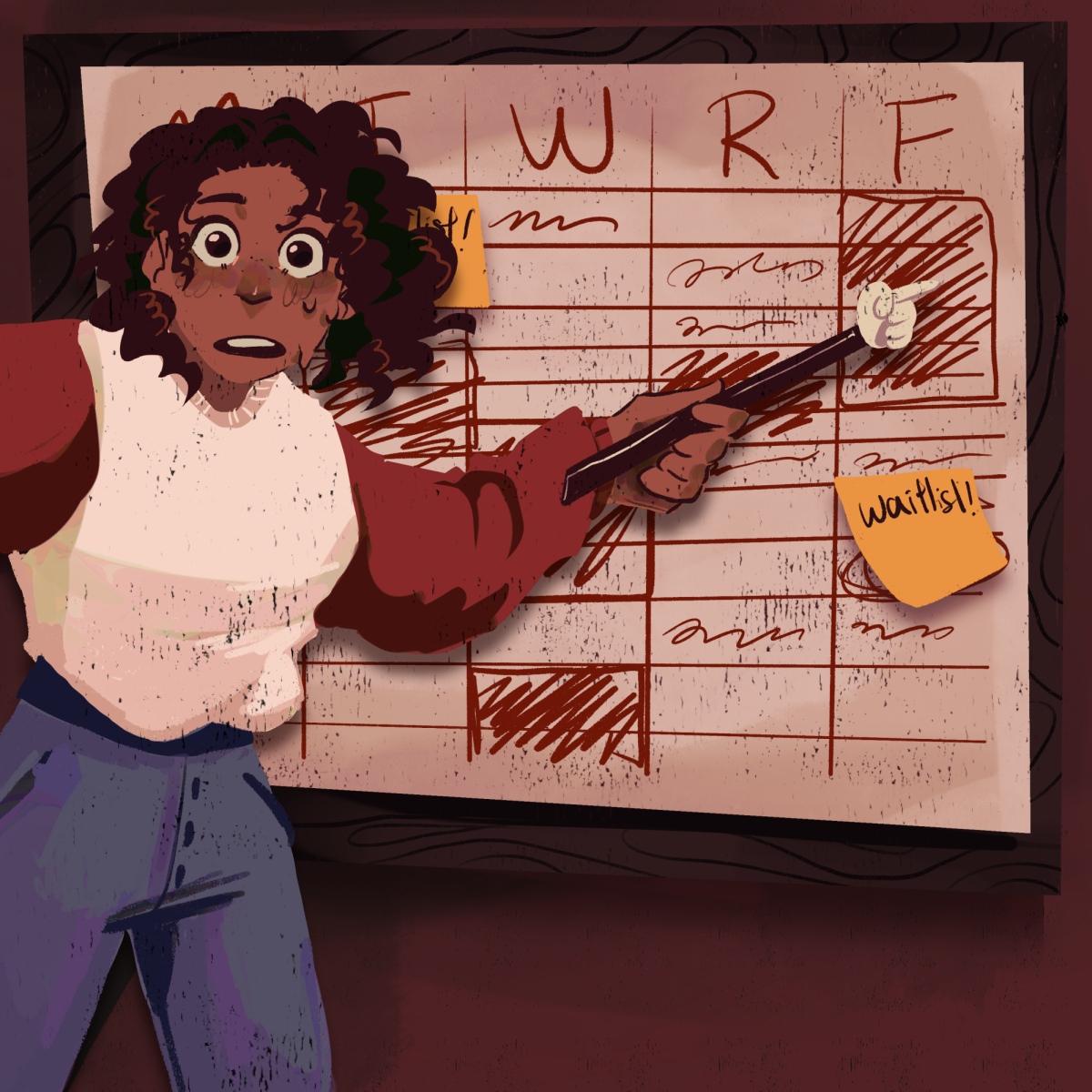

As the semester comes to an end and students prepare for final projects and exams, here are three tips for studying.
Transcript:
0:05: Welcome to 3 to Know with the Columbia Chronicle, your go to source for the top 3 things every Columbia College student, faculty, and staff member needs to know.
0:13: I’m your host, Levi Libson.
0:16: Whether we like it or not, Thanksgiving break is over and exam season is once again upon us.
0:20: If you’re a seasoned test taker or even someone who still struggles a bit to find the right footing in the weeks leading up to exams, well, I’ve got both good news and bad news for you.
0:28: The good news is that there are hundreds of great study methods available to you.
0:32: The bad news though is that our minds all perform differently, so the same strategy for one person might slow another person down.
0:38: Today, I’m gonna go over 3 tips for studying that are generally recommended by professionals.
0:43: Tip one.
0:44: Paraphrasing, summarizing, and organizing.
0:46: One huge trick to success in test-taking is consolidating everything you know into a centralized resource.
0:52: For example, gather all information that was taught through sheets, digital files, etc.
0:56: then make a real physical cheat sheet and see how much info you can put into one or two pages.
1:00: Paraphrase in a way that makes more sense to you.
1:02: If something is overly complicated in explanation, dumb it down a bit.
1:06: Just as long as you get the main idea, you should be in the clear.
1:08: Due to deeper cognitive processing, writing this all out by hand will cause it to.
1:11: Stick a lot harder in your brain.
1:13: While typing is efficient, it’s far inferior in regards to retention.
1:16: In the past, I’ve personally even gone through and rewritten all my class notes before a test and found great success.
1:21: In terms of organizing your information on a sheet of paper, follow the Cornell guide to taking notes.
1:26: Title and date on the top, questions or keywords on the left hand of the sheet, notes in the center, and a summary at the bottom.
1:32: Make yourself a cheat sheet even if you don’t end up studying with it.
1:35: The act of making it in of itself will do wonders.
1:38: Tip two, don’t cram.
1:40: While occasionally cramming might be your best bet, long sessions can lead to burnout and information overload.
1:45: In fact, you might still struggle to even retain whatever you were studying by the end, since you’re still mostly working in the short-term.
1:52: In the late 1980s, an Italian university student named Francesco Cirillo developed a method for studying called the pomodoro method, which translates to tomato.
2:01: At the time, Francesco used a tomato-shaped kitchen timer to space out his studying by increments of 20.
2:06: 5 minutes with 5 minute breaks in between and a longer 15 to 30 minute break after 4 pomodoros.
2:11: This method of spaced out studying helps your brain strengthen memory pathways for long-term retention.
2:17: Not only that, but the strain of a long study session is taken away as you allow yourself to step back and breathe.
2:22: My final tip is a lot more simple.
2:25: Study with other people.
2:26: Studying with other people can give you incredible insight into what you do and don’t know.
2:31: Similar to making a cheat sheet of All consolidated information.
2:34: Talking through something will also stick with you much stronger than just using a computer.
2:37: If you want to have some fun, make some warm drinks and invite a few friends over to study.
2:42: You can quiz each other and work through things you might not understand.
2:45: A collective of us all tackling a task is quite a lot more efficient.
2:48: Plus, it’s fun.
2:49: Take the time to set up a good comfortable environment and work, work, work away.
2:53: Ultimately, all these techniques are based entirely on the person, so find what works best for you.
3:00: Subscribe to our newsletters on our website, Columbia CChronicle.com.
3:04: Be sure to also check out conversations for weekly campus highlights.
3:07: I’m Levi Liben.
3:08: Thanks for listening.
Copy edited by Brandon Anaya