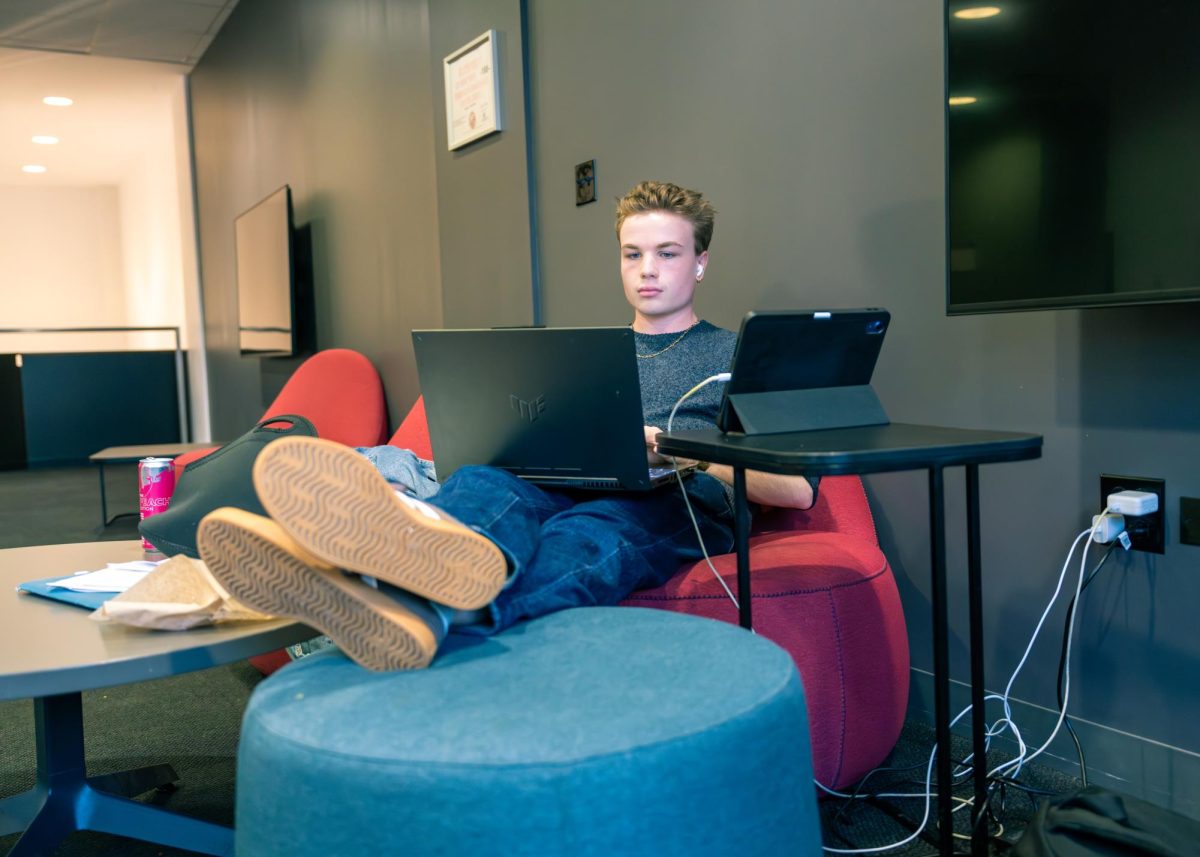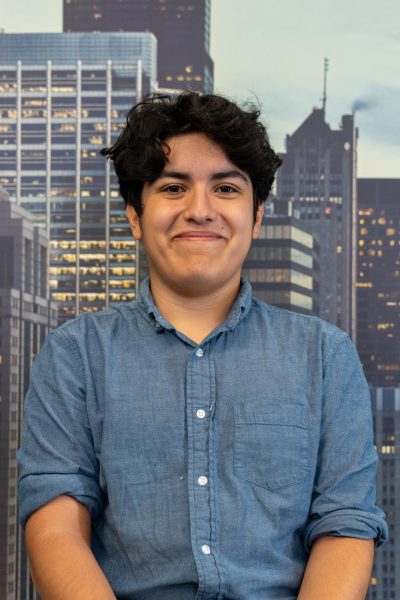

Anthony Carrera describes his artistic process, inspirations and how his time at Columbia influenced his work.
Transcript:
0:08: Welcome back to The Chronicle Conversations.
0:10: I’m your host, Aaron Guzman.
0:13: This week I am joined by Columbia alum Anthony Carrera, who takes us through his art process and shares some opportunities he has had at the start of his career.
0:22: Anthony describes some aspects of his visual art and gives some background into what factors drove him to create his style.
0:28: He also provides some examples of artists that provide similar techniques into their works and explains how they helped him form his own work.
0:35: I describe my work as geometric, very mixed between kind of early 2000s cartoons and late 60s and 70s kind of modernist design.
0:49: So I tend to incorporate a lot of graphical elements into it.
0:52: I like the feeling of anachronisms, like more kind of stuff that I saw when I was a kid, but making it look weathered and old.
1:01: My process is mainly digital.
1:03: I do a lot of studio paint or Illustrator, but for the most part, I only do traditional sketching when I’m just away from my office.
1:13: Definitely, all the people and my peers that I met throughout both the graphic design classes that I took and then a lot of the people that I met in ISG.
1:23: It was always, especially with my graphic design group of like my graduating class of graphic design, it always felt like I was being pushed to try harder, but not by, not by any means of like peer pressure or anything, but it’s like all these guys are trying their hardest, I wanna try to.
1:37: Definitely, I would say one of the biggest inspirations that I have is artists like Mike Mignola, Genndy Tartakovsky and like the designers
1:46: and artists like Stephen Silver.
1:48: I really like pushing the simplest forms out as, you know, as these dynamic characters and I, I always take their mindset of less is more, makes something recognizable from a distance.
1:59: Anthony also explains how Columbia and the city of Chicago had a significant impact on his work and how Columbia’s illustration and graphic design programs impacted his process.
2:10: Definitely it was getting to travel around the city and walk it a lot.
2:15: I was born and raised in Joliet my entire life.
2:18: Yeah, Joliet is not really a small town at all, but, you know, it’s not really the most walkable thing.
2:23: I, I would say like I was pretty independent of my parents in the sense that like, you know, I would go out, I would tell them I’m going out, but getting to walk the city by myself, I mean like, knowing that like, you know, like it’s just such a big place that I could just genuinely get lost if I like take a turn.
2:37: Though I got a good sense of direction, but, just like getting to like see all these people and meet them and like have that kind of freedom to be like, oh, you know what, I wanna, I wanna walk to like a random comic store.
2:49: Are there any nearby? And like finding like 3 or like, oh like, you know, there’s a Barnes and Noble, but maybe there’s other bookstores and then finding like 2 or 3 like, you know, ones that like it’s like oh these these aren’t big box stores and, you know, just getting to just getting to be there and even just down to like taking the train
3:04: so often.
3:05: It was, it was an interesting experience because I went to Columbia fully.
3:09: I, if you’d asked me to use before I went to Columbia, I wanted to be an illustrator full time, but then, you know, out of like the case of like, you know, wanting something, you know, the economical choice, I decided to go into graphic design and so it was a very interesting experience because when I went to Columbia, I was like, OK, you know, I have to be serious, I have to, you know, only do text and only do like modernist things and then all my professors are pushing me it’s like, why don’t you incorporate your illustration?
3:33: Why don’t you do something like that?
3:35: Because, you know, in the graphic design, well, there’s there’s no there there’s never having enough skills.
3:40: So like, if you can incorporate those, and then I had several professors push me towards that.
3:46: Darija Dokic and Dave Pabellon specifically were always like pushing me like, hey, put your, put your artwork in this, like, make something
3:53: with that, incorporate that because that’s just another piece to add on to it.
3:57: Even though I graduated from graphic design, I felt like, well, I learned graphic design and well I had a lot of fun with that, I felt like also it’s like I, I’m also, I felt like I did a little bit of that illustration stuff.
4:08: I just didn’t get to do a lot of the classes for that.
4:10: Anthony has also had some of his artwork featured in an early access multiplayer video game called Deadlock, made by Valve Software.
4:18: He explains what it was like to be given the opportunity to work with Valve after being a fan of their work for many years.
4:24: Oh, I’ve been a fan of Valve Software for quite some time.
4:28: I think probably since I was 6 or 7.
4:32: I can’t remember exactly when Portal first came out, but I think, I think it was 2008, 2007, but, off the top of my head, but that I, I think that it was when Portal one came out first, and then I, I went to a buddy’s house and we played it, he had the orange box, so we played all that stuff and, you know, then that from there I just kind of snowballed.
4:50: It was, it was like a dream come true.
4:52: I remember I, I’ve been posting fan art before we were allowed to like publicly like talk about the game or show anything off.
4:59: Not, not too long before, maybe about a month or a month and a half before they kind of went public with it.
5:04: And after a while, I just kept posting and posting and then one of the people working on the team was like, hey, we really like your work, like we have it like in the office.
5:11: I was like, oh, that’s really cool.
5:12: And then I posted some more stuff, and then they sent me a message of like, do you wanna work with us or something?
5:18: And I, yeah, I was like, oh, like is this real like I texted my boyfriend like, this is happening, like, this is like insane.
5:24: And so it was such an interesting thing because I’m still under NDA for a lot of the aspects that I worked on for there, but it was a really, it was an insanely welcoming environment and it is very truthful that when people like talk about like Valve being very free with your with work.
5:44: So like, when, when I would work with them, I would just hand them ideas or they would say, hey, what’s your idea?
5:49: It was very, there was very little oversight in what I was doing.
5:53: It was a lot of them saying, we want to see what you are, are doing for this, like, pitch us some stuff or here’s the general
6:00: idea and I would get very little in the ways of like restraint.
6:06: It was a great communicative experience. Basically at any point I could ask a question and they could get back to me.
6:11: It was just it was just a super fun experience.
6:14: That’s all for this week.
6:15: Make sure to stay up to date with our campus and metro news, and be sure to subscribe to our newsletter on ColumbiaChronicle.com.
6:21: I’m Aaron Guzman.
6:22: Thanks for listening.
Copy edited by Manuel Nocera