
Despite light rain, spirits were high as individuals of all abilities walked and rolled alongside floats, engaging with spectators by handing out candy and stickers while chanting “We got the power” at Chicago’s 22nd annual Disability Pride Parade on Saturday, July 26.
The parade kicked off from 401 S. Plymouth Court at 11 a.m. as participating organizations began filling the streets.
This year’s theme, “Still Rising, Still Thriving!” emphasized the celebratory spirit of disability pride while highlighting progress made in disability rights and showing that there is still an ongoing fight for equity among people with disabilities.
In a landmark moment, the official disability flag was raised at Daley Plaza for the first time following the parade.
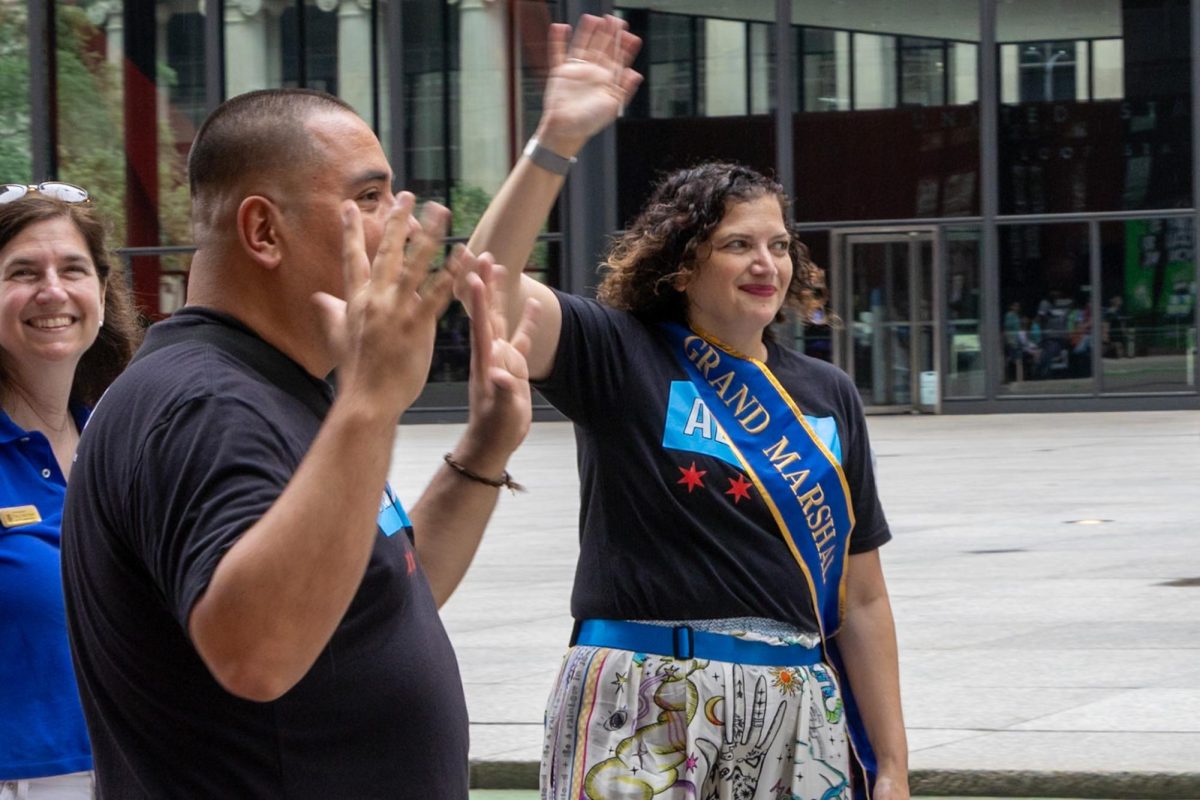
Leading this year’s parade as the grand marshal was Rachel Arfa, Commissioner of the Mayor’s Office for People with Disabilities. She made history as the first deaf person to be a member of a mayor’s cabinet nationwide.
“I want people to know that Chicago is a place where anyone can succeed with a disability,” Arfa said. “I want people to know that it’s possible, that anything is possible here in Chicago. I work every day to make sure Chicago’s the most accessible and inclusive city in the world.”
Since Arfa began her position in 2020, she has focused on working on disability employment, and her office’s career center has helped 165 people with disabilities find a job over the past three years.
“Having a job is life changing,” Arfa said. “People with disabilities can contribute and we can thrive as well.”
The parade marked a key point in disability history, celebrating exactly 35 years since the passage of the Americans with Disabilities Act on July 26, 1990. The ADA is a U.S. law that prohibits discrimination on the basis of disability in employment, public accommodations, transportation and telecommunications.
For longtime advocate Caprisha Williams, a Garfield Park resident attending her fifth Disability Pride Parade, the parade represented both progress and the importance of changing social perceptions.
“I’m here to progress. I am here to help people understand that disability is an identity, and it’s okay to have that,” said Williams, who has cerebral palsy and uses a wheelchair. “It’s not something to be ashamed of.”
Williams, who participated this year with Access Living, said she was enthusiastic about the parade and praised its organization, despite a long history of facing barriers with public transportation before buses had ramps.
Tellin’ Tales Theatre marched with their signature animal masks made from felt and found materials, which are a part of repurposed performance costumes. They are continuous participants in the annual parade.
“Our mission is to bridge the gap between the able-bodied and disabled stories and lives,” said Ben Saylor, a Bridgeport resident and longtime ensemble member who identifies as a little person with achondroplasia.
Saylor explained that the theatre company aims to create shows that promote awareness, understanding and acceptance. “For us, participating in the parade is visibility,” he said.
While the energy of the parade was exuberant, it also came at a time when disability rights are in jeopardy under the Trump administration.
The administration’s budget plan would eliminate funding for three grants to disability rights centers and cut funding for another. These cuts would be the largest financial threat to the federal disability rights network in its 50-year history.
Chicago resident Louie Francesco who identifies as autistic and has long COVID-19, expressed frustration with the current administration.
“The U.S. used to be so great and now we are trickling down,” Francesco said.
Francesco said people with disabilities face increasing medical barriers, pointing to troubling decisions around vaccines by the Trump administration, and noted accessibility gaps at the parade itself, particularly for those with invisible disabilities such as autism.
“They did a good job on making it accessible for wheelchair folks, but I think they forgot about invisible [disabilities],” he said, mentioning that he experienced sensory overload from loud music and crowds during the lineup process.
Esli Ramos, who coordinates events for the Bradley Cameron Association, has attended annually since 2018. She appreciated the parade’s inclusive environment as a person who is blind.
“I love the excitement that I hear, since I am blind, but also everyone just stands up for their disability and supports the disability community,” Ramos said. “I just love being part of it and hearing it around me.”
Ramos, who is from Plainfield, Illinois, said there is an ongoing need for respectful treatment in daily life.
“I feel like they need to not treat us like we’re children, talking down to us or leaving us out. Oftentimes, you get left out or not thought of,” she said.
For first-time attendee Rowan Doe, who identifies as neurodivergent and has ADHD, the parade gave them time to celebrate with their community.
“I love seeing people out,” Doe said about the event’s turnout. They had marched with the group Trans Up Front and found the intersectionality of disability pride important.
“The disabled community is one that anyone at any time might be a part of,” Doe said. “Accessibility benefits everybody at all times.”
Copy edited by Emma Jolly