Columbia’s recent grading policy change eliminated a rule that forced some students to repeat major coursework over fractional point differences and prevented transfer students from applying C-minus credit toward their degrees.
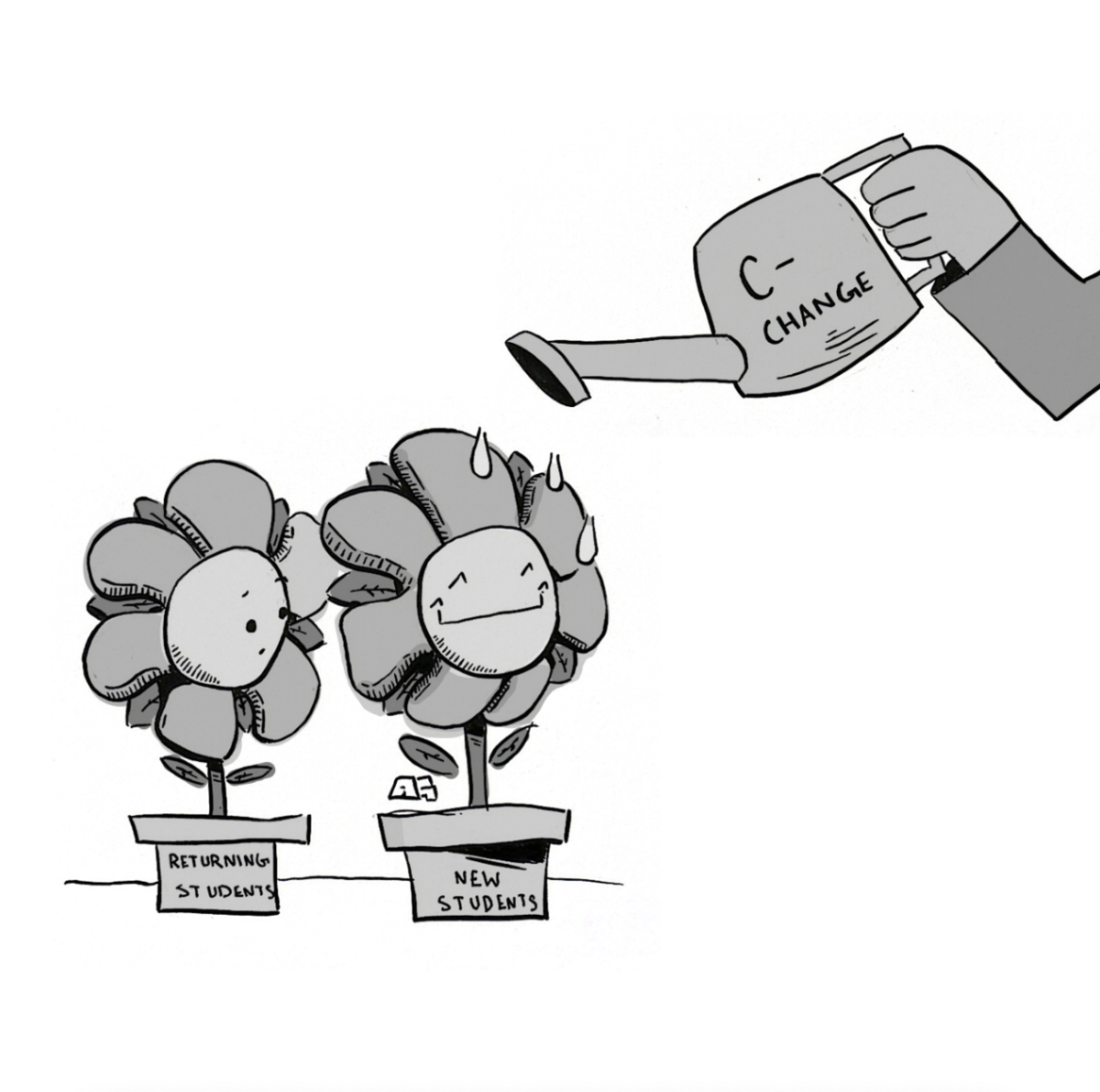
On Jan. 16, the Faculty Senate unanimously approved a policy change to allow C-minus grades to count toward major requirements. The vote ended a long-standing requirement that students must earn at least a C grade in major courses to progress through their programs, even though C-minus grades already counted toward overall degree completion. The policy also applied to transfer credits.
The change addresses a confusing policy that created unnecessary barriers for students. The expectation was inconsistent and Columbia defined a C-minus as satisfactory work for graduation purposes but not for major requirements.
The number of affected students is small, although the impact was significant as it forced those students to repeat classes and could cause delayed graduation plans. Transfer students faced unexpected challenges when told that their C-minus grades from past institutions would not transfer into their major.
Some fear that this change lowers standards and reduces student motivation. As the Chronicle previously reported, some students and faculty have voiced their concerns about classes being taken less seriously or effort levels changing.
Columbia is not modifying what is acceptable academic work; course instructors are in charge of setting course standards and determining grades based on student performance. The policy simply aligns major requirements with Columbia’s own definition of a passing grade.
Columbia must show that this change complements existing academic support. The college should clarify how the policy applies to past C-minus grades and make sure that students who received C-minus grades under the old policy can benefit from the change. The college should make sure that students who are still getting C-minus grades remain on track to complete their programs.
Any student who receives a C-minus could be put into academic coaching, where they can meet with their advisor to develop a strategy before the student moves on to the next course. This guarantees that the change in policy is not passive acceptance of lower performance and is actively trying to help student success.
The college must focus on making sure students understand the grading policies in place which will help with student success.
Removing the C-minus policy eliminates an unnecessary barrier for students. The responsibility now is clarity and ensuring that students understand how grades apply to their programs and receive support when they struggle. Clear policy and academic rigor are not competing priorities. When paired with effective academic advising, they reinforce each other.
Copy edited by Samantha Mosquera