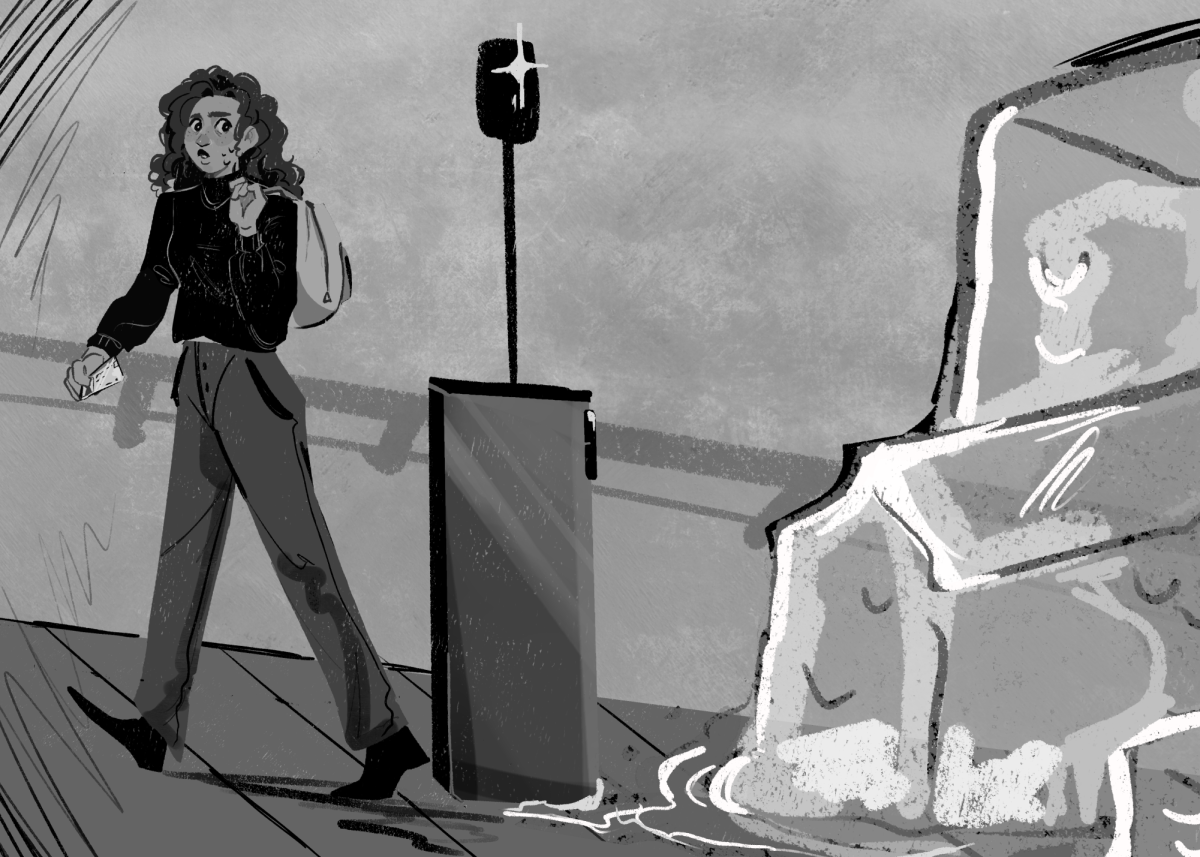

More than 9,000 flights have been canceled nationwide since the Federal Aviation Administration ordered airlines to reduce schedules last week, a move meant to ease pressure on control towers left short-staffed by the longest federal government shutdown in U.S. history.
Flight reductions are already at 4%, affecting most commercial flights, including those to and from Chicago’s airports, O’Hare International and Midway International.
In a press conference on Tuesday, Nov. 11 at O’Hare, Transportation Secretary Sean Duffy warned that air travel was “going to radically slow down” ahead of Thanksgiving, with more than 10% of flights canceled going into this weekend.
For Columbia students planning to travel home for Thanksgiving, these cuts could mean delayed departures, missed connections and extra expenses. Under the current calendar, the college’s break begins on Wednesday, Nov. 26, leaving many students with little flexibility to adjust plans if flights are canceled or rescheduled.
Columbia should extend the Thanksgiving break to a full week.
Other institutions already follow that model. The University of Illinois Urbana-Champaign and the School of the Art Institute of Chicago schedule a full week off.
Extending the break at Columbia would help with the immediate problem this year and in the longer term, simply bring the college in line with peer institutions.
For this year, Columbia should at least suspend classes for the week. If it can’t do that, it should ask faculty to excuse students or move classes online.
Often, classes scheduled on Mondays and Tuesdays of Thanksgiving have low attendance rates as it is.
Considering the low attendance, why should we continue holding classes amidst the travel issues?
Extending the break might pose challenges for faculty managing end-of-semester coursework. The college also has to consider how it would adjust the academic calendar to meet accreditation and instructional time requirements.
These are legitimate concerns, but the benefit to students’ well-being outweighs the inconvenience of a modest calendar change.
Academic stress is likely the most significant source of stress impacting the mental health of college students, according to the National Library of Medicine.
Now, if we combine student travel on top of their usual stress surrounding finals, it seems counterintuitive to not extend the break.
Everyone deserves a break.
Granting a full week for Thanksgiving would not only ease travel chaos but also send a message that the college values rest and recognizes real-world challenges, any year but maybe especially this one.
Columbia should lead with empathy and give the college community some much needed grace during this stressful and tumultuous time.
This choice will ultimately signify to our community that Columbia can bend the rules a bit to accommodate our student body in an unusual year, which may just be worth the loss of a couple of school days.
Copy edited by Matt Brady