
Columbia students joined more than 90 groups in the annual Arts in the Dark Halloween celebration, including children’s choirs dressed as various ghouls, and the Banana Bike Brigade speeding around the streets dressed as various animals and cartoon characters.
Organized by LUMA8 and co-founded by former Columbia administrator Mark Kelly, the Arts in the Dark parade draws thousands to State Street each October. It celebrates the city’s creative spirit through illuminated floats, live music and performances from arts and cultural institutions across Chicago — a tradition Columbia has helped shape since the parade’s debut in 2014.
Columbia’s presentation this year was inspired by the hit 2025 film, “Sinners,” which features a scene where past and present combine when the main character, Sammy, plays a song that transcends generations, which allows different historical cultures all to dance together in unison.
Columbia’s portion of the parade began with the Renegades Dance Team cheering down State Street, red and silver pom-poms glinting under the streetlights as “Sinners’” blues score played. The show built toward a dramatic juke-joint-inspired dance featuring students dressed as old-time vampires and modern hip-hop artists.
During the parade, performer and first-year film and television major Sadiyah Farrakhan paused to take in the scene.
“I think you look to your left and you look to your right, and you see so many people of different ages and shapes and colors and sizes,” she said, “and I think it was so beautiful to see everybody just on the side, just cheering for the same thing and enjoying the same thing.”
Junior film and television student Destiny Styles portrayed one of the vampires in the parade, speaking to why “Sinners” spoke to all the united student organizations.
“It had a lot to say about assimilation, not just in the black community, but in a bunch of other communities who have had their cultures taken and stolen from them, only for them to be reprimanded for expressing that culture,” she said.
Following the “Sinners” performance were first-year students wearing handmade masks designed under the theme “The Ghosts of the Stockyards,” featuring hogs, sheep and cattle, a new element of Columbia’s expanding role in the citywide event.
Gabby Gonzalez, a first-year dance major, adorned her ram skull with golden specks to represent the beauty behind imagery that people usually associate with demons.
She recalled her favorite memory during the parade, when she scared a child watching from the sidewalk.
“I walked up to a little kid and grabbed the barrier, just looked down at them, and then they went, ‘ah!’” She continued, “The mom was so excited, though. The mom was laughing her butt off.”
However, when the performance reached the Harold Washington Library, the music was cut off, frustrating student participants who spent weeks preparing for one of the college’s biggest community showcases.
“At the end, it literally just shut off without warning,” said Antonio Arce, a junior fashion major who played one of the vampires. “I feel like they should have planned this better because we practiced for like a month, like really hard, and we were doing really well.”
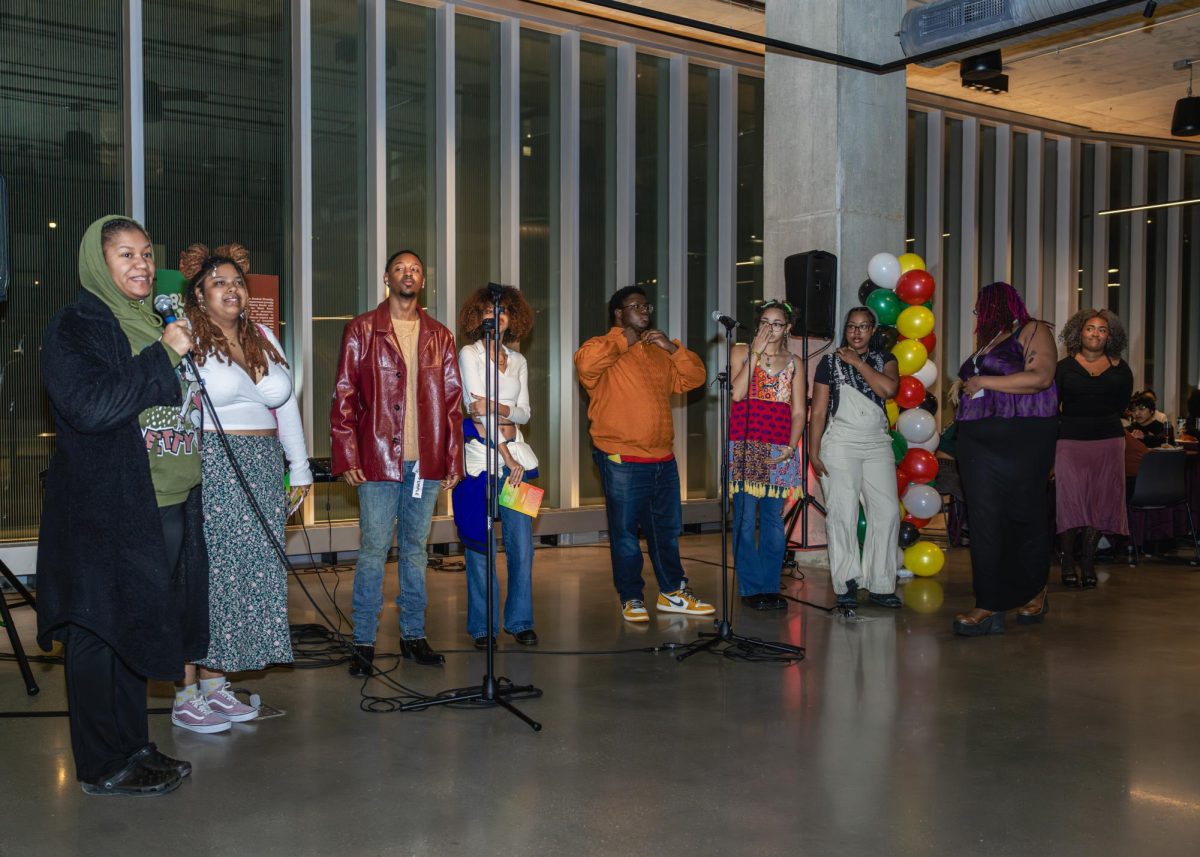
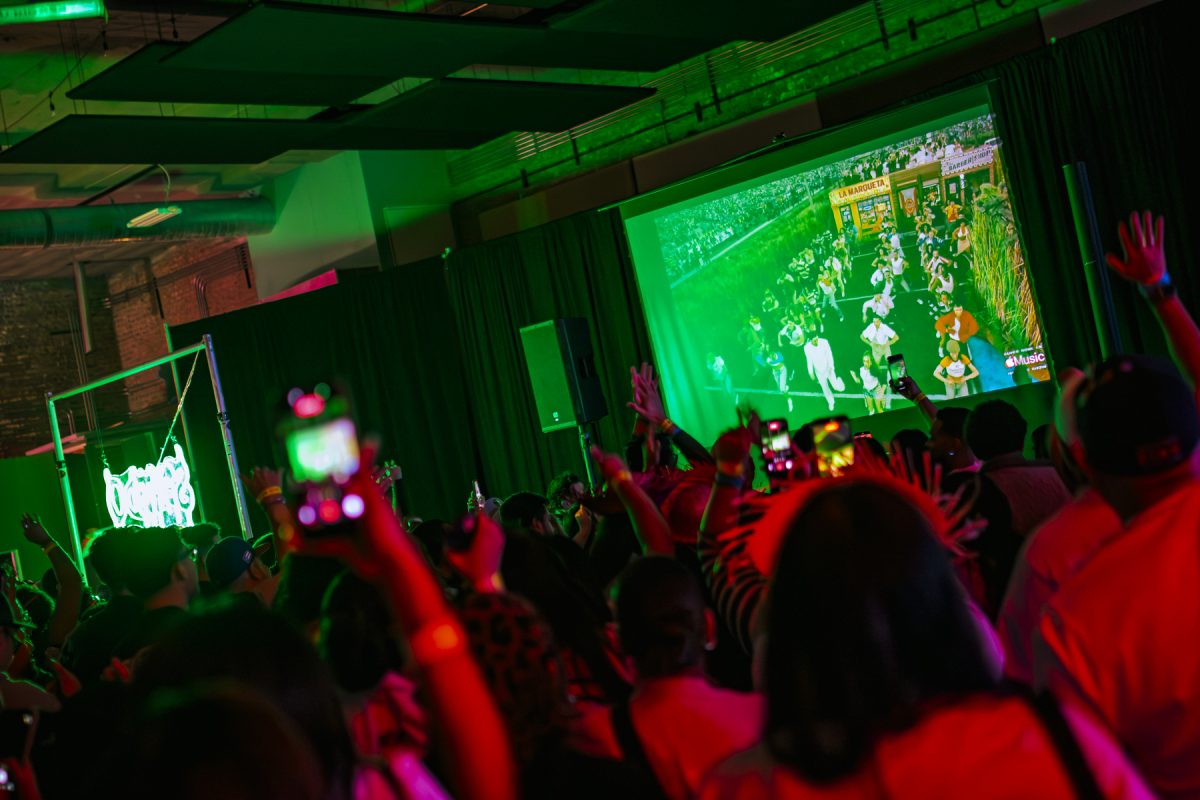
Despite the abrupt end, the college community gathered at the Student Center for a party featuring free food, a photo booth, a zine-making section and a huge dance room on the fifth floor.
However, the highlight of the evening occurred when students gathered at the entrance of the student center to see Columbia’s “Sinners” performance.
While “I Lied To You” blasted on the overhead speakers, people clapped along and the student organizations came together for a final hoorah that reclaimed the night, highlighting the importance of culture, togetherness and the spirit of Arts in the Dark.
Sophomore film and television major Owen Smith was one of more than a hundred students enjoying the party’s offerings. He stood out in his bright blue and red Superman costume.
“I’m looking forward to busting a move, if I’m being honest,” he said.
Additional reporting by Guadalupe Loza-Sanchez
Copy edited by Vanessa Orozco