A federal bill that would require documentary proof of citizenship when registering to vote is raising concerns among Columbia students and faculty who say it could create new hurdles for young voters living away from home.
Last week, the Republican-led bill narrowly passed the U.S. House of Representatives on a party-line vote, but its prospects in the Senate remain unclear, and it would need broad support, including overcoming the chamber’s 60-vote threshold to avoid a filibuster.
The “Safeguard American Voter Eligibility Act” — otherwise known as the “SAVE Act,” would require voters across the country to provide proof of citizenship to register to vote. For students who are away from home, these vital documents may not be easily accessible, adding new barriers to overcome.
“Anything that makes voting more complicated is going to deter a lot of people,” said Teddi Karnes, a member of Columbia Votes and a senior film and television major.
Under the act, individuals would be required to present documentary proof of U.S. citizenship — such as a passport, REAL ID or birth certificate — when registering to vote in federal elections. The requirement would apply to the registration process, not to casting a ballot, including voting by mail.
Lucy Mandlowitz, a sophomore theatre arts: production and practice major, has voted exclusively by mail since becoming eligible. If she needed to update or re-register while attending school out of state, she would have to obtain documents that are currently kept with their parents in Colorado.
“I understand why this rule would be implemented, but I personally think it’s a little bit unnecessary,” Mandlowitz said. “If you are already getting a mail-in ballot that is assigned to your name and to your city, they should already know that you are a citizen.”
The SAVE Act does not ban or restrict absentee or mail-in voting as President Trump initially had pledged to do through an executive order or federal legislation. Mail-in voting remains a state-by-state process.
Although junior marketing major Claire Bald is grateful that she brought her passport and birth certificate from Washington, she understands that many other students may not have the same situation.
“We’ve seen a lot of changes lately that restrict who can vote, and I think this is just another kind of way to suppress voters,” Bald said.
Griffin Garrett, the senator representing the LGBTQ+ community in Columbia’s Student Government Association, said the act also targets women and transgender people whose current legal names may not match the names listed on their original documents.
“The whole point of the ‘SAVE America Act’ isn’t actually to make [voting] more fair,” said Garrett, a sophomore theater design and technology major. “It is to remove the voices of these minorities and to make it harder for people to have their voices heard.”
These concerns raised by students also reflect issues beyond campus.
“Nationwide the cumulative effect will likely be a decrease in voter participation,” said Daniel Williams, a part-time instructor who teaches political science in the School of Communication and Culture.
According to a study by the Center for Democracy and Civic Engagement, more than 21.3 million U.S. citizens cannot readily access proof of citizenship. Federal data also shows that nearly half of all Americans do not have a passport.
“This is also happening at a time when a lot of people who previously have not been engaged in political activity are becoming engaged,” Williams said.
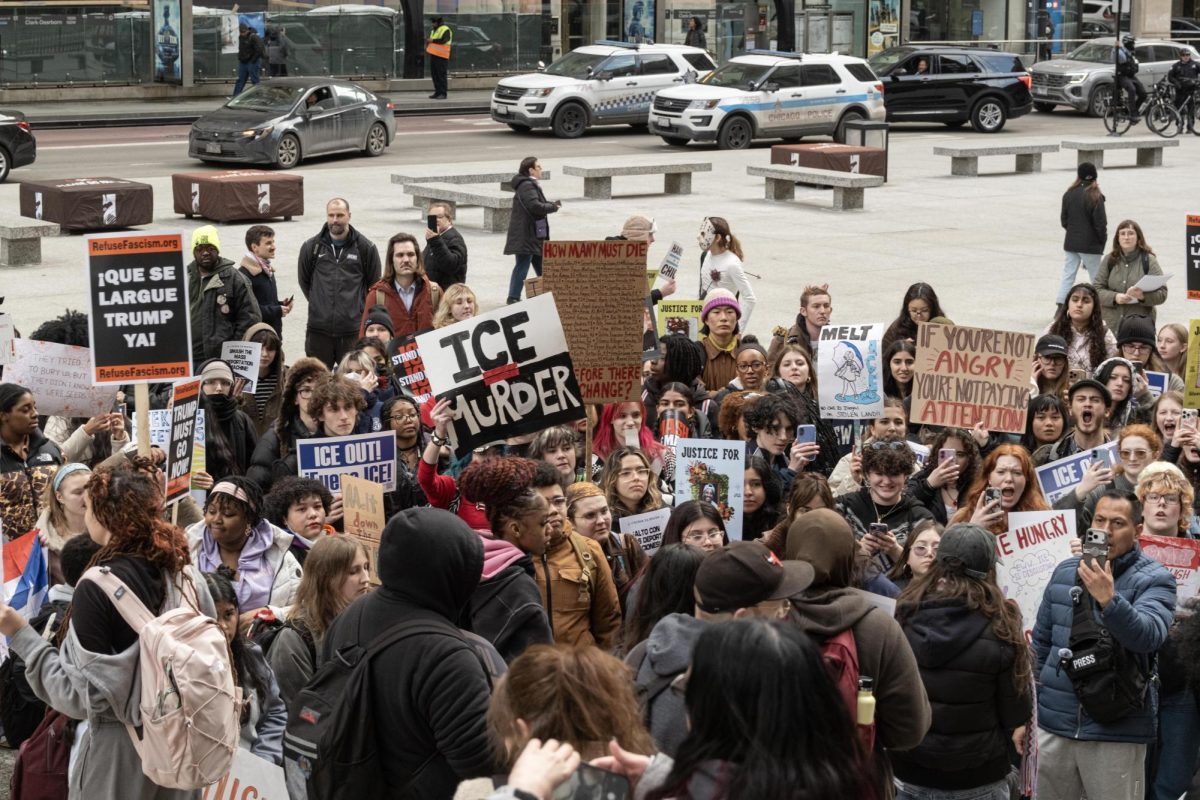
On Friday, Feb. 13, 60 Columbia students joined a protest at Federal Plaza as a part of a nationwide school walkout, as previously reported by the Chronicle.
“The youth vote is extremely powerful,” said Karnes. “It’s a new block of voters every year as people age into the system, and with this new block comes new ideas.”
Whether the bill advances or stalls in the Senate, faculty and students said the conversation surrounding it has already highlighted how election policy debates can directly affect young voters navigating college life.
“People know politics affects them,” Williams said. “I think the biggest thing people don’t always know is that they can affect politics.”
Copy edited by Matt Brady