After two fatal shootings involving federal agents in Minnesota this month, Columbia students with ties to the Twin Cities say they now think differently about where they walk and who they talk to.
“Emotionally, Minnesotans are distraught and in so much pain,” said Olive Swarts, a junior fashion studies major from Minneapolis who just returned to campus a few days ago. “I switch from being numb to angry and terrified of what’s happened.”
For many people in Chicago and across the Midwest, anxiety about aggressive federal immigration enforcement long predates the Minnesota shootings and is shaped by years of raids, detentions and fatal encounters involving federal agents— incidents that civil rights groups say are rarely subject to independent investigation.
“There’s a really strong sense of fear, anger and uncertainty amongst everyone,” said Lily Zimmerman, a junior music business major from Waconia, Minnesota, about 30 miles southwest of the Twin Cities. “People are on edge from day to day.”
Tensions in Minnesota escalated earlier this month after two separate encounters involving federal immigration agencies ended in deadly force, drawing scrutiny to how immigration enforcement operates across the country.
Renee Good, a 37-year-old Minneapolis resident, was shot and killed on Jan. 7 during an Immigration and Customs Enforcement operation in south Minneapolis. Federal officials say an ICE agent fired after Good’s SUV moved toward the officer and struck him. Witnesses and independent video analysts, however, dispute that account, saying the footage does not clearly show Good attempting to run over the agent. State and local officials have called for a full independent investigation into the shooting.
On Jan. 24, Alex Pretti, a 37-year-old ICU nurse at the Minneapolis VA hospital, was shot and killed by U.S. Border Patrol agents in Minneapolis after officials said he approached them with a handgun and resisted. Video footage and witness statements reviewed by multiple news organizations, however, show Pretti holding a cellphone, and do not support the federal account of a weapon threat.
As of late January, at least eight people have died either in Immigration and Customs Enforcement custody or in encounters with federal immigration agents, the Guardian reported. ICE does not publish a centralized, up-to-date database of deaths.
“We’re seeing intense media coverage of white American citizens being murdered by their own government and people are finally turning their heads,” said Adiline Vega, a senior art history major who added that they are “outraged” by the killings of Good and Pretti.
Vega, co-president of Columbia’s Latino Alliance, said the focus on those cases risks overshadowing other fatal encounters involving immigration enforcement. “Black and Brown people have always been more vulnerable to aggressive police and military enforcement,” she said.
Last fall, Chicago found itself at the center of federal immigration enforcement when the U.S. Customs and Border Protection and ICE carried out large operations across the city under the name “Operation Midway Blitz.” The actions sparked protests and backlash for their tactics.
Heavily armed federal officers were seen patrolling neighborhoods, including River North. Community advocates raised alarms that individuals were being targeted based on how they looked, instilling fear in immigrant communities.
In September, Silverio Villegas-Gonzales was shot and killed by an ICE agent in Franklin Park during a traffic stop. Neither of the federal agents at the scene were wearing body cameras, Block Club Chicago reported.
“If ICE comes back to Chicago, which they will, I firmly believe they will be far more aggressive,” said Nahyoung Hyun, a senior film and television major. ”It’s important that we as a community prepare for that and protect our friends, neighbors and even complete strangers from their never-ending discrimination and violence.”
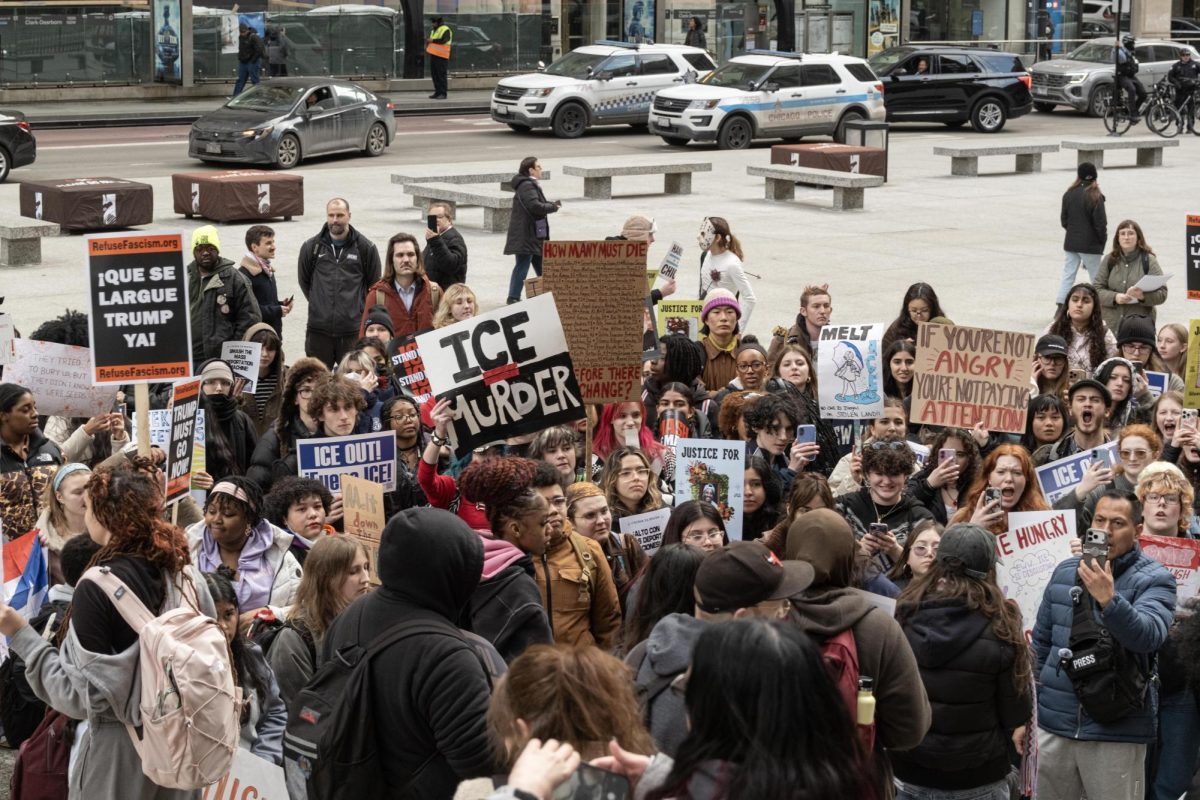
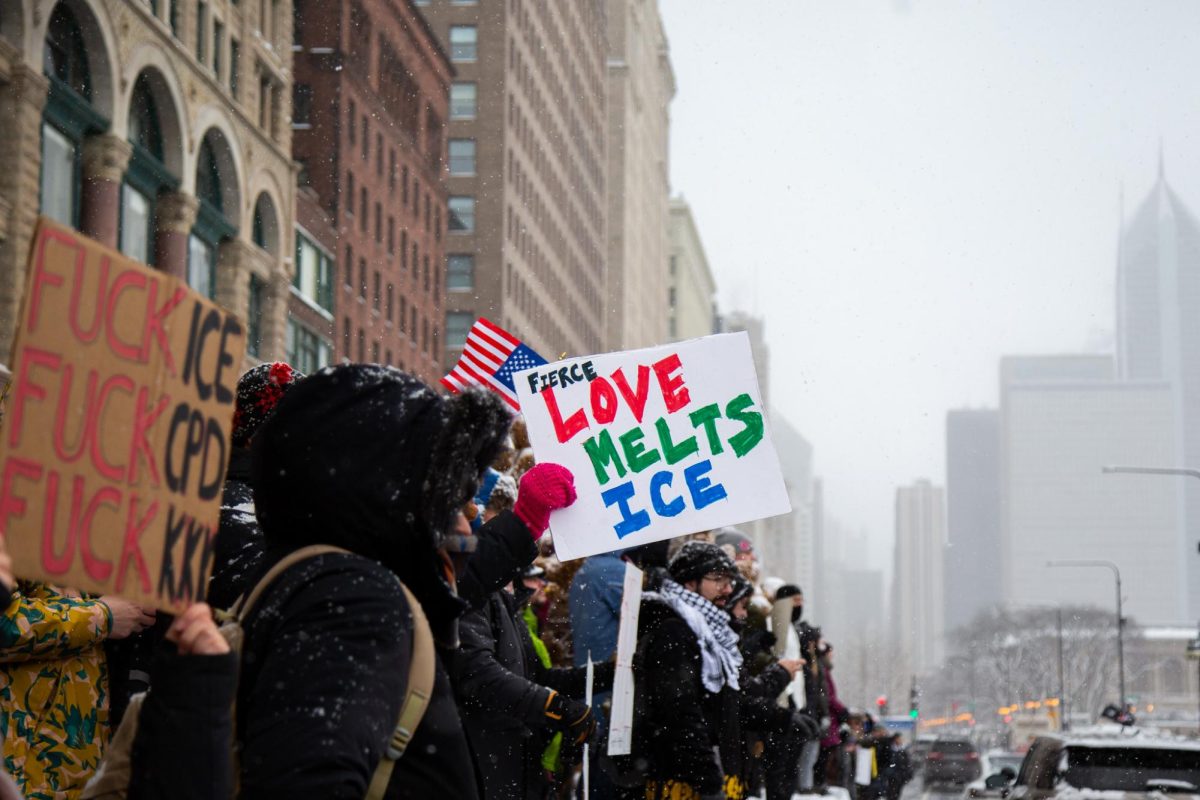
On Sunday, Jan. 25, the day before the spring semester started at Columbia, protesters marched through downtown Chicago in freezing temperatures and several inches of snow, carrying signs saying “fierce love melts ICE” and “no ICE.”
“I fear that soon Chicago will be the next target of ICE, and I can only hope to help spread my knowledge from living in Minnesota to help prepare and defend Chicago in the same way,” Swarts said. “There’s a collective sense of anxiety and alertness that I’ve never experienced growing up in Minneapolis and living here my whole life, apart from attending Columbia for school.”
Protesters and community members in Minneapolis and other cities have framed the recent deaths as part of a broader federal enforcement campaign called Operation Metro Surge, which has involved thousands of arrests and drawn sustained public outcry from activists and local officials.
“Long before these recent killings, immigration enforcement operations have created a constant sense of fear and heightened awareness within my community,” said Stefanie Valle Aguilera, a senior fine arts major and co-president of Columbia’s Latino Alliance. “People are more cautious about their surroundings and daily routines.”
In both cases, Trump administration officials disputed witness accounts and video evidence, offering versions of events that differ from footage and eyewitness statements.
On Monday, Jan. 26, President Donald Trump spoke by phone with Minnesota Gov. Tim Walz about the federal immigration enforcement surge in the Twin Cities, the Minnesota Star Tribune reported.
The governor’s office said Trump agreed to consider reducing the number of federal immigration agents in Minnesota and to consult federal officials about allowing the Minnesota Bureau of Criminal Apprehension to independently investigate the two fatal shootings.
“I feel like it’s so easy to say you’re not afraid or you’re not intimidated by these fucking punks, but a part of you definitely is,” said Alice Bortel, a sophomore photography major from Minneapolis. “Like, you’re absolutely intimidated because these dudes have databases. All they have to do is take a picture of your plates or whatever, and then they can follow you to your house.”
That history of enforcement and the question of accountability has been underscored by statements from White House adviser Stephen Miller, who has publicly told Immigration and Customs Enforcement officers they have “federal immunity” while carrying out their duties— language shared by the Department of Homeland Security that critics say suggests a lack of consequence for aggressive enforcement tactics.
To date, neither of the recent fatal shootings has been the subject of a civil-rights investigation.
“I am certainly concerned for the violence that could happen in Chicago if federal agents return, but I am also hopeful that the scrutiny of their operations will finally lead to accountability and justice for all victims,” Vega said.
Students worry that increasingly aggressive ICE operations could lead to further violence.
“I fear for the safety of people of all ages in our community,” Valle Aguilera said. “Based on what we have seen recently, ICE operations have been increasingly aggressive, and I worry that this could escalate further if they return. My concern is that, as people try to respond with courage or resistance, another tragic incident could occur.”
Swarts said the events have reshaped her sense of responsibility as a student in Chicago.
“I feel that now I have a responsibility to inform my community in Chicago about everything that’s happening with ICE in Minneapolis,” Swarts said. “Connecting with the community is the absolute most crucial way Americans can survive this attack on our rights.”
Copy edited by Venus Tapang
Resumen en español
Después de las muertes de dos ciudadanos estadounidenses por agentes federales, estudiantes de Minnesota expresaron su temor que la violencia de ICE volverá a Chicago. El domingo 25 de enero, miles protestaron la presencia de ICE bajo temperaturas gélidas en el centro de la ciudad, algo que Olive Swarts, estudiante de tercer año de moda, considera esencial en esta época.
“Conectarse con la comunidad es la manera absolutamente más crucial para que los americanos puedan sobrevivir por este ataque a nuestros derechos”, Swarts dijo.
Resumen en español por Sofía Oyarzún