THE SEX ISSUE
Junior film and television major Frida Scheffler-Gonzalez said differing political beliefs are a non-negotiable in her dating life.
Because she is Mexican, she said politics are closely tied to her identity and values, shaping who she would and would not consider dating.
“That would be a huge dealbreaker for me,” she said. “Even if you’re a nice person, you’re still supporting things that are so terrible.”
Whether political differences are a dealbreaker can vary widely depending on factors such as age, background and personal experience. But for some students, politics are inseparable from questions of safety, identity and values.
According to an NPR/PBS News/Marist poll in May 2025, 60% of 18-29 year olds who participated said that it’s important to date or marry someone with the same political beliefs, with that percentage decreasing as the age increased.
Another study done by American Enterprise Institute found that after the 2024 election, 52% of single women are more unwilling to date a Trump supporter, compared to 36% of single men.
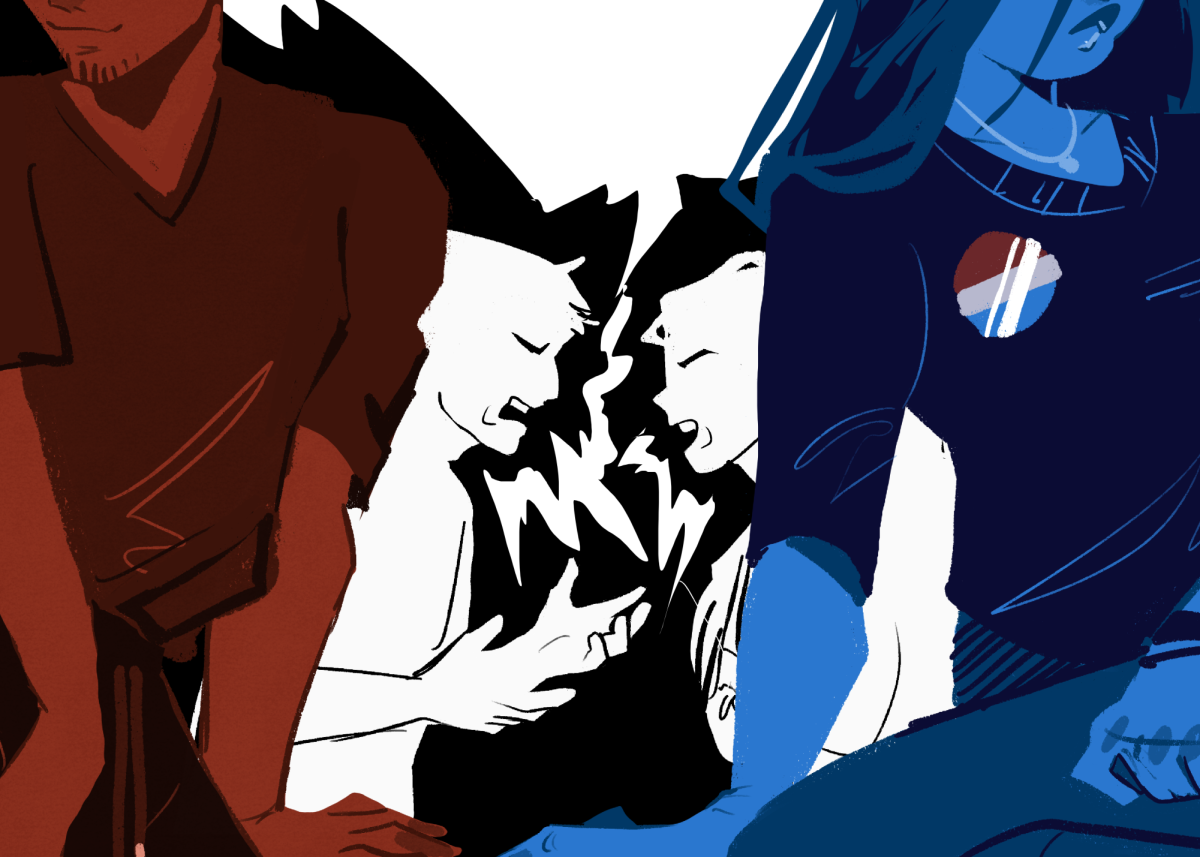
For some Columbia students, political beliefs are a deciding factor in whether they would pursue a relationship. For others, the issue is more complicated and depends on a range of factors.
Senior musical theatre major Isabella Rios struggled in a two-and-half-year-long relationship. Rios is a Democrat and her partner was a Republican. The relationship didn’t last, and today, it would be a dealbreaker.
“It’s really disheartening and embarrassing to try to explain things that feel so simple to you and so straightforward, to people who just don’t believe you and don’t want to believe you,” she said.
Their differences were most obvious during the pandemic and the Black Lives Matter movement when the country was deeply polarized over public health measures, racial justice and the role of government.
“There was just an inherent non-understanding of where the other was coming from, as much as you would try to discuss it and try to be like, ‘No you have to see things from my point of view,’” she said.“I was very stubborn. I was like, ‘I don’t want to see things from a Trump supporter’s point of view.’”
Junior journalism and communication major Tina Krasniqi said she would not enter a relationship with someone whose core beliefs were different.
“I hate how politics has become on a humanity level, because if you had asked me about taxes and all that stuff, I couldn’t care less, but about people, I do care,” she said. “Getting to know someone, if they were upfront like, ‘I’m a Trump supporter,’ I would be like, ‘Oh, never talking to you again.’”
The issue mirrors national trends that hardened during President Donald Trump’s first term in office. A 2020 Pew Research Center study found that nearly half of U.S. adults said it was important to them to date or marry someone who shared their political views, a sharp increase from previous decades.
That survey also found that about 71% of Democratic singles said they probably or definitely wouldn’t consider a committed relationship with someone who voted for Trump, and 45% said they definitely wouldn’t — and similar reluctance appeared among Trump voters toward Clinton voters.
For Krasniqi, Trump is the literal red line. She would not date someone who supported Trump, “absolutely not.”
Scheffler-Gonzalez wouldn’t either. If politics come up and she and her date sharply disagree, she moves on. Trump is the dealbreaker.
“If someone I was gonna date was a big supporter of [Trump] and everything that he does, then what does that say about the things that you do, your personality? What kind of things do you support?” she said.
Junior journalism and communication major Benjamin Sherman also said he would struggle to date someone with opposing political beliefs, though he acknowledged the issue can be complicated.
For Sherman, he said it would come down to how differently they view things.
“Everyone disagrees about stuff, but I think a lot of things, especially right now, it’s very polarized,” he said.
Sherman recognized the difficulty people may have today discussing their sides because everyone’s beliefs are so extreme, and in some cases, it may come down to how willing they are to listen to each other.
“As long as you’re capable of describing why you believe things, I guess I could consider dating someone on the opposite political side of me,” he said. “It’s about being open about what you believe, not to generalize or characterize. But I do think on the conservative end, it’s just very stand-offish right now.”
However, for acting major Oliver Lujano, the answer isn’t so simple.
“To me, it’s a matter of extent — how deeply someone is invested in their political beliefs,” he said.
Lujano said political differences don’t necessarily have to be a dealbreaker in every relationship. He said he has seen people with opposing political beliefs maintain healthy relationships by communicating and making compromises..
“It comes down to asking yourself, ‘Can I live with myself being with this person, knowing they may be upset by something that goes against their political beliefs?’” he said. “It depends on where they are on that spectrum and how willing they are to make it work,” he said. “If they care for each other enough, it comes down to whether they can balance their beliefs while still caring for one another.”
Copy edited by Venus Tapang